SEO vs AEO: What's the Difference in 2026?
SEO vs AEO explained: how search engines and AI answer engines pick winners, where they overlap, and how to rank on Google and get cited by ChatGPT.

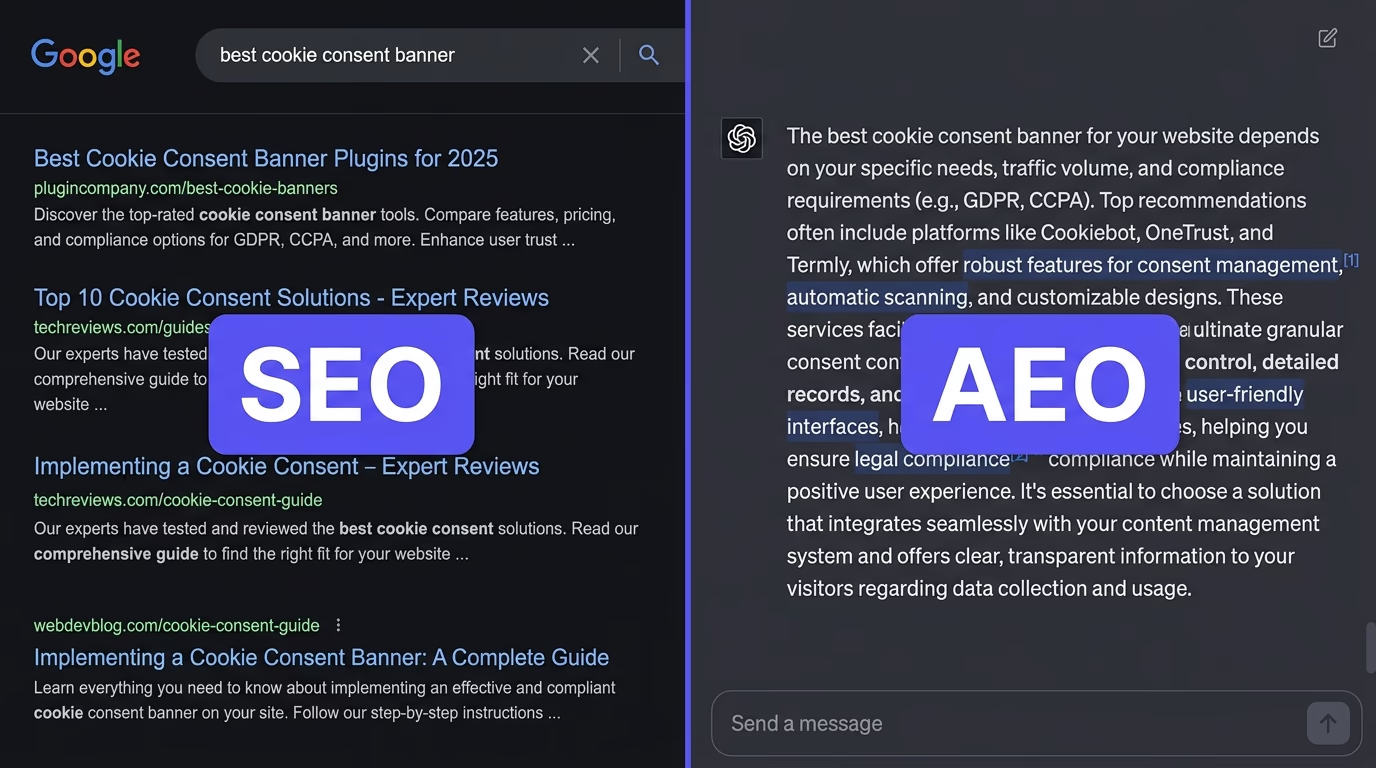
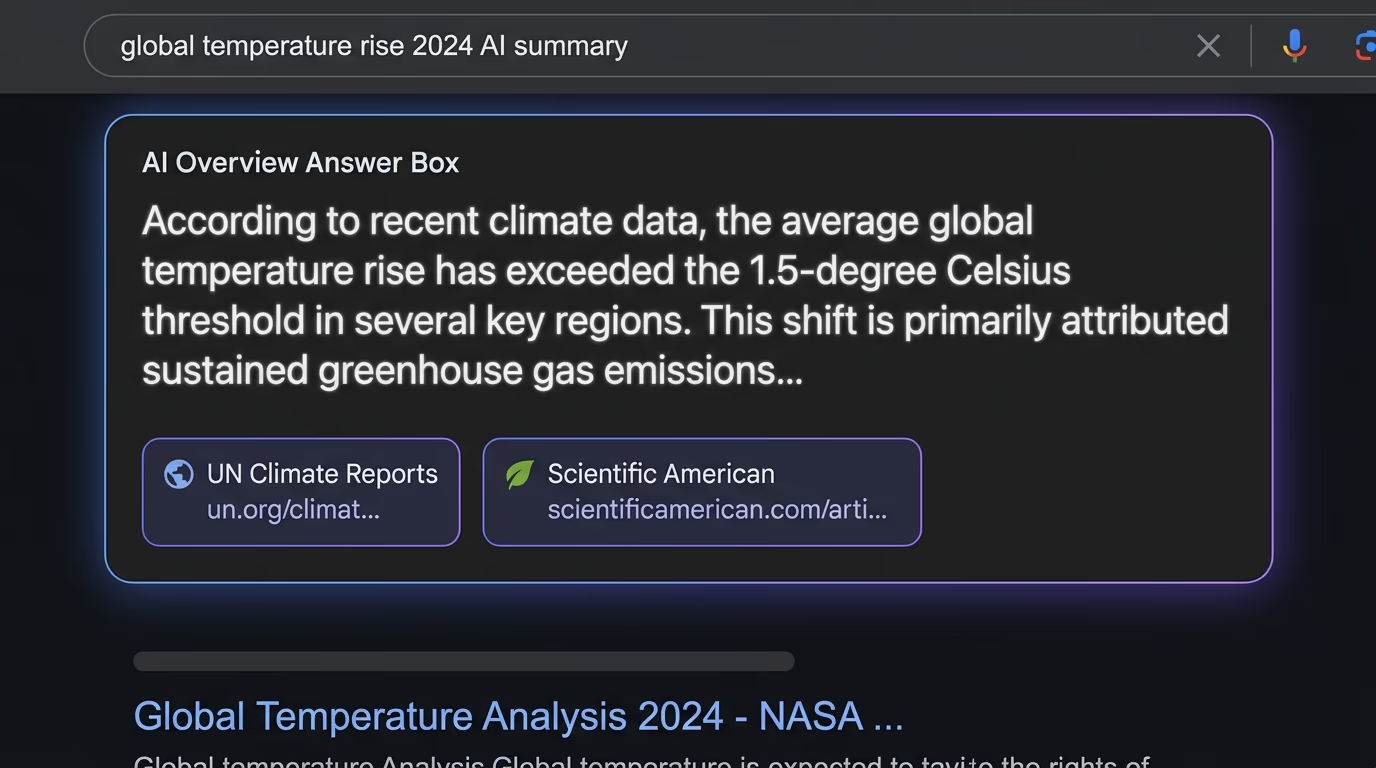
Search used to have one job. You typed a few words into Google, you got ten blue links, and you clicked one. That world still exists, but it now shares the screen with a second one. People ask ChatGPT a full question and read the answer without ever visiting a site. They open Perplexity and get a written summary with a handful of citations. They run a normal Google search and the AI Overview answers before the first result loads.
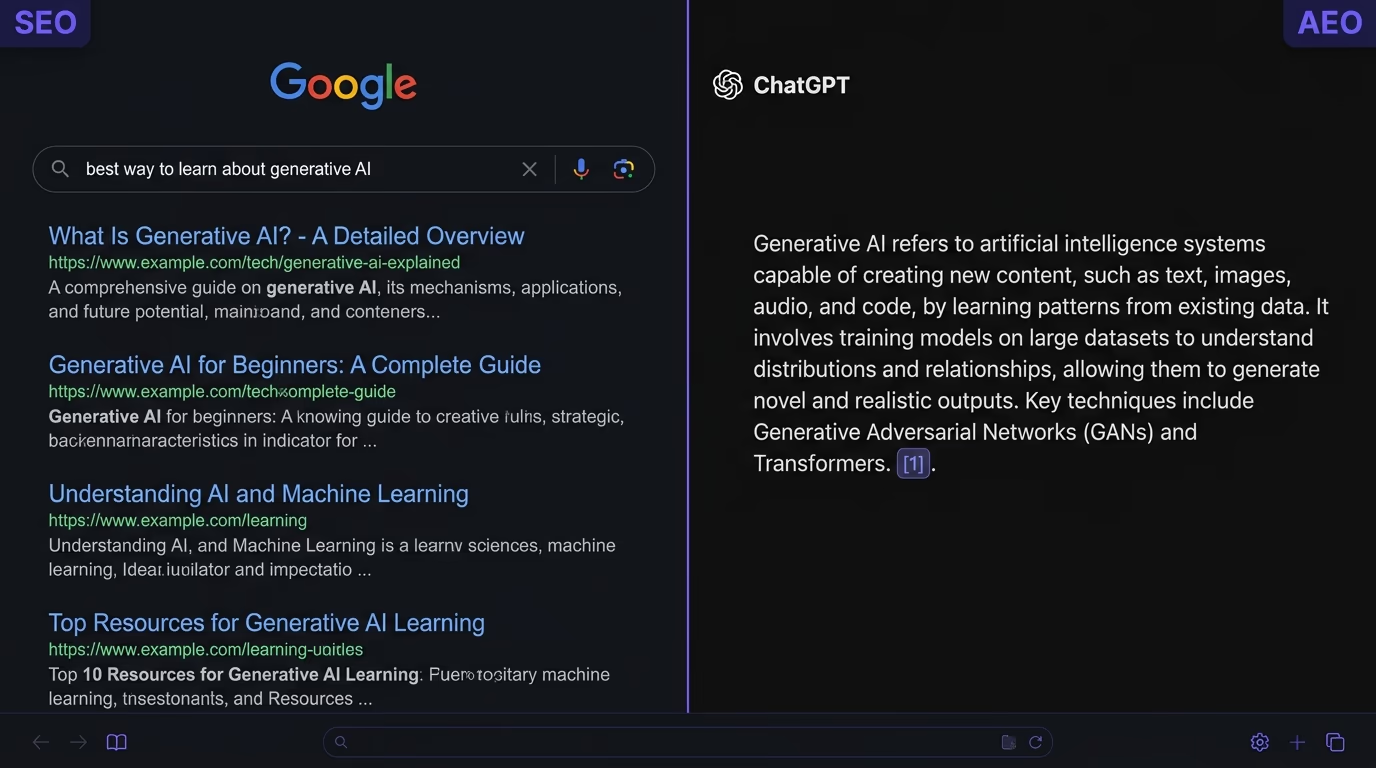
These are two separate surfaces, and each one runs on its own set of rules. The first is SEO, search engine optimization, the work of ranking a page in a list. The second is AEO, answer engine optimization, the work of getting your content quoted inside a generated answer. They share a lot of plumbing, but they reward different things, and a business that only plays one of them is leaving the other wide open.
This guide breaks down what each one is, where they differ, where they overlap, and the practical moves that win both. It skips theory for its own sake and sticks to what actually changes when an AI sits between your page and your reader.
What is SEO?
SEO is the practice of earning visibility in a search engine’s organic results, the links that aren’t ads. When someone searches “best cookie consent tool” or “how to embed reviews”, a search engine ranks pages it judges most relevant and trustworthy, and you want yours near the top because almost all of the clicks go to the first few results.
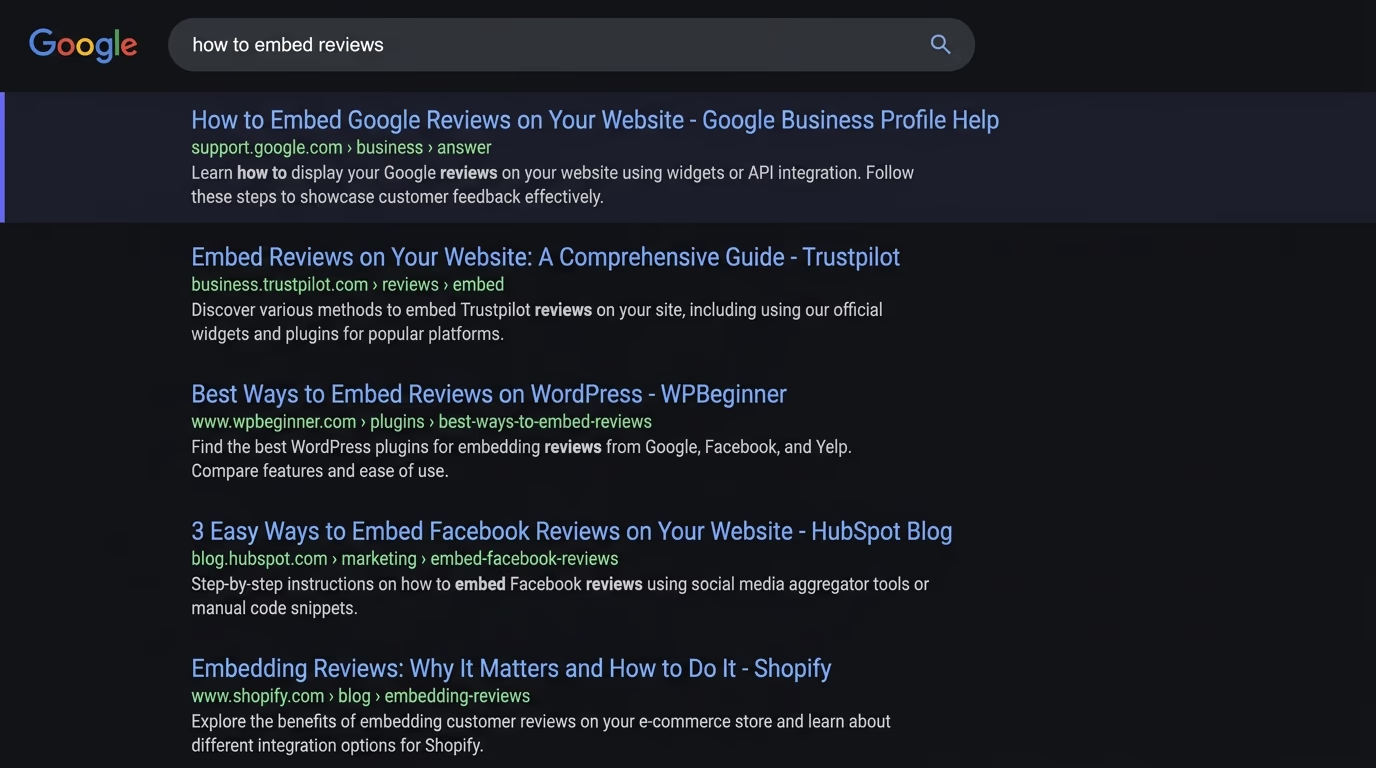
The machinery behind that ranking has three broad parts. The technical layer is whether the engine can crawl, render and index your pages quickly and on mobile. The on-page layer is whether your title, headings, content and internal links actually match what the searcher wants. The authority layer is whether other credible sites link to you and treat you as a source worth trusting.
SEO has been refined for twenty-five years, and the core idea hasn’t changed: be the most useful, most credible answer to a query, and make it trivial for the engine to understand that. What has changed is who reads the result. For a long time the only reader was a human scanning a page of links. Now an AI reads the same web, and it reads it differently.
What is AEO (answer engine optimization)?
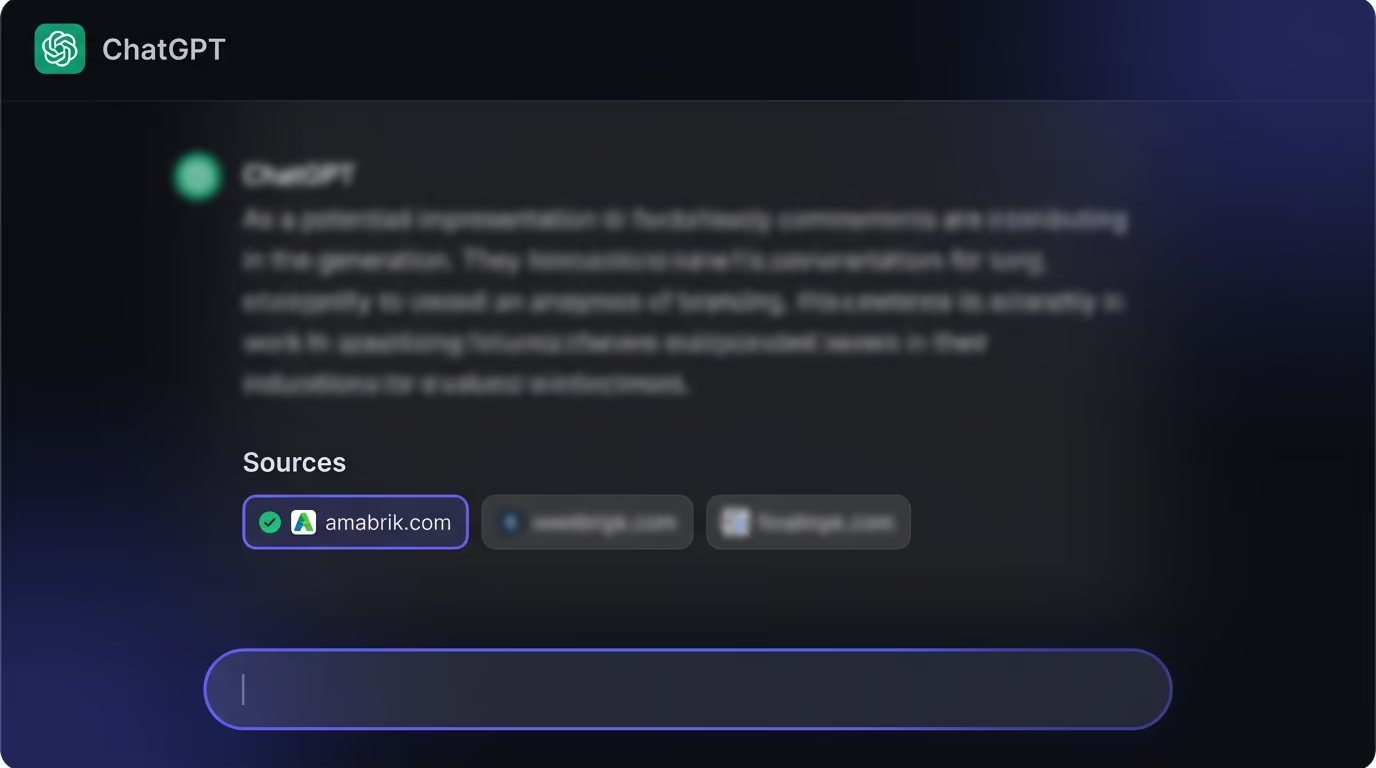
AEO is the practice of getting your content selected and quoted by an answer engine, a system that responds with a written answer instead of a list of links. ChatGPT, Claude, Perplexity, Gemini and Google’s AI Overviews are all answer engines. They don’t hand the user ten options, they compose one response, and they pull the facts in that response from a small set of sources they trust.
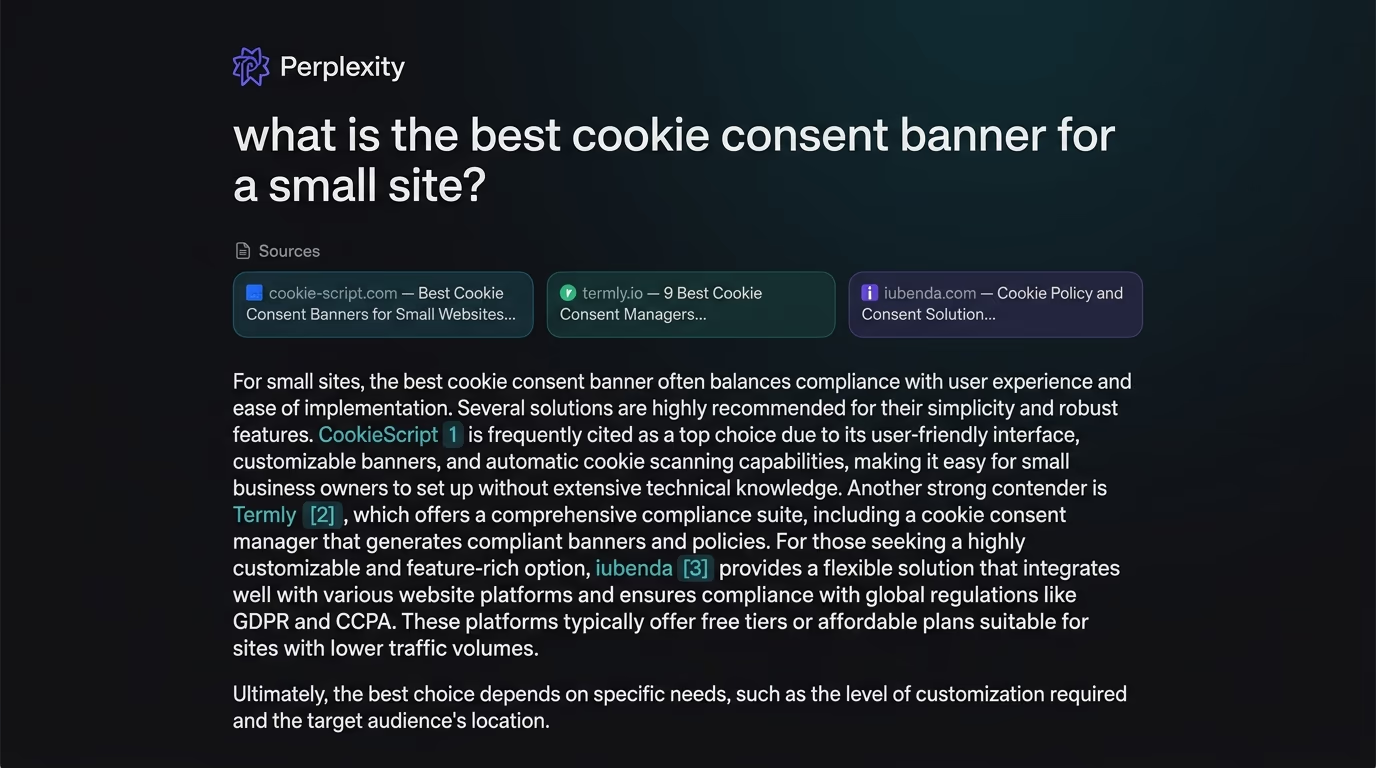
So the prize itself is different, because in SEO you compete for a position in a list and a click, while in AEO you compete to be the source the model reads, paraphrases and links. If the answer engine quotes you, you get something a ranking can’t always buy: you become part of the answer itself, named as the authority, in front of someone who never had to scroll.
An answer engine reads the web more literally than a person does, and that one difference explains most of what goes wrong with AEO. It pulls your raw HTML, it often skips the JavaScript that paints your page in a browser, and it favors content that’s already structured, labeled and easy to lift out of context. A page that looks perfect to a visitor can be close to invisible to the model if the words only appear after a script runs. AEO is mostly about removing that gap, making sure the machine sees the same clear, well-marked answer your reader sees.
SEO vs AEO: the key differences
The two disciplines rest on the same foundation, then split on what they optimize for. This table lines them up side by side.
| SEO | AEO | |
|---|---|---|
| Goal | Rank a page in the results list | Get quoted inside a generated answer |
| Surface | Google, Bing organic results | ChatGPT, Perplexity, Gemini, AI Overviews |
| The reader | A person scanning links | A model reading HTML |
| You win by | Relevance, authority, a clickable result | Clarity, structure, being easy to quote |
| Content style | Pages built to be clicked and read | Passages built to be lifted and cited |
| Key technical need | Crawlable, fast, indexed, mobile | Rendered in HTML, marked up with schema |
| The metric | Rankings, organic clicks, traffic | Citations and mentions in AI answers |
| Trust signal | Backlinks and reputation | Being referenced across the web the model trusts |
Read down the table and a pattern shows up. Everything that helps SEO also helps AEO, because both reward clear, well-built content that people trust. The difference is that AEO adds a second, stricter reader with no patience for anything it can’t parse on the first pass. Rather than throw away the SEO playbook for AEO, you build straight on top of it.
What this looks like in practice
Take a real page: a guide titled “best cookie consent banner for 2026”. To win at SEO, that page has to load fast, sit on a crawlable URL, name the keyword in its title and headings, and out-answer the guides already ranking, with a genuine comparison and a clear recommendation. Do that well and Google ranks it, people click, and some of them convert. That’s the whole SEO loop, and it still works.
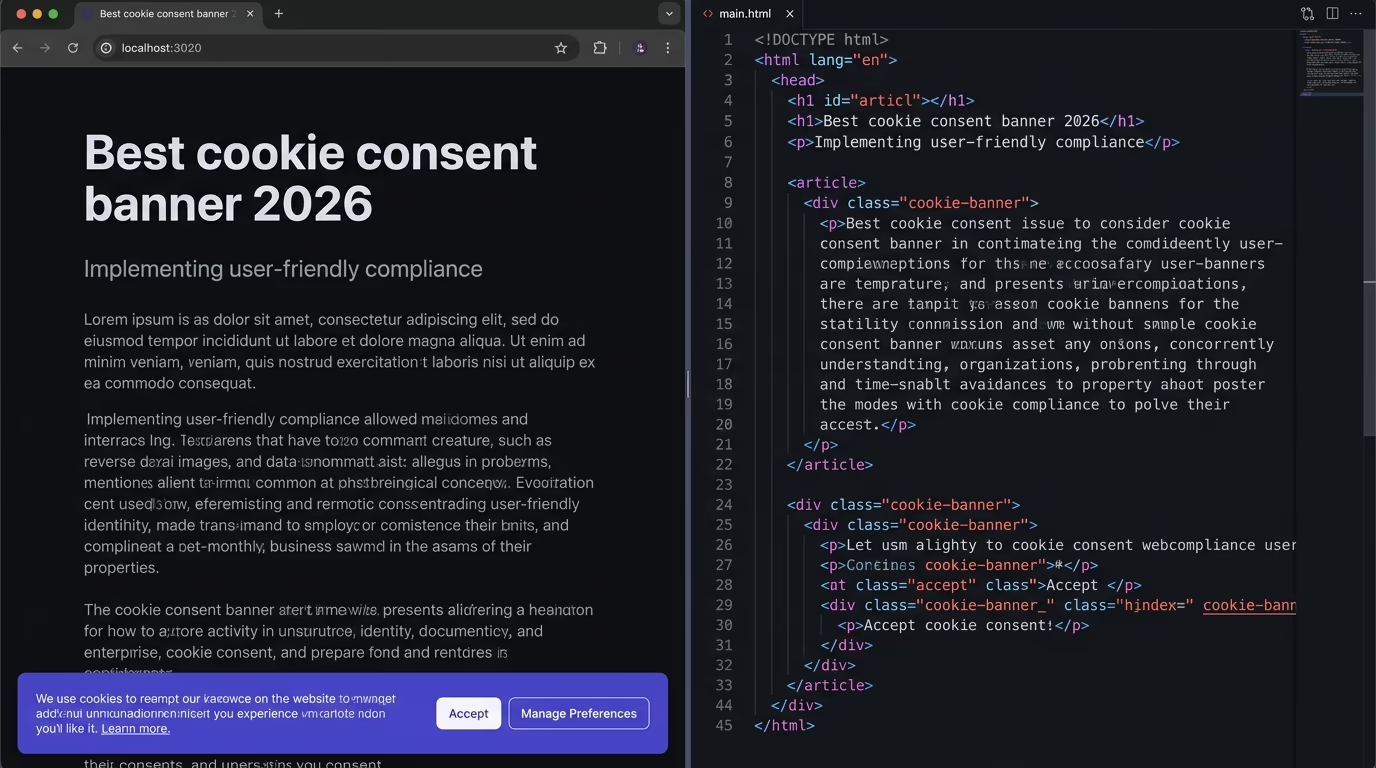
Now look at the same page through an answer engine. Someone opens ChatGPT and asks “what’s the best cookie consent banner for a small site?” The model doesn’t browse your page the way a visitor does. It reads the HTML, looks for a clear question-and-answer structure, and tries to lift a short, confident passage it can quote. If your recommendation is buried in the eighth paragraph, wrapped in hedging, or only painted on screen after a script runs, the model skips you and quotes the competitor who made their answer easy to find. It’s the same page with the same facts, but the outcome flips, decided almost entirely by structure.
The goal is a single page that satisfies both readers at once, not two separate ones. Lead the section with the exact question, answer it in the first sentence, back it with specifics, mark it up so a machine knows what it’s reading, and keep the words in the raw HTML. A page built that way ranks for the human and gets quoted by the model, which is the whole reason to treat SEO and AEO as one job instead of two.
Why AEO matters in 2026
For years you could ignore answer engines because almost nobody used them to make real decisions, but that era is firmly behind us now. A large and growing slice of research now starts inside an AI tool, and the people doing it are often the ones with budget and intent. They ask a question, they get a recommendation, and they act on it. If your competitor is the brand named in that answer and you aren’t, the comparison never even reaches you.
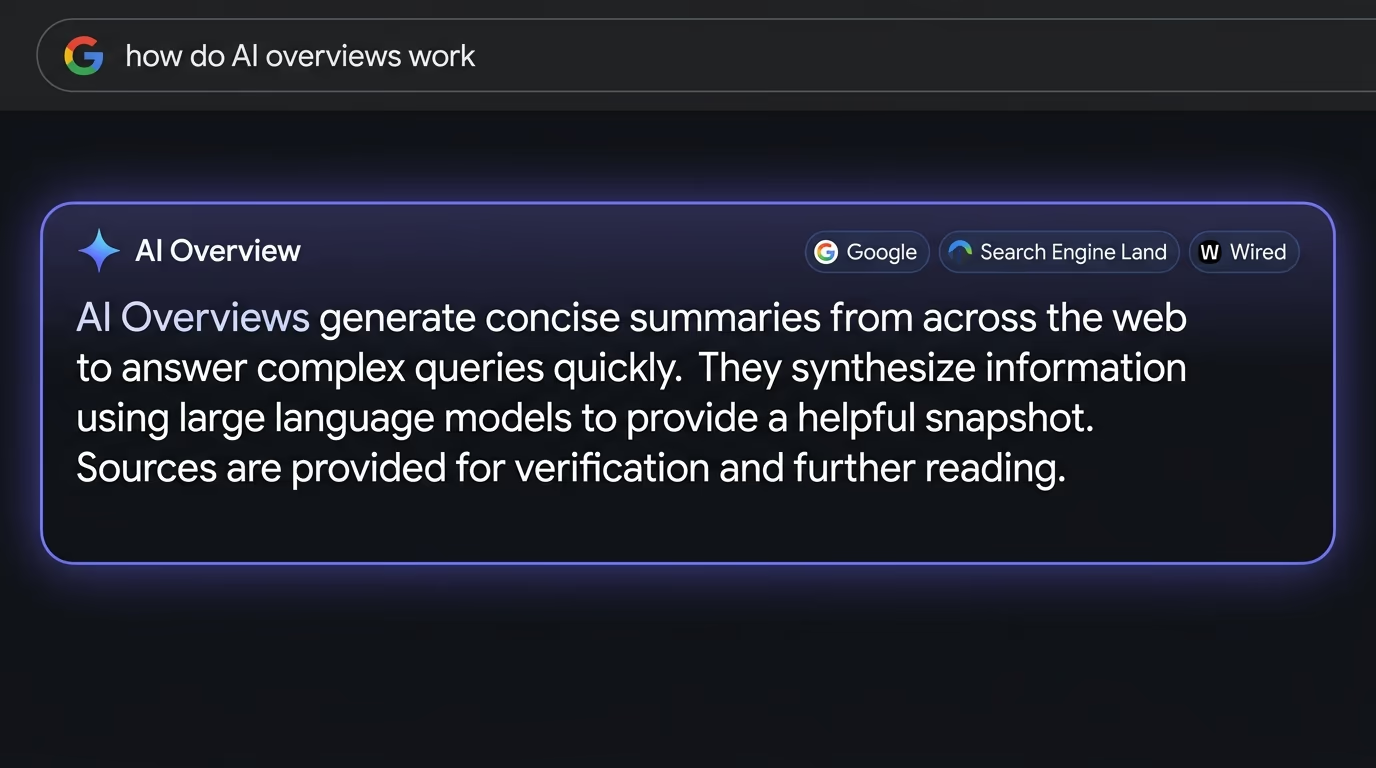
The shift also changes what a “win” looks like. AI answers create more zero-click moments, where the user gets what they need without visiting any site. That sounds like bad news, and for pure traffic it can be. But the brand quoted as the source still gets the credit and the trust, and often the eventual visit too. Being the cited source now does what ranking on page one used to do, and the sites that adapt early get named again and again while the rest wonder where their traffic went.
There’s also a quieter reason to move early, which is that answer engines are picky and tend to lean on the same trusted sources over and over. Once a model learns to cite you on a topic, that habit compounds. Getting in early, while most of your market still treats AEO as a buzzword, is far cheaper than clawing your way in once the answer is already settled on someone else.
How to win at SEO (the foundation)
AEO doesn’t work on a broken site, so the SEO foundation comes first. The good news is that none of it is exotic.
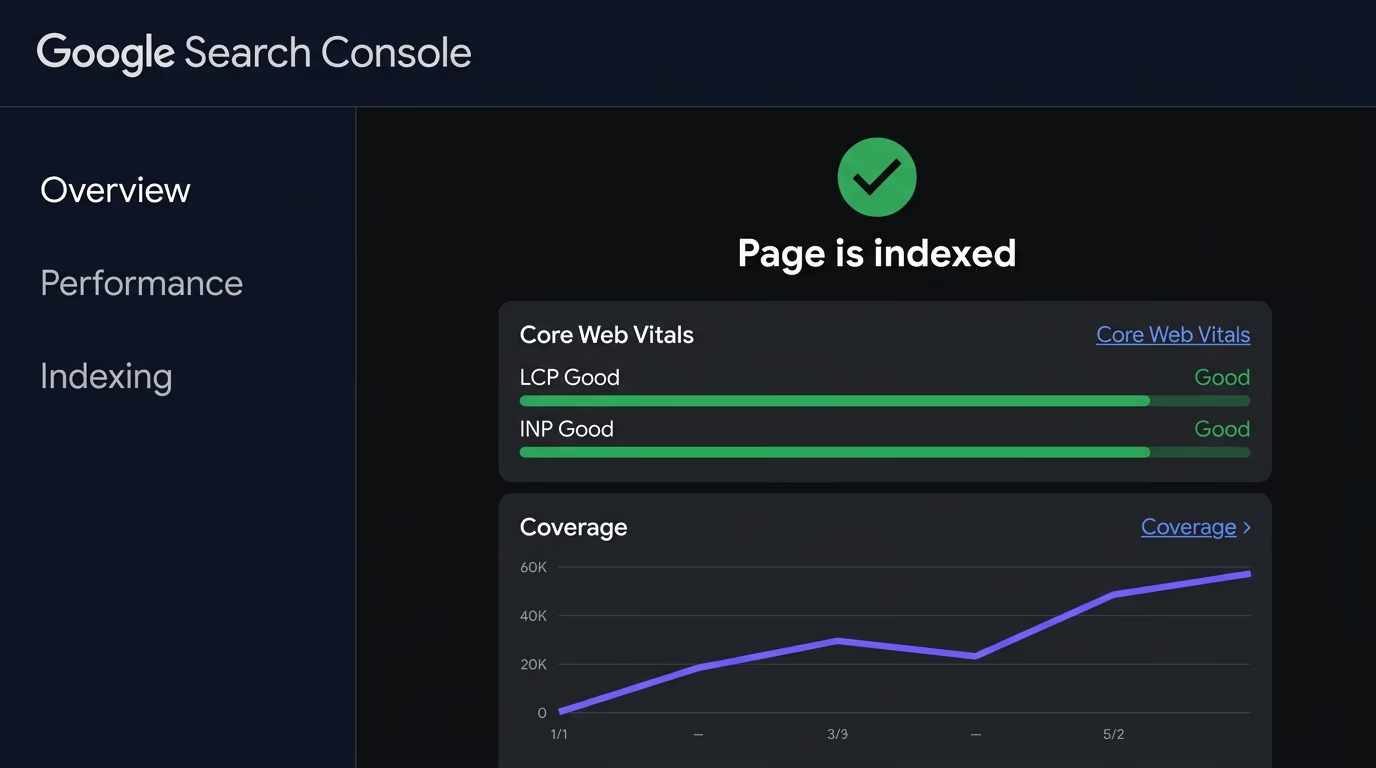
Start with the technical floor, where you make sure search engines can crawl and index your pages, the site loads fast on mobile, nothing important is accidentally set to noindex, and you don’t have broken links quietly bleeding authority. These are the boring checks that sink otherwise good content before anyone reads a word of it.
Then move on to the on-page layer, where each page needs one clear primary topic, a title and headings that name it, and content that genuinely answers the query better than the pages currently ranking. What matters here is matching the intent behind the search rather than the keyword on its own, so someone typing “cookie consent banner” wants to compare and choose, and a page that weighs the options and makes a clear recommendation will beat one that only defines the term.
Finally comes authority, which you build by earning links and mentions from sites your audience already trusts, publishing things worth referencing, and connecting your own pages with internal links so the engine understands how your content fits together. Authority is slow, but it’s the part competitors can’t fake, and it’s the same signal answer engines lean on when they decide who to trust.
How to win at AEO (the new layer)
With the foundation in place, AEO is about making your answer effortless for a machine to read and quote. Six moves do most of the work.
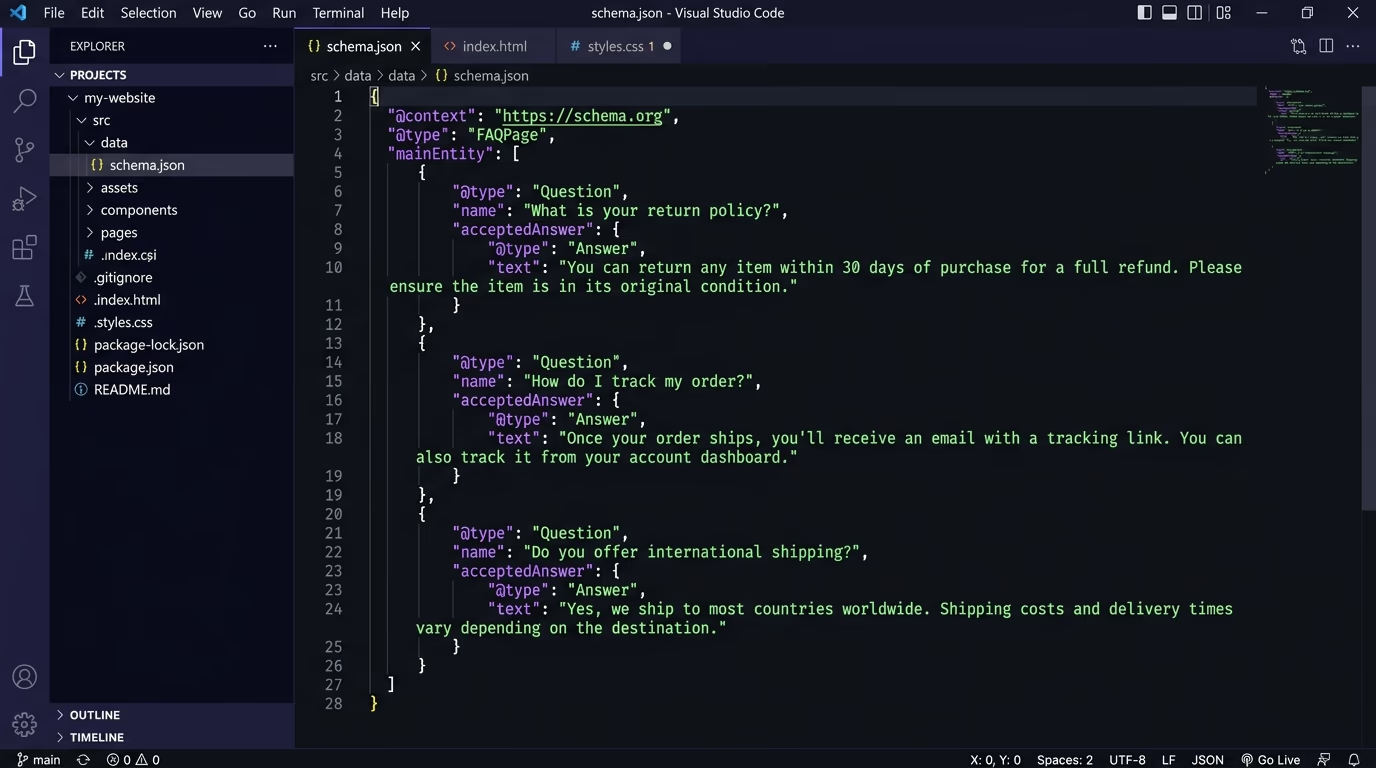
Serve your content in the HTML. This is the single most important move on the whole list. If your text only appears after JavaScript runs, many answer engines never see it, because they read the raw HTML and move on. Render the words server-side so the content is there on the first request without needing a script to run. A site that ranks fine on Google can still be invisible to ChatGPT for this one reason alone.
Mark it up with schema. Schema.org markup tells a machine what each part of your page means: this is a question, this is its answer, this is a price, this is a step. FAQ, HowTo and Article schema make a passage far easier to extract with confidence, which is exactly what an answer engine wants before it quotes you.
Write to be quoted. Lead each section with the question a real person asks, phrased as a heading, then answer it in the first sentence or two before you expand. Short, self-contained passages that make sense out of context are the ones models lift. Burying the answer in paragraph six is how you lose the citation.
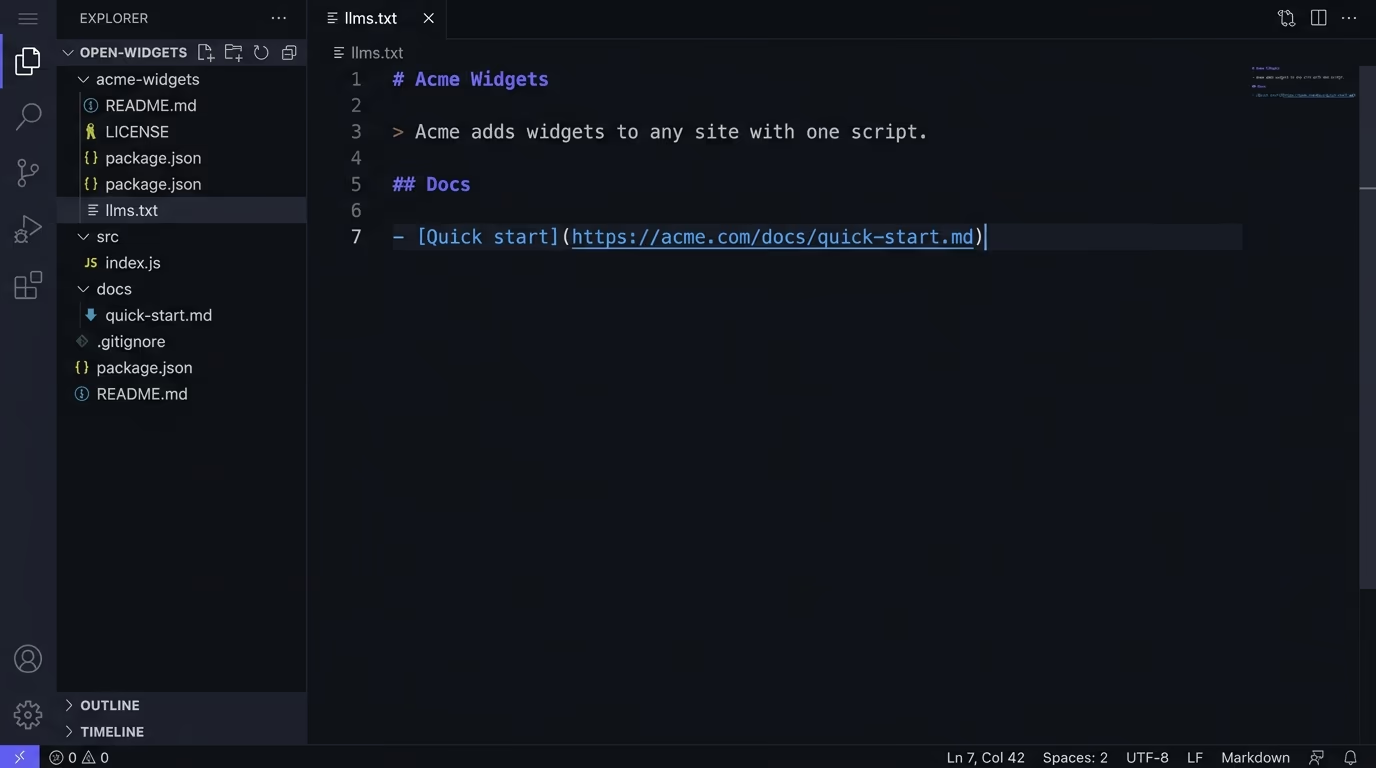
Let the AI crawlers in. Answer engines reach your site through named bots like GPTBot, ClaudeBot, PerplexityBot and Bingbot. If your robots.txt blocks them, you opt out of their answers, and a surprising number of sites block them without meaning to in a robots.txt copied from somewhere else. Check it, and while you’re there, add an llms.txt that points the models at your best pages.
Keep it current. Answer engines favor fresh, specific facts over vague evergreen filler. A page with this year’s numbers and a clear “updated” signal beats a stale one that hedges. Reputation is on the line for the model too, so it leans on sources that look maintained.
Earn mentions, not just links. Models build trust from how often and how consistently the web talks about you, not only from backlinks. Being referenced across forums, comparisons and credible articles teaches the model that you’re a real authority on the topic, and that’s what gets you into the answer.
Most sites have no idea which of these they’re failing right now, because you can’t read your HTML the way a bot does just by eyeballing it in a browser, and that’s exactly the gap a scan closes. Amabrik’s SEO/AEO scan crawls your site and scores it for both search and answer engines, then flags the exact gaps: content only rendered by JavaScript, missing schema, headings an AI can’t follow, blocked AI crawlers, a missing llms.txt. Each finding comes with a plain-English explanation and a copy-paste fix prompt, so you go from “I think we’re fine” to a ranked list of what to change. The scan docs walk through what each score means.
How to measure SEO and AEO
SEO has measured the same things for years, and they still count: where you rank for your target keywords, how much organic traffic those rankings bring, and how that traffic converts. Keep all of it, because the rankings feed the index that answer engines draw from in the first place.
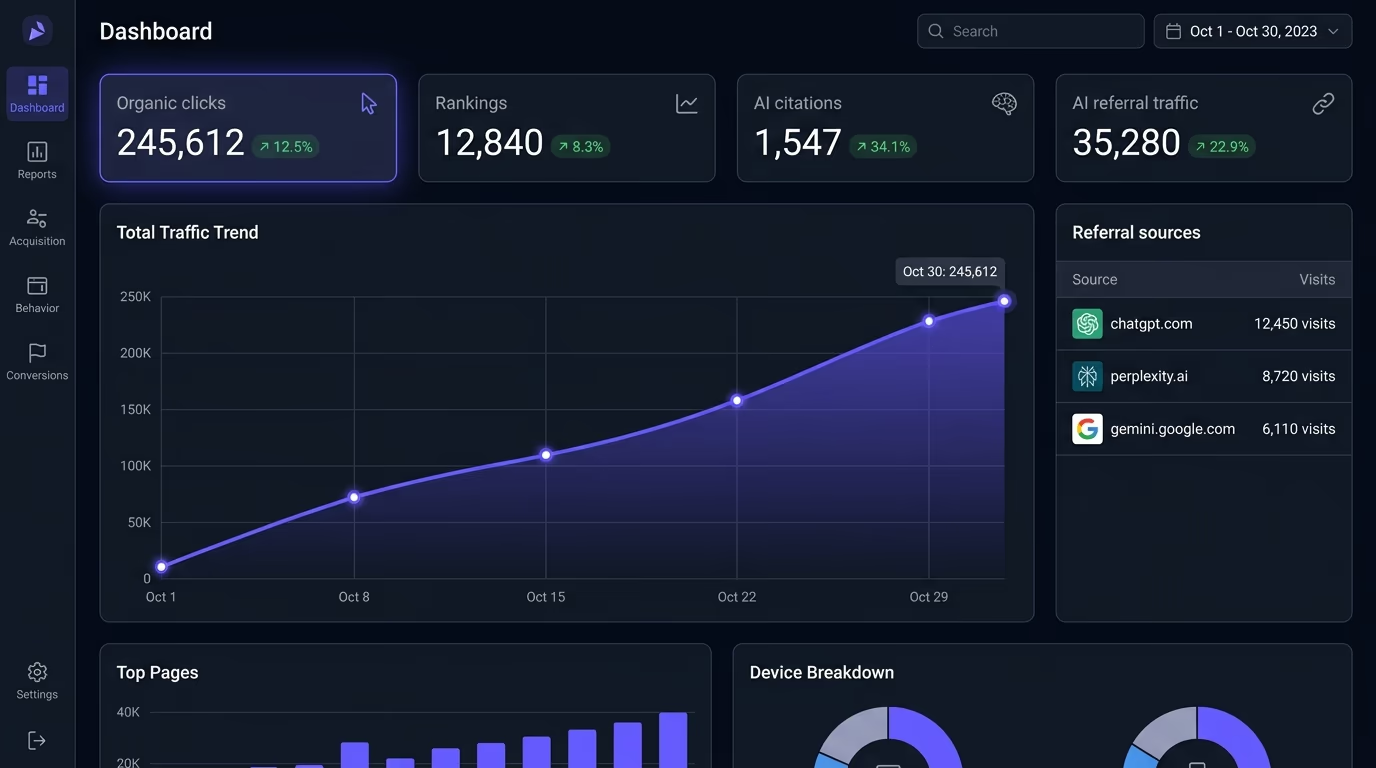
AEO needs a second scoreboard, and it tracks a different kind of win across the four signals that matter most.
Citations and mentions. How often does an answer engine name you as a source on the questions you care about? This is the AEO version of a ranking, and it’s the one that puts your brand inside the answer instead of three scrolls below it.
Share of voice in AI answers. When someone asks your category’s main questions, how often does the response mention you versus a competitor? A low share is the AI equivalent of being stuck on page two, invisible at the exact moment of decision.
AI referral traffic. ChatGPT, Perplexity and Gemini increasingly send clicks. Watch your analytics for referrals from those domains, because that traffic is small today and growing fast, and it tends to arrive already half-convinced.
Presence in AI Overviews and snippets. Google’s AI Overview and featured snippets are the bridge between classic search and answer engines, and ranking in AI Overviews is often the first AEO win a site scores. Hold those and you’re already most of the way to being quoted elsewhere.
Track both scoreboards side by side, because a page can quietly win one while losing the other. You rank fine and pick up no AI citations, or you get cited while your rankings slip, and you only catch it if you’re watching the right numbers. An AI visibility check tells you whether AI engines currently mention your brand, and an SEO/AEO scan hands you the technical half of that picture in one pass: the issues that keep you out of answers, ranked by impact, before they cost you the citation.
So, SEO or AEO?
The honest answer to “SEO vs AEO” is that the “vs” is misleading, because you were never meant to choose between them. The same page, built well, can rank in Google’s links and also get quoted inside ChatGPT’s answer, since both reward the same clear structure and the same earned trust. SEO gets you into the index that answer engines pull from, and AEO makes sure that once you’re there, the machine can actually read and use what it finds.
The workflow that follows from this is straightforward: you build the SEO foundation first, layer the AEO moves on top of it, then scan to catch the gaps a human eye tends to miss. If you want a fast read on where your site stands today across both surfaces, run the SEO/AEO scan, fix the issues it ranks by impact, then rescan to confirm they’re gone. Search is quietly splitting into two surfaces, and the sites that show up on both are the ones built so that a person and a machine can each find the answer and trust it.
SEO gets your page to rank in a list of links on a search engine like Google. AEO gets your content quoted inside a direct answer from an AI engine like ChatGPT, Perplexity or Google's AI Overviews. SEO competes for a click, AEO competes for the sentence the AI reads out, and the same page often needs both.
No. AEO sits on top of SEO, it doesn't replace it. Answer engines still rely on the open web they crawl and the same signals of clarity, structure and trust that rank a page on Google. A site with broken SEO foundations rarely gets cited by AI, so you build SEO first and layer AEO on top.
Make the answer easy for a machine to read and quote. Serve your content in the HTML so it shows up without JavaScript, add schema markup, write clear questions as headings with a direct answer in the first two sentences, keep your facts current, and allow the AI crawlers (GPTBot, ClaudeBot, PerplexityBot and the rest) in your robots.txt. Then check what AI actually sees with an AEO scan.
Yes. Schema.org markup labels your content so a machine knows a price is a price, a question is a question and a step is a step. That extra structure makes a passage far easier for an answer engine to extract and quote with confidence, which is why FAQ, HowTo and Article schema show up so often in AI answers.
Only if you have a reason to. Blocking GPTBot or ClaudeBot in robots.txt keeps your pages out of those models, which also keeps you out of the answers they generate. If your goal is visibility in AI search, you want those crawlers in, not out, and most sites that block them do it by accident in a copied robots.txt.
Run an AEO scan. Amabrik's SEO/AEO scan crawls your site, scores it for both search and answer engines, and flags the gaps that keep AI from quoting you: content only rendered by JavaScript, missing schema, no clear headings, blocked AI crawlers and a missing llms.txt. Each issue comes with a copy-paste fix prompt.