How to Rank in AI Overviews (2026)
How to rank in AI Overviews: what Google cites, the silent blockers keeping your site out, and the fixes that get your content into AI answers.

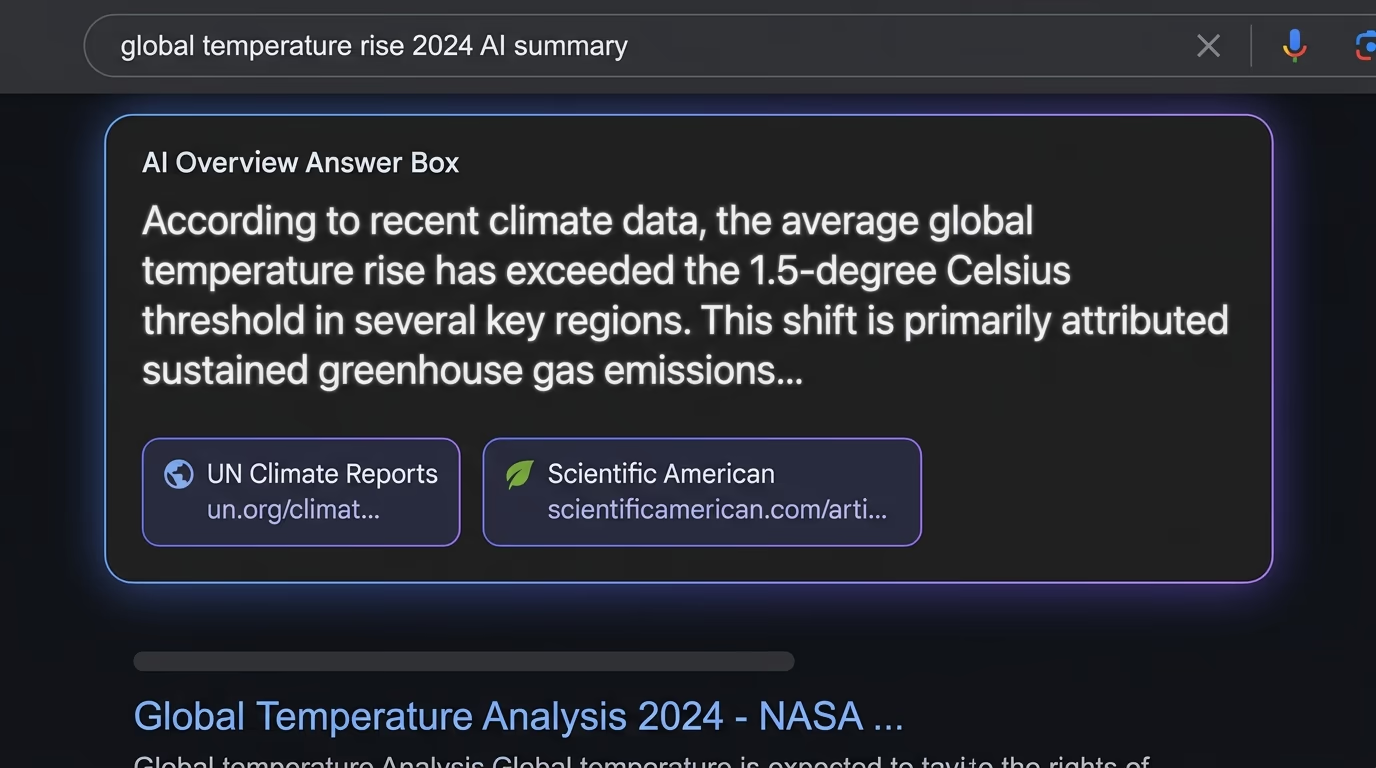
Google AI Overviews now appear on roughly one in four search results in the US, and that number keeps climbing. If your content gets cited in the AI-generated answer box at the top of the page, you earn visibility that sits above every organic result. If it doesn’t, you lose clicks to the sites that do. It’s already happening on queries your audience searches today.
This article covers how Google picks the pages it cites, the silent blockers that keep most sites out, and the specific changes that move your content into AI Overviews. Every recommendation is backed by current data, not speculation about what might work.
What are Google AI Overviews and why do they matter?
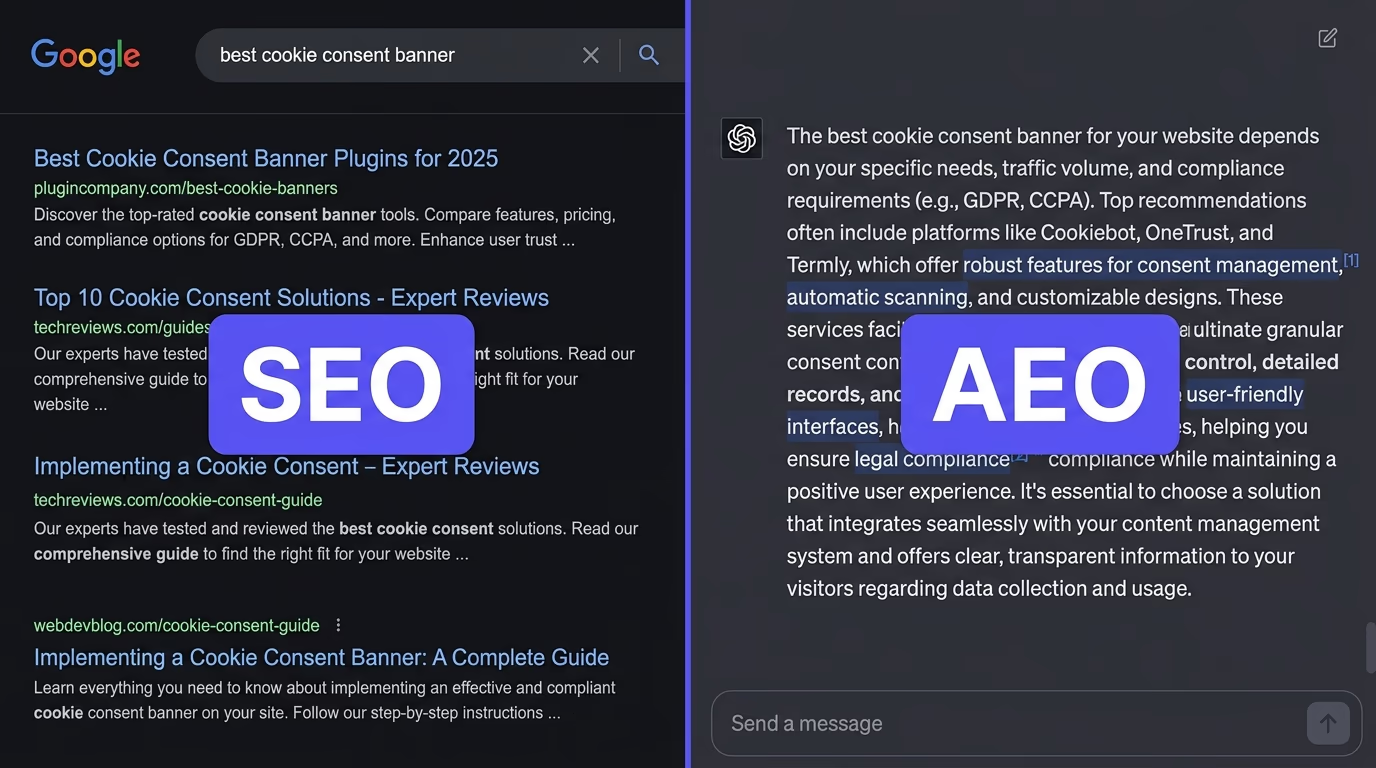
AI Overviews are AI-generated summary boxes that appear at the top of certain Google search results. Google’s language model reads multiple pages from its index, synthesizes an answer, and displays it with inline citations linking to the sources it used. The user gets a direct answer without scrolling, and the cited pages get prominent placement above the traditional blue links. The AI Overview is one of three Google Gemini surfaces, so the wider Gemini SEO guide covers it alongside the Gemini app and AI Mode.
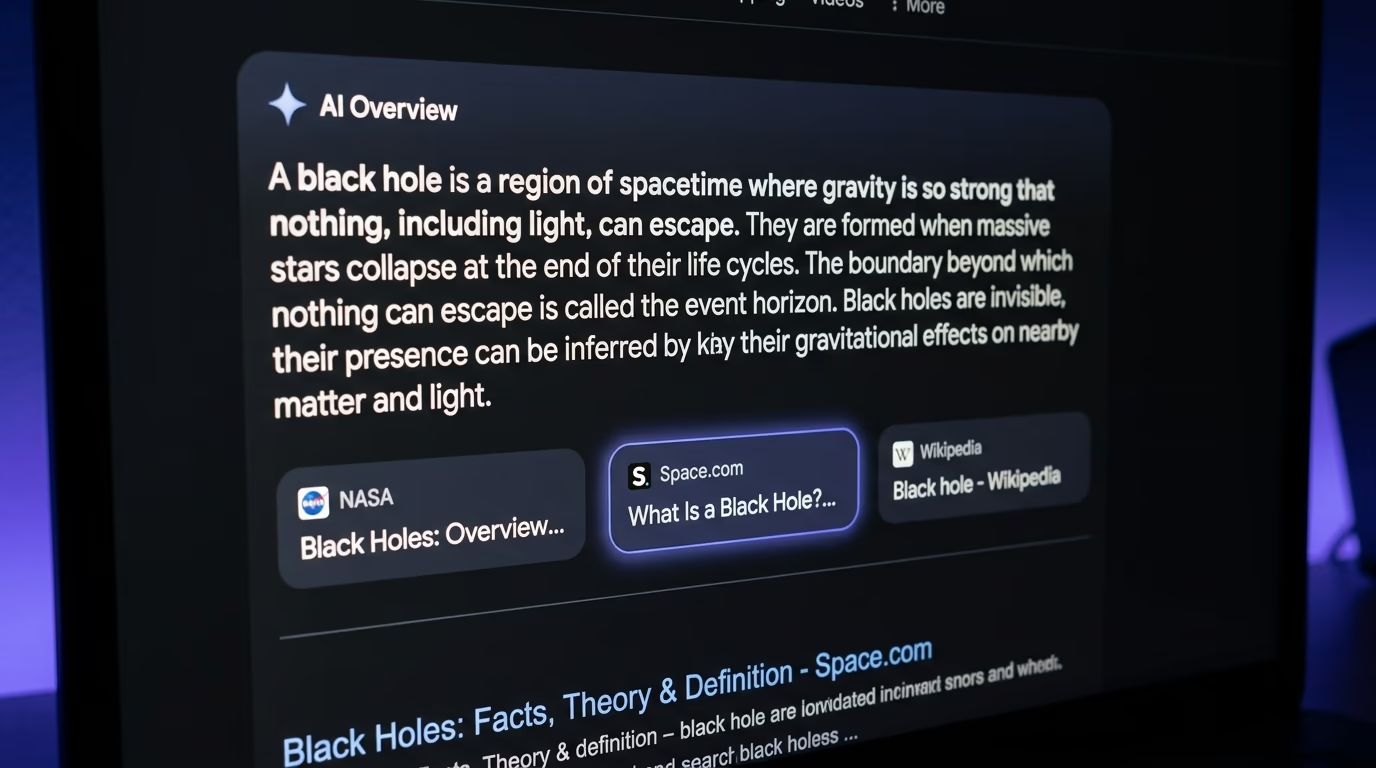
The scale is hard to ignore. Conductor’s research found that 25.11% of US searches triggered an AI Overview in Q1 2026, up from 13.14% in March 2025. In commercial verticals like SaaS, e-commerce, and finance, BrightEdge puts that closer to 48%. These aren’t edge cases anymore, they’re a large share of the queries your potential customers type every day.
The impact on clicks is just as significant. Seer Interactive’s data shows AI Overviews cut organic click-through rates by 61% on affected queries overall, but the pages that actually get cited inside the overview earn 35% more clicks than they would from a standard organic listing. The gap between being cited and being ignored is wider than anything featured snippets ever created.
That means ranking in AI Overviews isn’t an optional bonus for sites that already do well. It’s becoming the dividing line between pages that hold their traffic and pages that watch it disappear.
How does Google pick which pages to cite?
Google doesn’t use a separate index or a different algorithm for AI Overviews. It pulls from the same index that powers organic search, then applies additional quality filters to decide which pages deserve to be synthesized and cited. Understanding those filters is the foundation for everything else in this article.
The first filter is organic ranking. SE Ranking’s analysis found that 92.36% of AI Overview citations come from domains that already rank in the organic top 10 for that query, with 63.19% coming from pages specifically in the top 10. If your page sits on page two or deeper, it almost never gets cited. That makes traditional SEO the entry ticket to AI Overviews, not a separate discipline from it.
The second filter is passage quality. Google’s retrieval system doesn’t evaluate whole pages as much as it evaluates specific passages. Pages that lead sections with clear, direct answers to the question at hand are easier for the AI model to extract and quote. Walls of text without clear structure get passed over, even when they rank well organically.
The third filter is the trust the page carries. Google’s quality raters guidelines emphasize E-E-A-T (experience, expertise, authoritativeness, trustworthiness), and the AI Overview system leans on those signals even more heavily than organic ranking does. SEOcrawl’s data claims 96% of AI Overview citations come from sources the system judges as verifiably authoritative. That number may be hard to independently verify, but the pattern is consistent: pages with author bylines, accurate facts, and domain authority get cited. Pages without those signals tend to get passed over.
What’s silently blocking your site from AI Overviews?
Most articles about AI Overviews focus on what to add: better content, more schema, stronger E-E-A-T. Few talk about what’s actively preventing your site from being considered, even when the content itself is solid. These silent blockers are worth checking first, because no amount of optimization helps if the AI model can’t see your content.
The most common blocker is JavaScript-rendered content. If your page’s main text only appears after client-side JavaScript runs, Google’s main crawler can usually handle it (Googlebot renders JS), but other AI search products and some Google systems process the raw HTML first. Content locked behind a React or Vue hydration step with no server-side rendering sometimes gets partially or incorrectly indexed. You can check this by loading your page with JavaScript disabled in your browser. If the main text disappears, you have a rendering dependency that may hurt your AI Overview chances.
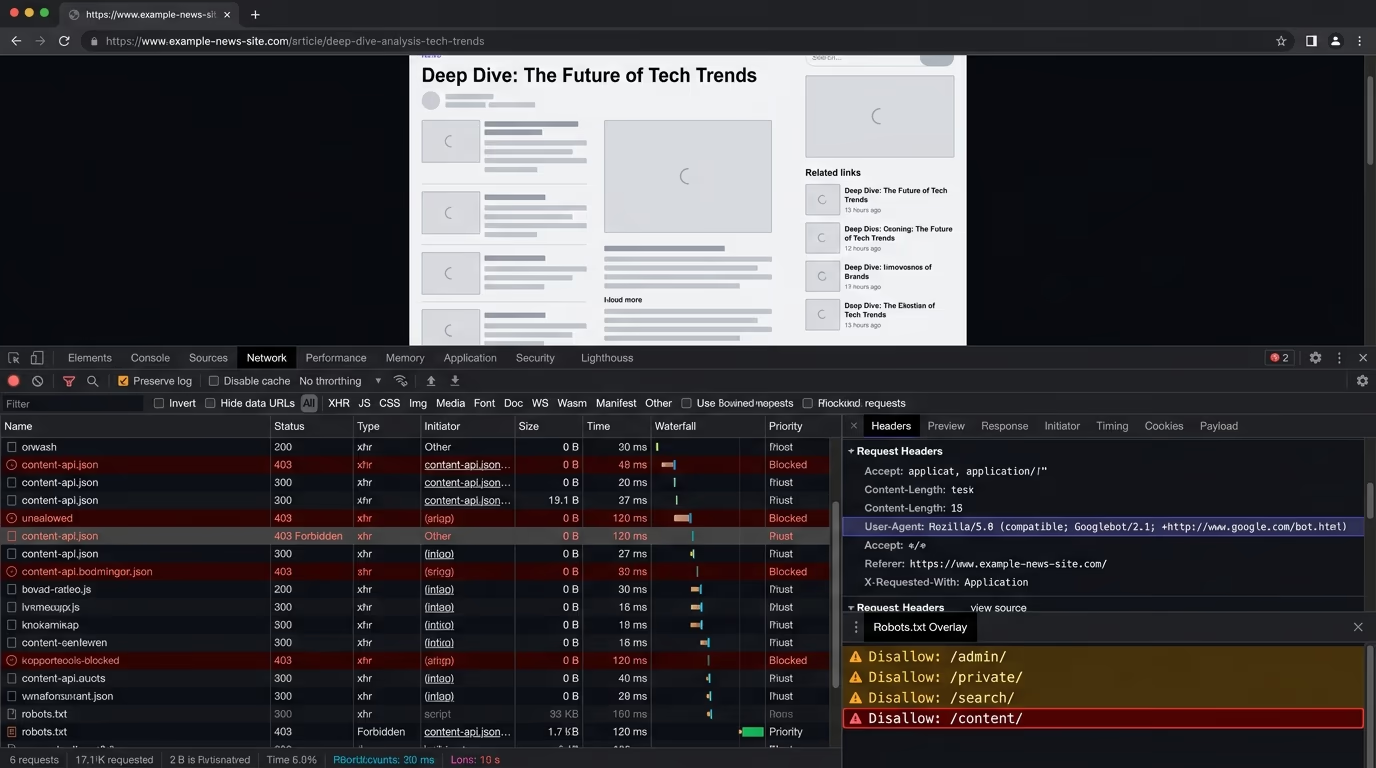
The second blocker is overly restrictive robots.txt rules. Blocking specific paths that contain your best content, or using broad disallow rules meant for staging or admin sections that accidentally catch live pages, removes those pages from consideration entirely. It’s worth auditing your robots.txt with fresh eyes, specifically looking for paths that might contain content Google should see. Your SEO/AEO scan can flag these access issues in one report.
The third blocker is thin or duplicate content. Pages that say roughly the same thing as three other pages on your site confuse the AI model about which one to cite, so it often cites none of them. Canonical tags help here, but the better fix is having one thorough page per topic instead of several shallow ones competing with each other.
Are AI crawlers able to reach your content?
This question confuses a lot of site owners because “AI crawlers” can mean two different things, and the distinction changes what you should do.
Googlebot is the crawler that builds Google’s search index, and that same index feeds AI Overviews. If you block Googlebot, you drop out of organic search and AI Overviews simultaneously. That’s rarely intentional, but partial blocks (a disallow on /api/, /app/, or /admin/ that catches actual content pages) happen more than you’d expect.
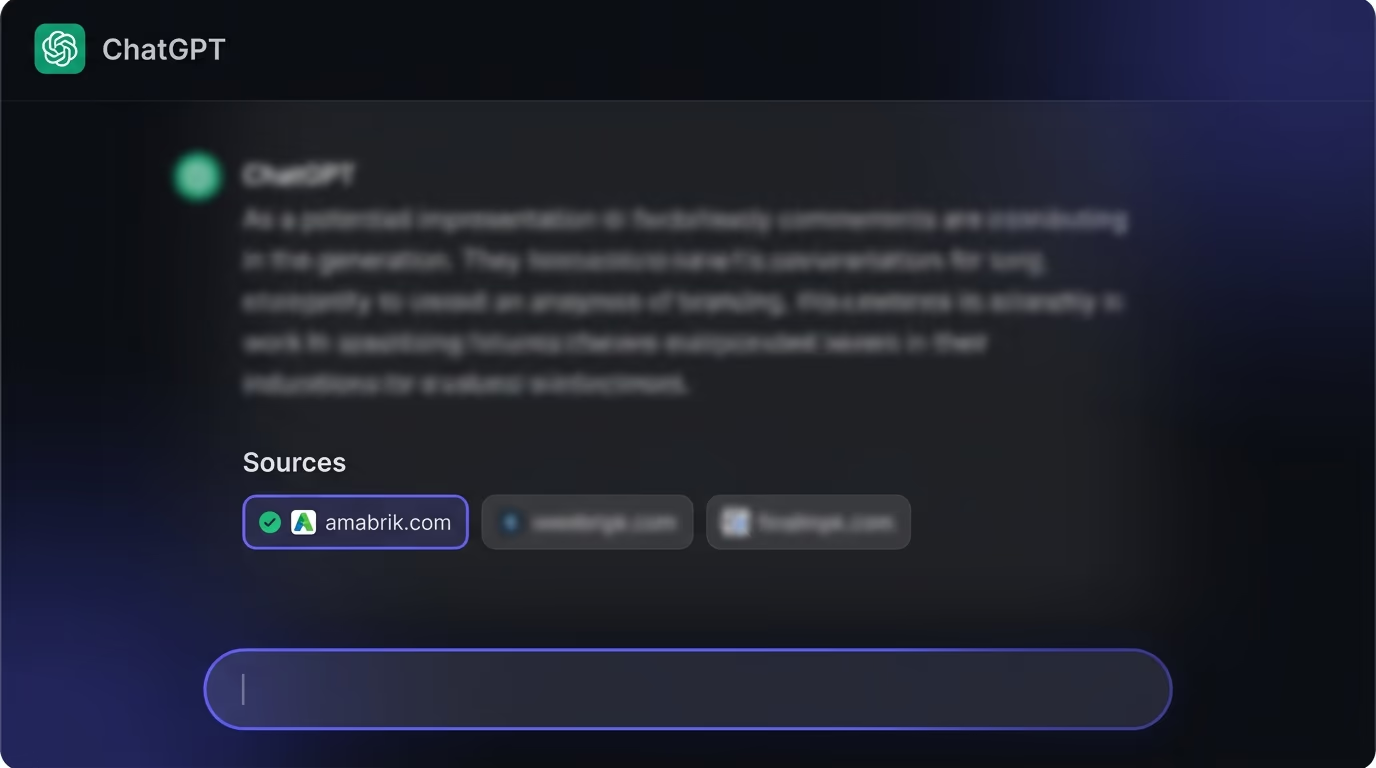
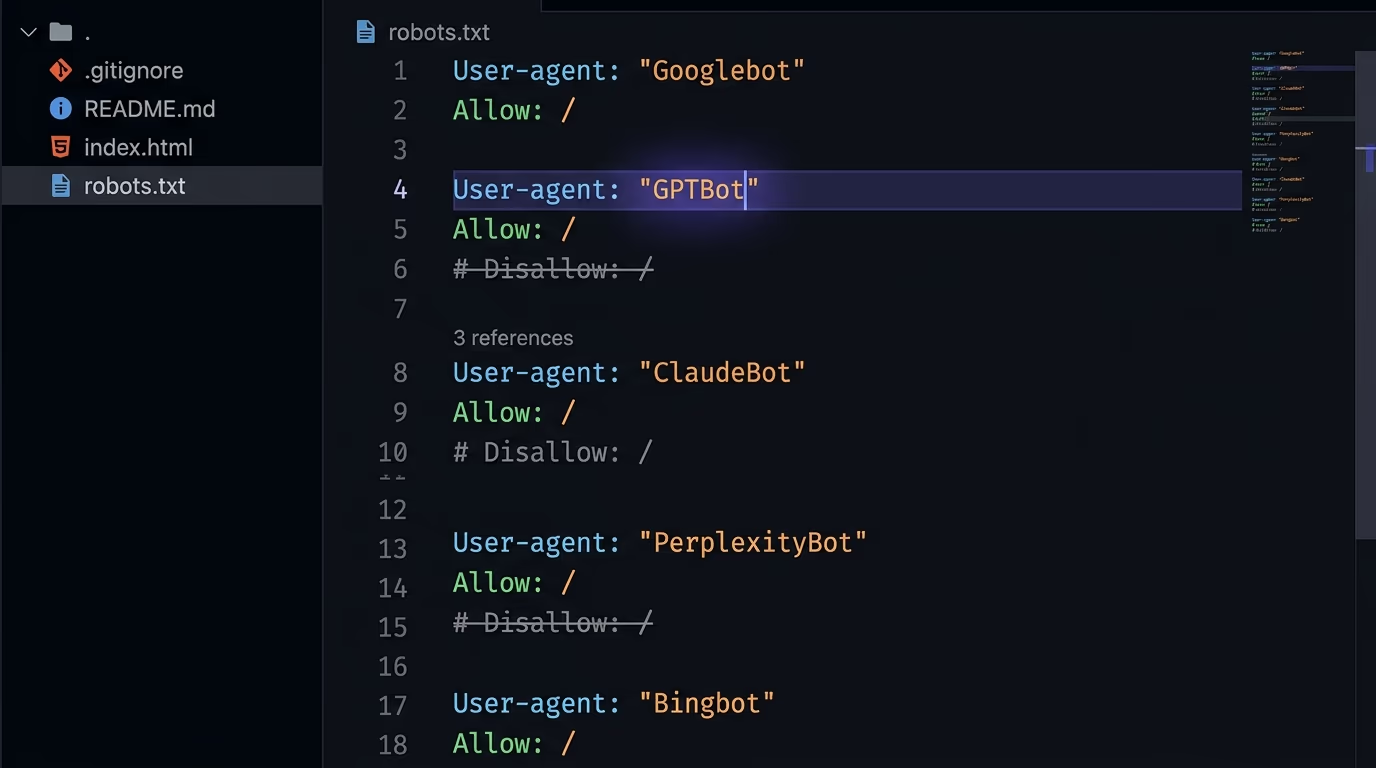
Then there are crawlers specific to other AI products. GPTBot crawls for OpenAI (ChatGPT search), ClaudeBot for Anthropic, PerplexityBot for Perplexity, and Bingbot feeds Microsoft Copilot. Blocking these crawlers does not directly affect Google AI Overviews, since those come from Google’s own index, but it does block your content from appearing in ChatGPT citations, Perplexity answers, and Copilot responses. If you care about AI search visibility beyond just Google, you want all of these crawlers to be able to reach your content.
The practical step is to open your robots.txt and search for these user agents: Googlebot, GPTBot, anthropic-ai, ClaudeBot, PerplexityBot, Bingbot. If any of them have a Disallow: / rule, that crawler can’t reach anything on your site. If you have path-specific disallows, make sure they aren’t accidentally blocking your content pages.
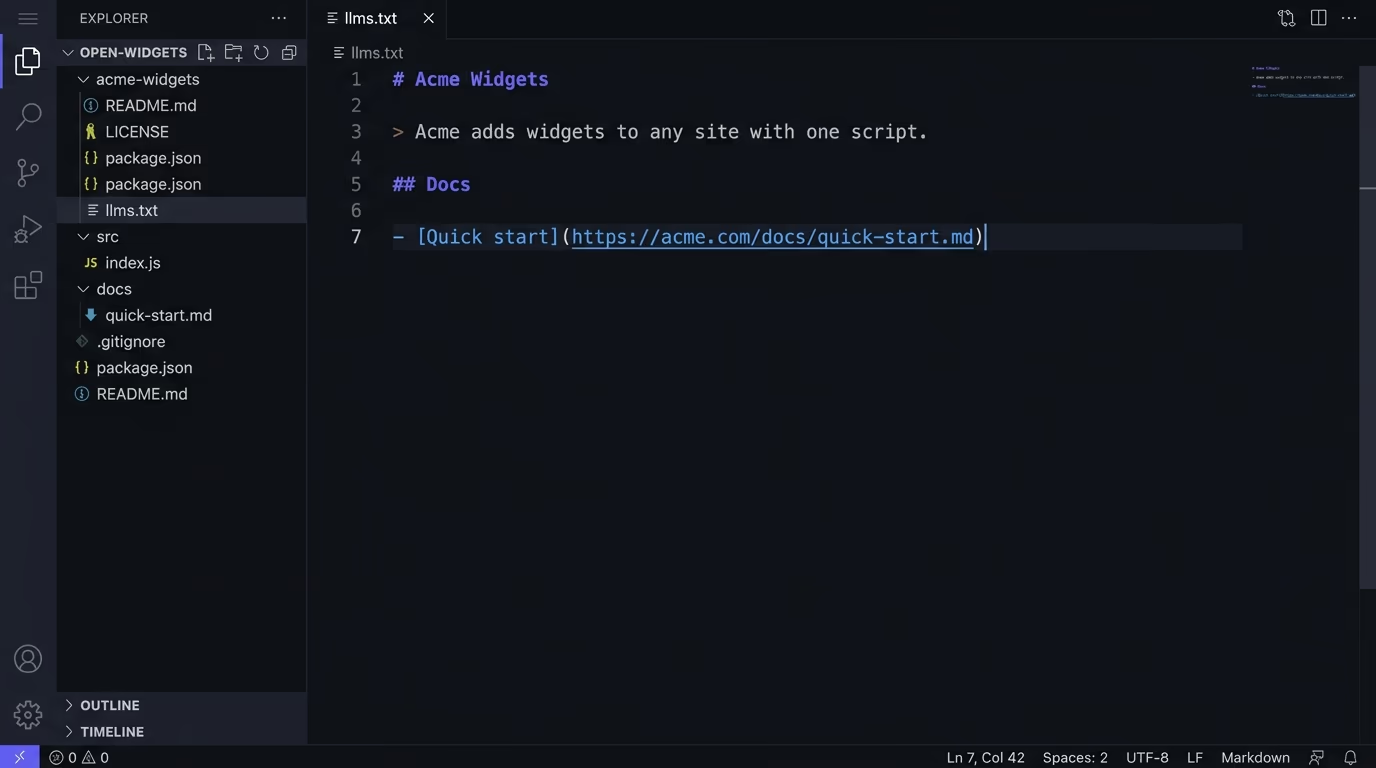
For a broader picture of which AI systems can see your site, you can check your AI visibility and consider adding an llms.txt file that gives AI models a curated map of your most important pages. It isn’t a confirmed ranking factor, but it’s a low-effort signal that some AI tools are starting to check.
Does your content answer the question directly?
Google’s AI Overview system needs to extract a clear, quotable answer from your page. If your content talks around the topic without stating the answer plainly, the model will pick a page that does.
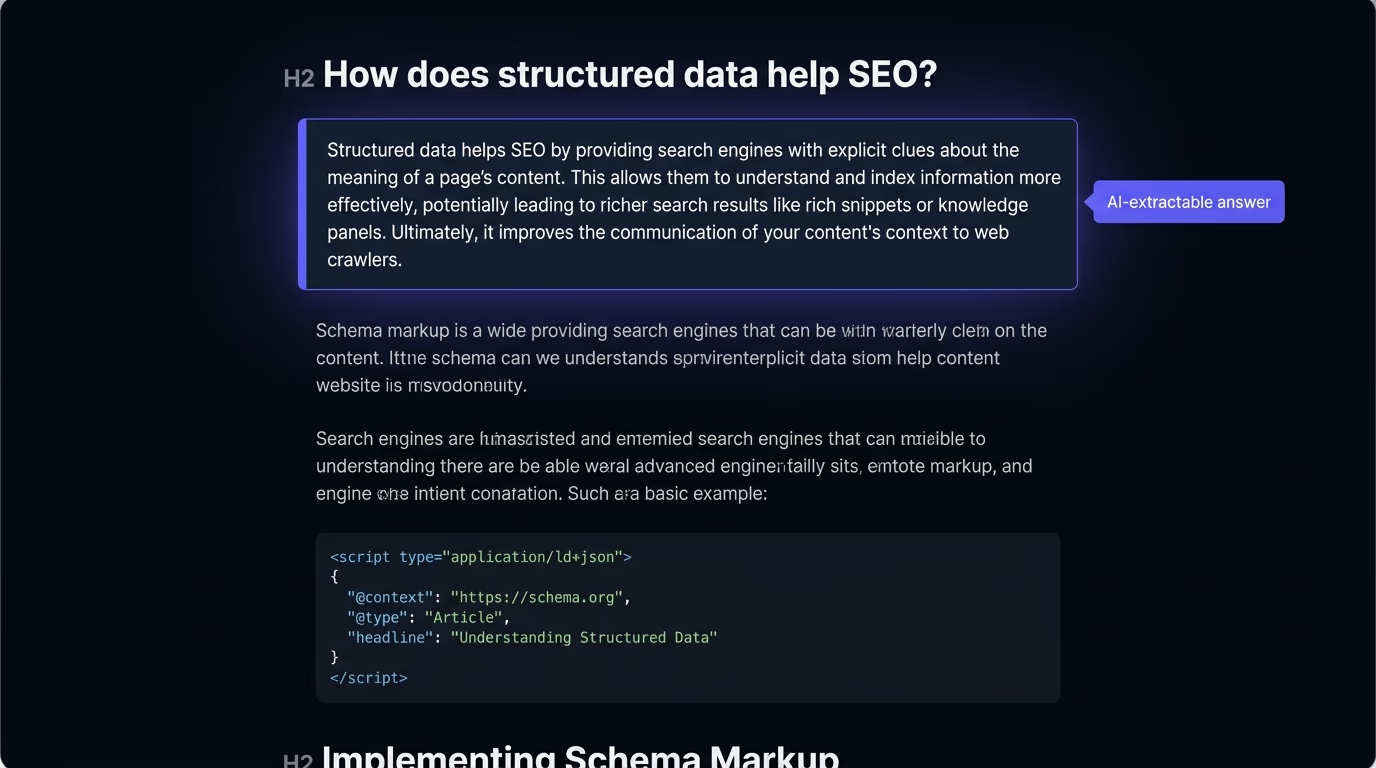
The strongest pattern for AI Overview inclusion is simple. Phrase your H2 headings as the questions your audience actually asks, then make the first one or two sentences after each heading a direct, complete answer to that question. The rest of the section can provide context, examples, and nuance, but the answer comes first. This is the same structure that wins featured snippets, and it works for AI Overviews for the same reason: the model can grab a passage that stands on its own.
Query length plays a role here too. Conductor found that 60.85% of long-tail queries (four words or more) trigger AI Overviews, while short, generic queries are much less likely to. That means the content most likely to get cited is content that answers specific questions with specific answers, not broad overview pages that touch everything lightly.
A practical test is to take your page’s H2 headings and ask yourself whether each heading is a question a real person would type into Google. Then read the first sentence after that heading and ask whether it answers that question without needing any other sentence to make sense. If the answer requires reading three paragraphs before it arrives, move the answer up.
Writing for AI extraction doesn’t mean dumbing down your content or stripping out depth. It means structuring the page so the direct answer comes first and the supporting detail follows, rather than burying the answer deep in a section where the model may not find it.
How does structured data help you get cited?
Structured data (JSON-LD schema markup) doesn’t guarantee you’ll appear in AI Overviews, but it gives Google explicit, machine-readable signals about what your page is, who wrote it, and what questions it answers. Those signals make it easier for the AI model to match your content to the right queries and cite the right passages.
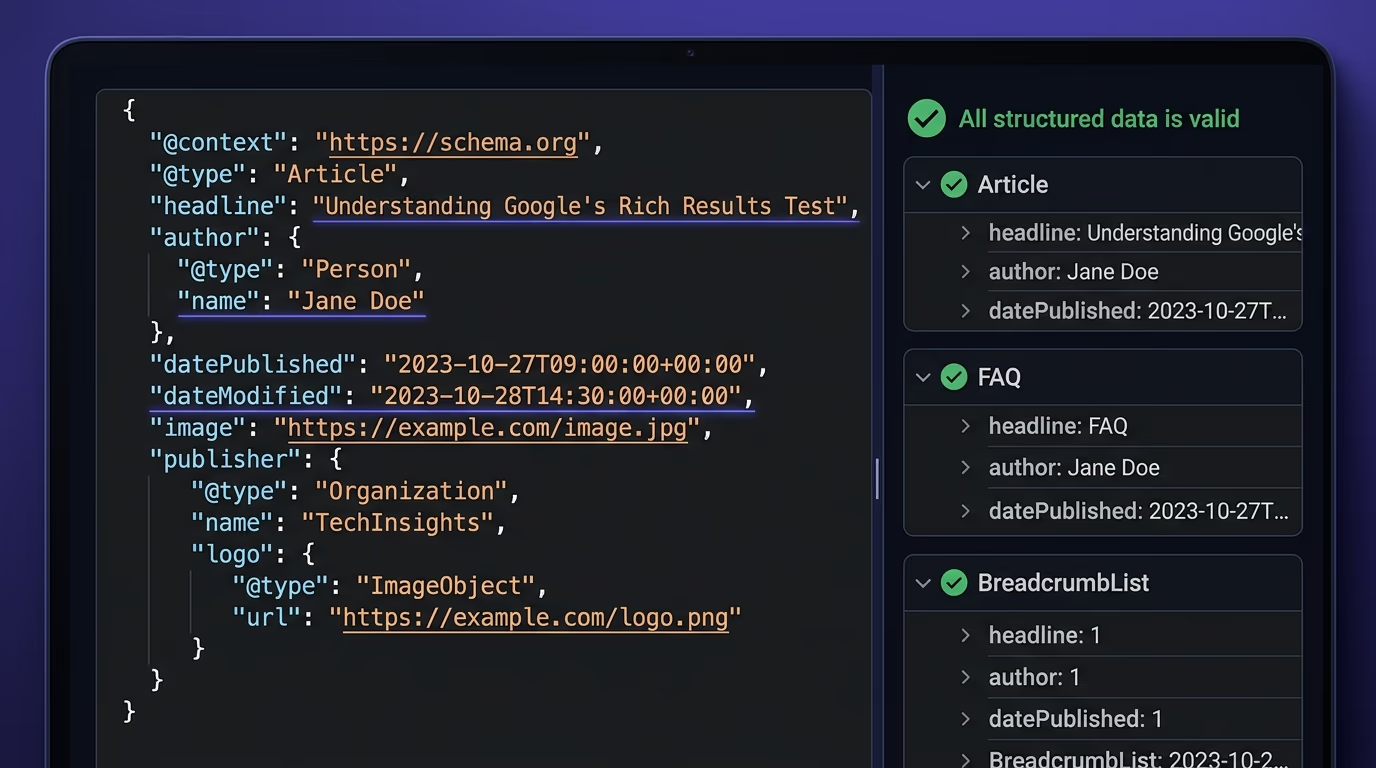
The three most useful schemas for AI Overview visibility are Article, FAQ, and HowTo. Article schema tells Google this is a piece of content with a specific author, publish date, and headline. FAQ schema marks up specific question-and-answer pairs so Google can extract them individually. HowTo schema does the same for step-by-step instructions. For the priority order across every type and the rendering rule that keeps your markup readable to AI, see schema markup for AI.
Here’s what a minimal Article schema looks like for a blog post:
{
  "@context": "https://schema.org",
  "@type": "Article",
  "headline": "How to Rank in AI Overviews",
  "author": {
    "@type": "Person",
    "name": "Your Name"
  },
  "datePublished": "2026-07-06",
  "dateModified": "2026-07-06"
}
FAQ schema is just as straightforward. Each question-and-answer pair becomes a Question entity with an acceptedAnswer:
{
  "@context": "https://schema.org",
  "@type": "FAQPage",
  "mainEntity": [{
    "@type": "Question",
    "name": "How do I rank in AI Overviews?",
    "acceptedAnswer": {
      "@type": "Answer",
      "text": "Your direct answer here."
    }
  }]
}
Beyond schema type, the author and dateModified fields matter more than people realize. SE Ranking found that 55.61% of AI Overview citations come from content published in 2024 or 2025 (and the 2026 share is growing), which means the AI model visibly prefers recent content. Keeping your dateModified current, and having a real author attached to the page, are small signals that compound over time.
The validation step is easy: paste your URL into Google’s Rich Results Test and confirm your schema parses without errors. Missing or malformed schema is invisible to you but obvious to Google.
What role does E-E-A-T play in AI Overview selection?
E-E-A-T stands for experience, expertise, authoritativeness, and trustworthiness. Google’s quality raters use these criteria to evaluate pages, and the AI Overview system uses similar signals to decide which sources deserve to be cited in a synthesized answer. The bar is higher for AI Overviews than for organic ranking, because Google is putting its name on the synthesized answer and linking your page as the source.

Experience means the content shows signs that the author has actually done the thing they’re writing about, not just researched it. A security article that includes “when I audited a client’s Supabase instance, the RLS policies were wide open” carries more weight than one that lists best practices without any indication the writer has applied them. First-person observations, specific results, and screenshots of real outcomes all count.
Expertise is about qualifications and depth. Author bylines with real names, bios that explain why this person is qualified to write on this topic, and links to their other published work help Google’s systems confirm that the page isn’t anonymous content-farm output. If your blog posts don’t have author pages with actual credentials, that’s a relatively simple thing to add.
Authoritativeness comes from external signals: backlinks from reputable sites, mentions in press or industry publications, and a site that’s recognized in its space. This is the hardest signal to build quickly, but it’s worth knowing that it matters because it explains why newer sites sometimes struggle to get cited even when their content is strong.
Trustworthiness ties the other three signals together. Accurate facts, cited sources, clear contact information, a secure (HTTPS) site, and a privacy policy all contribute. For your money or your life (YMYL) topics, the trust bar is especially high, but even for general informational content, pages that look sloppy or anonymous get passed over.
The practical action here is to audit your content pages for these specific things: does each article have a named author with a bio and credentials? Are the facts cited or verifiable? Does the site have an about page, contact information, and HTTPS? These aren’t abstract quality signals, they’re concrete things the AI model’s quality filtering can detect.
How can you track your AI Overview performance?
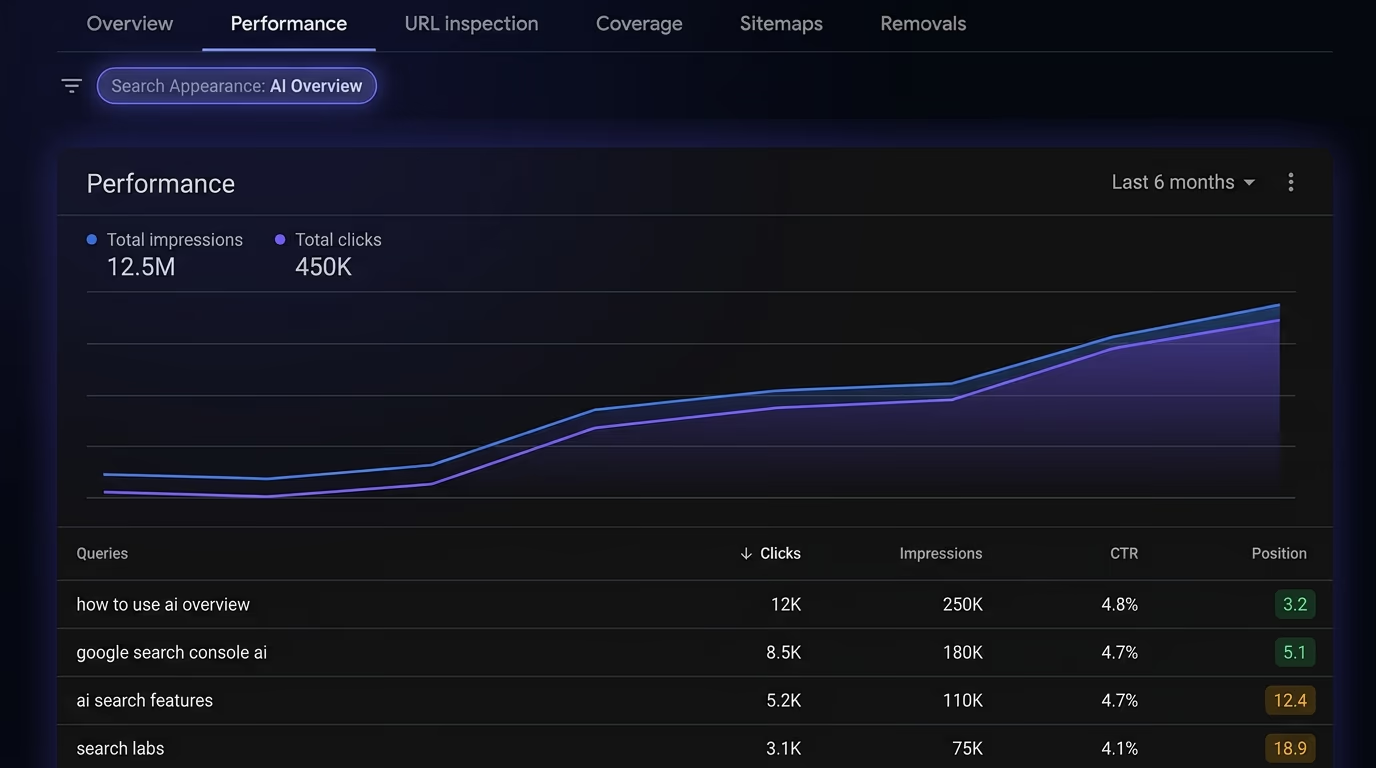
You can’t optimize what you don’t measure, and tracking AI Overview appearances is still harder than tracking organic rankings. Google Search Console added an AI Overview filter in its Performance report, which is the most reliable free source. Filter by “Search Appearance” and look for the “AI Overview” label to see which queries show your site in an AI Overview and how many impressions and clicks those generate.
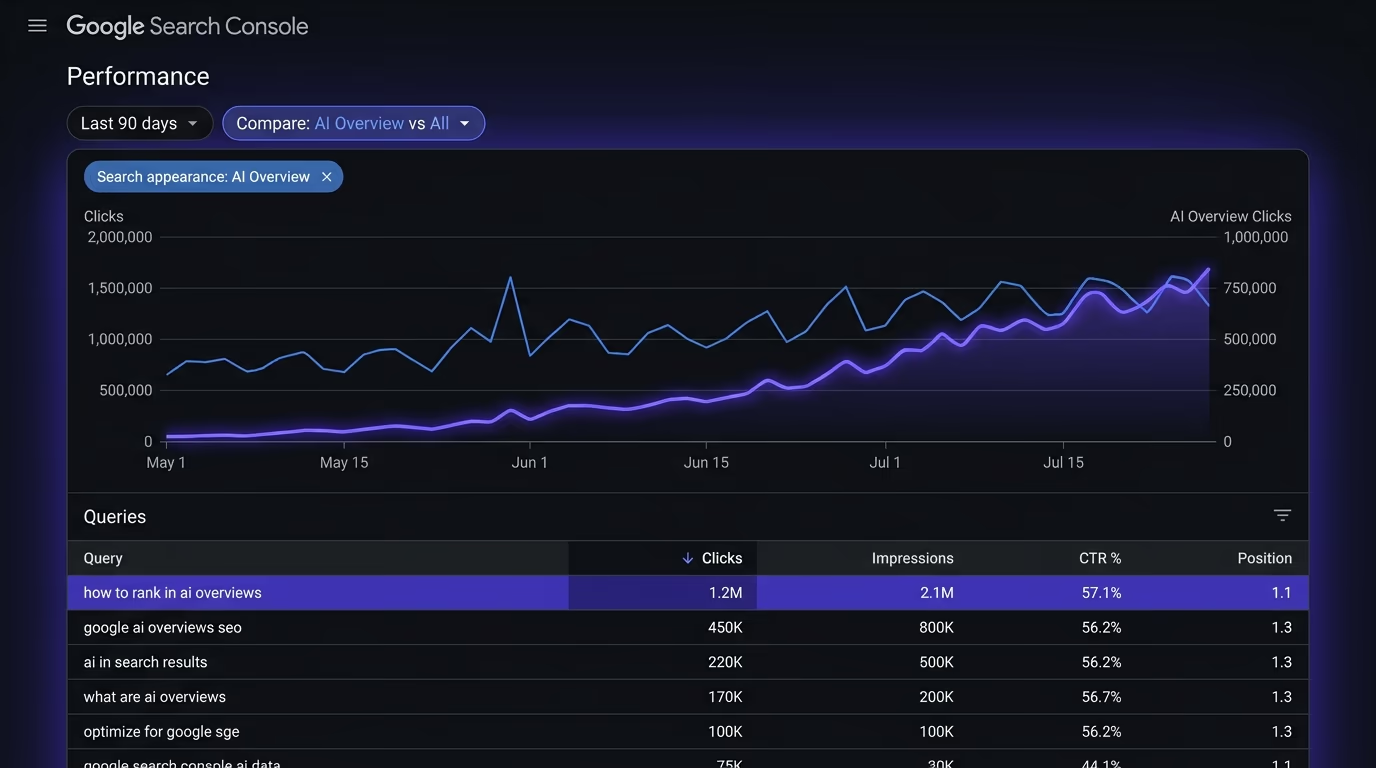
The limitation of Search Console is that it tells you where you appeared, not why. It won’t show you what passage Google cited or which competitor appeared alongside you. For that, third-party tools like SE Ranking, Ahrefs, or Semrush offer AI Overview tracking features that monitor specific keywords and show whether an AI Overview appeared, which URLs were cited, and what the AI-generated text looked like.
Manual spot-checking is still worth doing. Pick your ten most important informational queries, search them in an incognito window (AI Overviews can be personalized), and note whether your content appears. If a competitor is being cited for a query you rank for organically, compare their page structure to yours. Often the difference is that their page leads with a direct answer while yours buries it, or they have FAQ schema while you don’t.
A pattern worth watching is how your AI Overview appearances correlate with your organic position. SE Ranking’s data shows 70% of their pages featured in AI Overviews also ranked in the organic top 10, which confirms that improving your organic position remains the single biggest lever. If you’re stuck between positions 8 and 15 for a query that triggers AI Overviews, pushing into the top 5 organically will usually pull you into the AI Overview citation list as well.
Run a scan and find what’s holding you back
Everything in this article comes down to three things: your content needs to rank organically, it needs to be structured so Google can extract clear answers, and nothing should be silently blocking access. Most sites have gaps in at least one of these areas, and the gaps are often invisible without a proper audit.
Amabrik’s SEO/AEO scanner checks all of them in one pass. It crawls your pages and scores both traditional SEO health (titles, meta descriptions, headings, broken links, canonical tags) and AEO readiness (structured data, AI crawler access, content depth, heading structure). Every issue comes with a plain-English explanation and a copy-paste AI fix prompt you can hand to Claude, ChatGPT, or Cursor to get the fix applied in minutes.
If you’ve read this far and aren’t sure where your own site stands, run the scan and work through the report. The combination of organic ranking improvements and AI-readiness fixes is what actually gets your content cited in AI Overviews, and a scan tells you exactly which fixes to prioritize.
Start by making sure your page already ranks in the organic top 10, since over 90% of AI Overview citations come from those results. Then verify that Google's AI crawlers can reach your content, add Article and FAQ schema markup, and lead each section with a direct answer to the heading's question. Pages that are well-structured, factually accurate, and backed by clear E-E-A-T signals get cited most often.
In most cases, yes. Research from SE Ranking found that 92% of AI Overview citations come from domains already in the organic top 10. Pages stuck on page two or deeper occasionally appear, but it is rare. Improving your organic ranking is the single strongest lever for AI Overview visibility.
Informational and question-based queries trigger AI Overviews most often, especially longer queries of four or more words. Simple navigational searches, single-word lookups, and sensitive YMYL topics in health or finance are far less likely to receive one.
Blocking general web crawlers like Googlebot will prevent you from being indexed entirely, which removes you from AI Overviews. Blocking AI-specific crawlers like GPTBot or ClaudeBot affects other AI search products but does not directly affect Google AI Overviews, since those are generated from Google's own index.
Structured data doesn't guarantee inclusion, but it helps Google understand your content type, authorship, and the questions you answer. Article, FAQ, and HowTo schemas give Google clear signals about what information your page provides, which makes it easier to cite specific passages.
Run an SEO/AEO scan that checks your structured data, heading structure, AI crawler access, and content depth. Amabrik's SEO/AEO scanner covers all of these in a single report, scoring both traditional SEO and AI-engine optimization, with a fix prompt for every issue it finds.