POPIA Compliance for South African Websites
POPIA compliance for websites: whether South Africa's privacy law applies to you, the eight conditions, the cookie consent rules, and the real fines.

POPIA is South Africa’s data protection law, and complying with it means having a lawful reason to process personal information, telling people what you collect and why, getting valid consent where you rely on it, keeping the data secure, and letting people see or delete what you hold. It applies to any business, called a responsible party under the Act, that is based in South Africa or processes personal information using means inside the country, and that pulls in plenty of websites run from abroad. For most sites the real work is small: a clear privacy notice, a cookie banner that holds tracking scripts until the visitor agrees, and a way to answer data requests.
Most POPIA guides are written by law firms for corporate privacy teams, or by vendors selling one tool. This one is written for the person who runs the website. It covers whether the law reaches you, the eight conditions every responsible party has to meet, what South Africa’s regulator expects around cookies and online tracking, how POPIA compares to the GDPR, the fines that make people nervous, and a checklist you can work through on your own.
What is POPIA, and what does compliance mean?
POPIA is the Protection of Personal Information Act 4 of 2013, South Africa’s law for how organisations handle personal information, and compliance means following its rules every time your site collects, uses, or shares that data. Parliament signed it in 2013, its main provisions started on 1 July 2020, and after a one year grace period it became fully enforceable on 1 July 2021.
Personal information under POPIA is any data about an identifiable person. That covers the obvious things like a name, an email address, an ID number, or a phone number, and the less obvious ones like an IP address, a cookie identifier, device details, and location. South Africa adds a twist that surprises most people: POPIA also protects the information of a juristic person, meaning a company or a trust, so business contact details sit under the law too. Some categories count as special personal information, including a person’s religion, race, health, biometrics, or sexual life, and those carry stricter rules and usually need express consent.
The Information Regulator is the body that enforces all of this. It takes complaints, runs assessments, issues codes of conduct, and hands down enforcement notices when an organisation falls short. Since July 2021 it has been active rather than theoretical, so the risk stopped being hypothetical some time ago.
Consent is the thread running through the Act, but it is not the whole story. POPIA lets you process personal information on several grounds, and consent is only one of them, which trips up teams who assume every cookie needs a yes. Get the grounds right and the rest of compliance follows.
Who has to comply with POPIA?
POPIA applies if your business is based in South Africa, or if it is based elsewhere but processes personal information using means located in the country, so most South African sites and many foreign ones with real operations there are in scope. Unlike the GDPR, which follows an EU resident wherever the company sits, POPIA’s trigger is where the business and its processing sit, not only where the visitor happens to live.
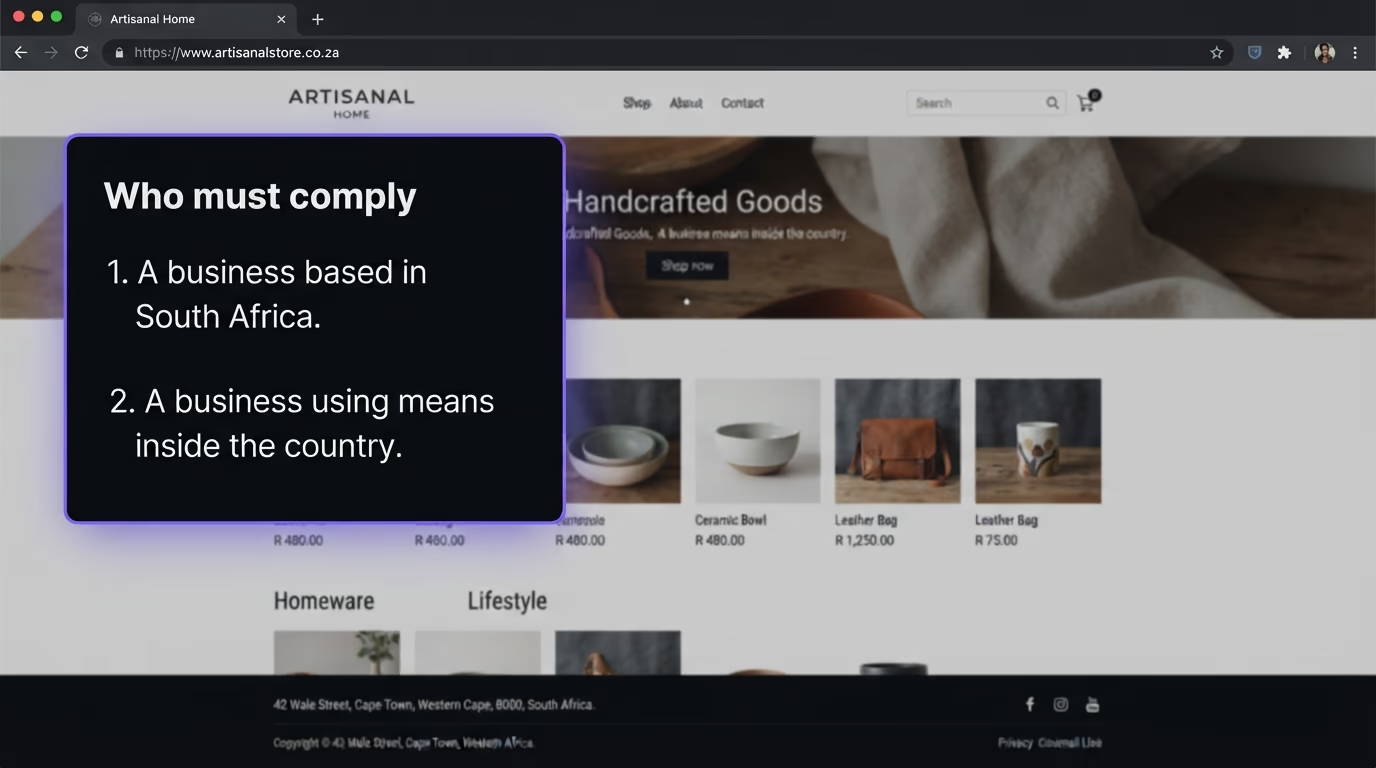
The Act sets a two limb test in section 3. A responsible party is caught if it is domiciled in South Africa, or if it is not domiciled there but makes use of automated or manual means situated in the country, unless those means only forward information through it. A responsible party is whoever decides why and how personal information gets processed, which is the equivalent of a controller under the GDPR. The company you hand data to for processing, an email platform or an analytics provider, is an operator, the equivalent of a processor, and using an operator inside South Africa can pull you in as well.
In practice that means a Cape Town shop, a South African SaaS with local servers or staff, and a global business running an office in Johannesburg are all clearly inside. A purely foreign site with no operations in the country and only the odd South African visitor sits closer to the edge, and legal opinion there is genuinely split. The safe reading is simple: if you market to South African customers and collect their data, treat yourself as a responsible party and build for POPIA. If you already handle the CCPA for California users or the LGPD for Brazil, this is the South African layer of the same job.
What are the eight conditions for lawful processing?
POPIA is built on eight conditions for the lawful processing of personal information, and meeting all eight is what compliance means in practice: accountability, processing limitation, purpose specification, further processing limitation, information quality, openness, security safeguards, and data subject participation. Work through them and you cover the statute without reading it.
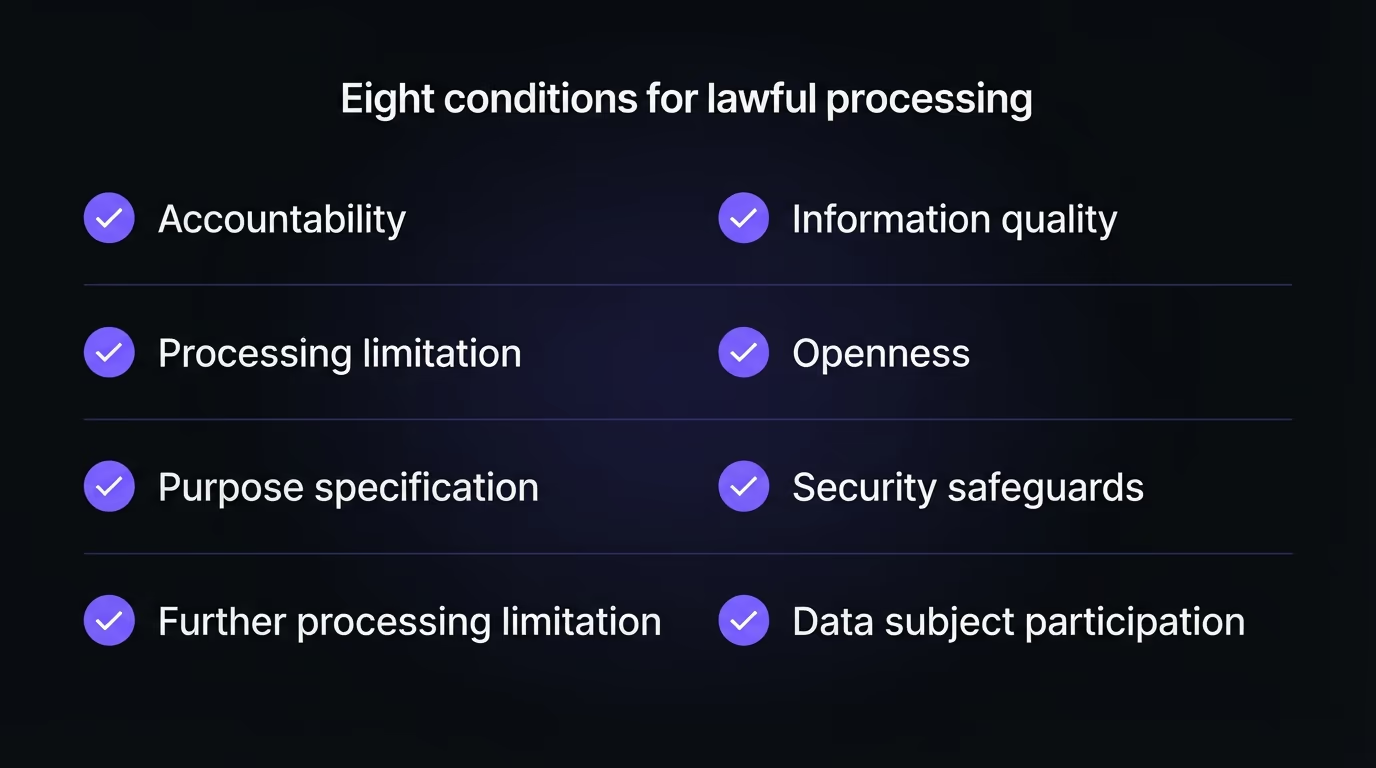
The first cluster is about why and how you collect. Accountability puts one person in charge of your compliance, the information officer. Processing limitation says you collect lawfully and only what you need, with a valid ground, and where you can, straight from the person concerned. Those grounds are wider than consent alone. You can also rely on a contract with the person, a legal duty, protecting their vital interests, a public law duty, or your own legitimate interest, which is why not every cookie or form needs a tick box. Purpose specification asks you to fix a clear reason before you collect and to tell the person what it is. Further processing limitation stops you quietly reusing that data for something unrelated later.
The second cluster is about keeping the data honest and safe. Information quality means you keep records accurate and current. Openness means you document what you process and publish a privacy notice people can actually read, and it is under this condition that the information officer registers with the Regulator. Security safeguards ask for real technical and organisational protection and, when something goes wrong, breach notification. Data subject participation is the rights condition: a person can ask what you hold, have it corrected, or have it deleted, and you have to answer. None of the eight needs a lawyer to satisfy, and a small site can meet them with a notice, a banner, and a habit of collecting less.
Does POPIA require cookie consent on your website?
POPIA has no dedicated cookie clause, but a cookie that collects personal information, like an advertising ID or a tracking identifier, is processing under the Act, so it needs a lawful ground, and for tracking and analytics cookies that ground is almost always consent. Strictly necessary cookies that make a login or a cart work do not need consent, so the rule bites on marketing and profiling cookies, not the ones that keep the site running.
The logic behind that is short and hard to argue with. An online identifier and a location both count as personal information under POPIA, so a cookie that carries them is processing data about a person. If you cannot point to another ground, and for advertising or cross site tracking you usually cannot, then you fall back to consent. POPIA defines consent as a “voluntary, specific and informed” agreement, which means the person has to understand what they are agreeing to and choose it freely, before the tracking starts.
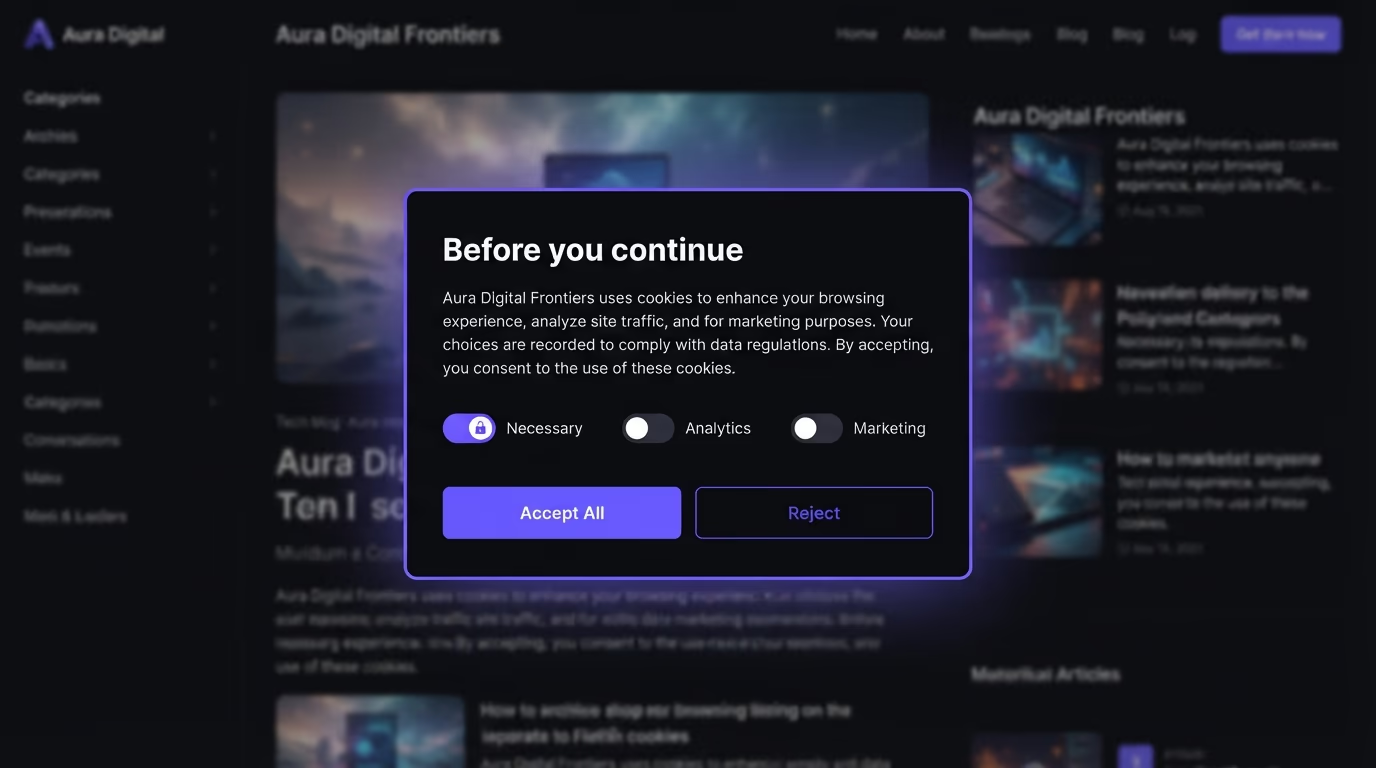
That definition rules out a couple of common setups. A banner that assumes yes unless the visitor navigates away does not give you consent that was freely chosen, and it gives you no record to show the Regulator later. Boxes ticked by default fail for the same reason. What works is a banner that discloses your tracking in plain words, holds the tracking scripts until the visitor makes a choice, offers a genuine reject, and stores what they picked. A cookie consent widget that gates declared scripts does exactly this, and it keeps a consent log you can produce if anyone asks. If you built the banner to the standard of a good cookie consent setup for the GDPR, you already clear the POPIA bar.
What must a POPIA cookie banner include?
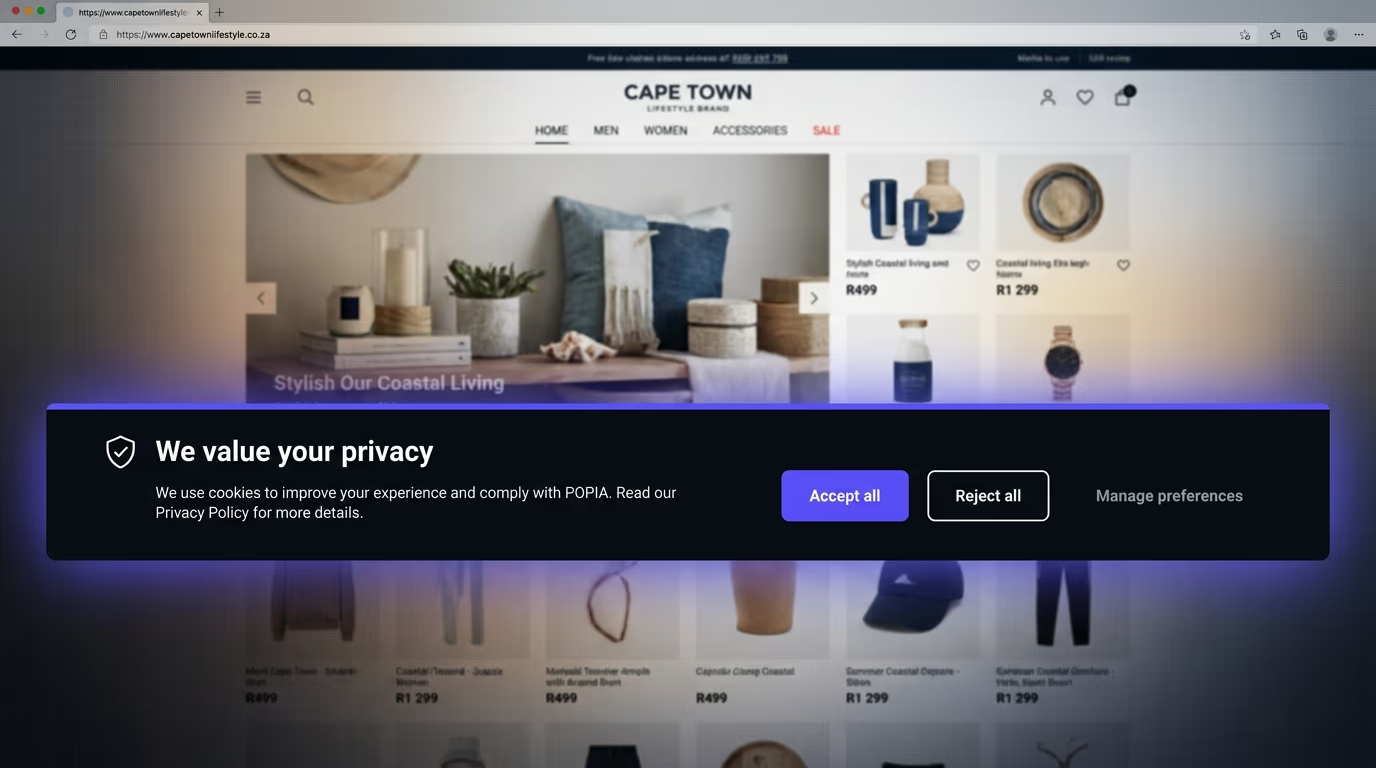
A POPIA friendly cookie banner shows before any tracking cookie loads, states in plain words what you track and why, and gives an Accept and a Reject choice that carry equal weight, plus a way to manage categories. The goal is a record you can produce, consent that was voluntary, specific, and informed, captured before the tracking started, with the date and the choice stored.
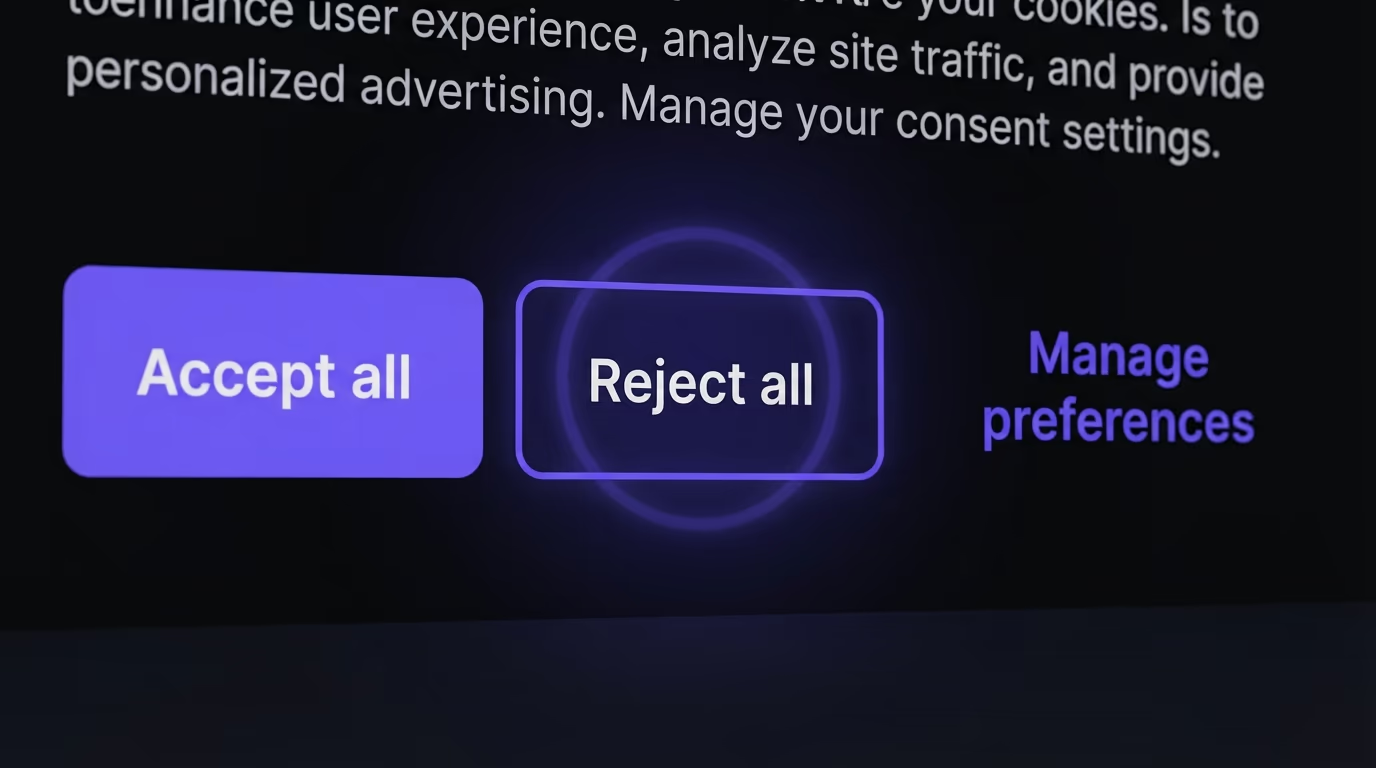
Prior blocking is the piece people skip. If your analytics or advertising scripts fire the moment the page loads, you have already processed personal information before anyone agreed, and no banner design fixes that after the fact. The scripts have to wait for the choice. Alongside that, the Accept and Reject buttons need equal prominence, because burying reject behind an extra click or greying it out is the kind of nudge the Regulator treats as invalid consent. A “manage preferences” option then lets a visitor turn analytics on but marketing off, category by category.
The evidence matters as much as the buttons. Because consent has to be informed and provable, you want a log that stores each choice with a timestamp, so you can answer the Regulator or a data subject without guessing. Amabrik’s cookie widget keeps a 13 month consent log with CSV export, which is the record POPIA effectively asks you to hold. If you run Google tags, wire the banner into Google Consent Mode v2 so those tags respect the choice too. Set it up once and the same banner covers your South African visitors and your European ones.
What are the penalties for breaking POPIA?
POPIA is enforced by the Information Regulator, and the headline penalty is a fine of up to R10 million or a prison sentence of up to 10 years for the most serious breaches. Lesser offences carry up to R1 million or a year, and the Regulator can also issue an enforcement notice that forces you to change how you process data, or stop.
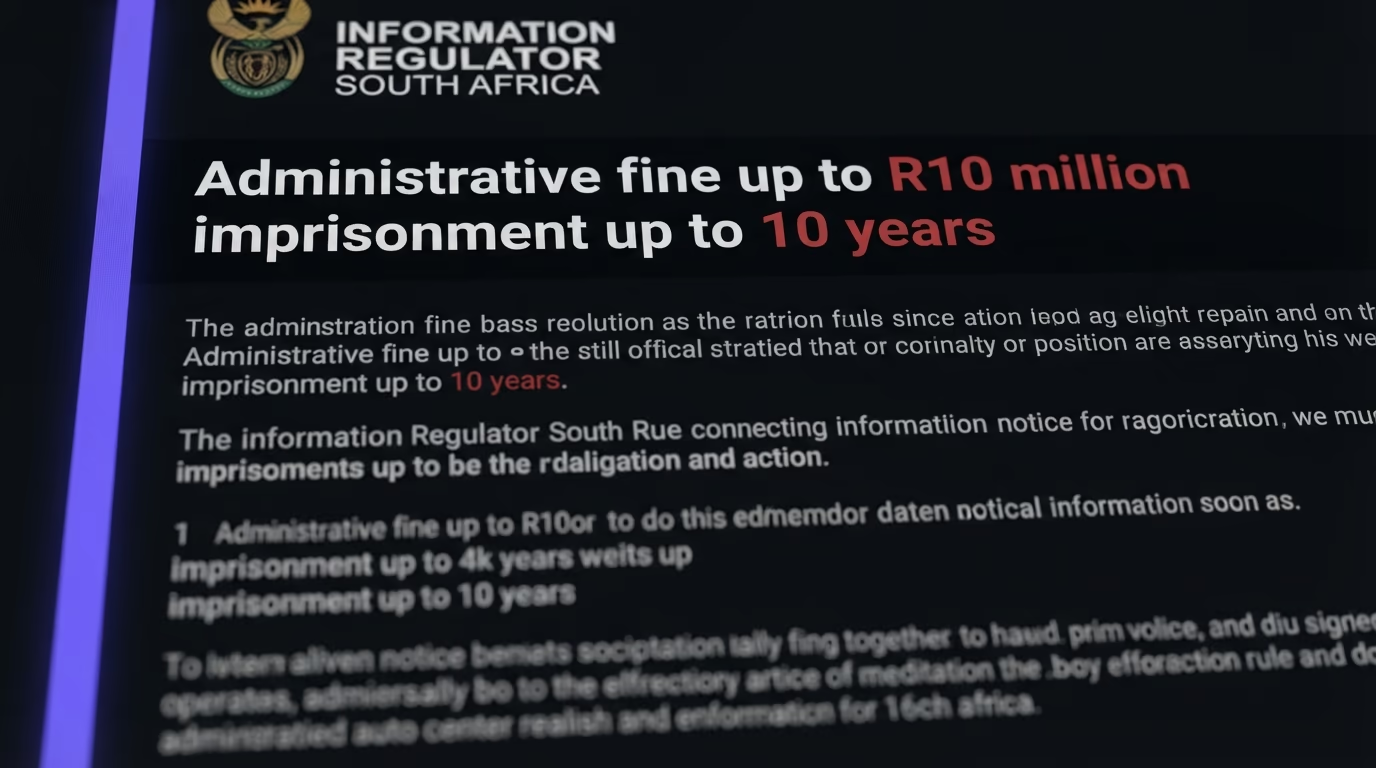
The path to a fine usually runs through an enforcement notice rather than a surprise penalty. A person complains, the Regulator investigates or assesses your practices, and if it finds a problem it tells you to fix it by a set date. Ignoring that notice is the offence that draws the heaviest fines, so the organisations that get hit hardest are the ones that were warned and did nothing. On top of the Regulator’s powers, a data subject can take you to civil court for damages, and POPIA lets them claim even without proving you meant to cause harm, which lowers the bar compared with an ordinary lawsuit.
Breach notification is the duty most sites forget until it is too late. When you have reasonable grounds to believe an unauthorised person accessed personal information you hold, you have to notify the Information Regulator and the people affected as soon as reasonably possible. The notice has to give people enough to protect themselves. Skip it, and the failure to report can cost more than the breach did, which is the same lesson every modern privacy law teaches.
POPIA vs GDPR: what is actually different?
POPIA and the GDPR share the same backbone, a lawful ground for processing plus real rights for the individual, so a GDPR ready site is most of the way to POPIA. The differences that matter are territorial scope, the way consent is framed, the size of the fines, and one South African quirk, which is that POPIA also protects the personal information of companies, not only living people.
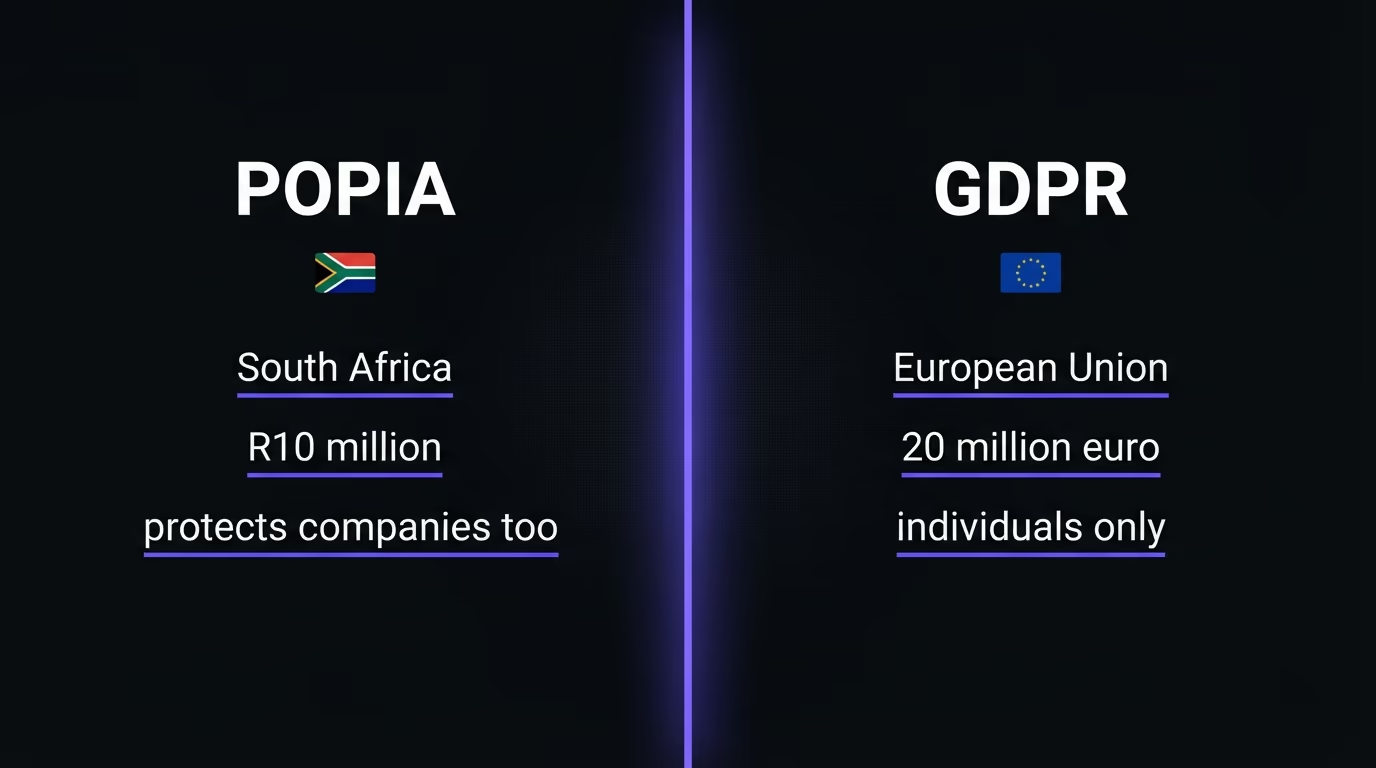
The table below lays out where the two laws diverge for a typical website.
| Area | POPIA (South Africa) | GDPR (EU) |
|---|---|---|
| Who it protects | People and, unusually, juristic persons like companies and trusts | Living individuals only |
| Territorial trigger | Responsible party based in South Africa, or using means in the country | Any organisation processing EU residents’ data |
| Lawful grounds | Consent plus five others, including contract, legal duty, and legitimate interest | Six lawful bases, including consent |
| Cookies | Tracking cookies process personal data, so they need a ground, usually consent | Tracking cookies need prior opt in |
| Maximum penalty | R10 million or up to 10 years imprisonment | Up to 20 million euro or 4 percent of global turnover |
| Regulator | Information Regulator, fines and enforcement notices | Data protection authorities that fine directly |
The takeaway is that a GDPR grade privacy setup covers POPIA comfortably, while the reverse leaves gaps. The surprise for most teams is the juristic person point. Because a company’s contact details are protected, B2B marketing data in South Africa gets the same care as consumer data, so a bought list of company emails carries real risk. The other practical gap is enforcement style. A GDPR authority can fine you straight away, while South Africa’s Regulator tends to warn first through an enforcement notice, which changes how the risk feels day to day without making it smaller.
How to make your website POPIA compliant
Making a website POPIA ready comes down to a handful of concrete jobs: publish a real privacy notice, register an information officer, put up a cookie banner that logs consent, keep your forms lean, and have a plan for data requests and breaches. None of them need a law degree, and doing them in order covers the eight conditions.
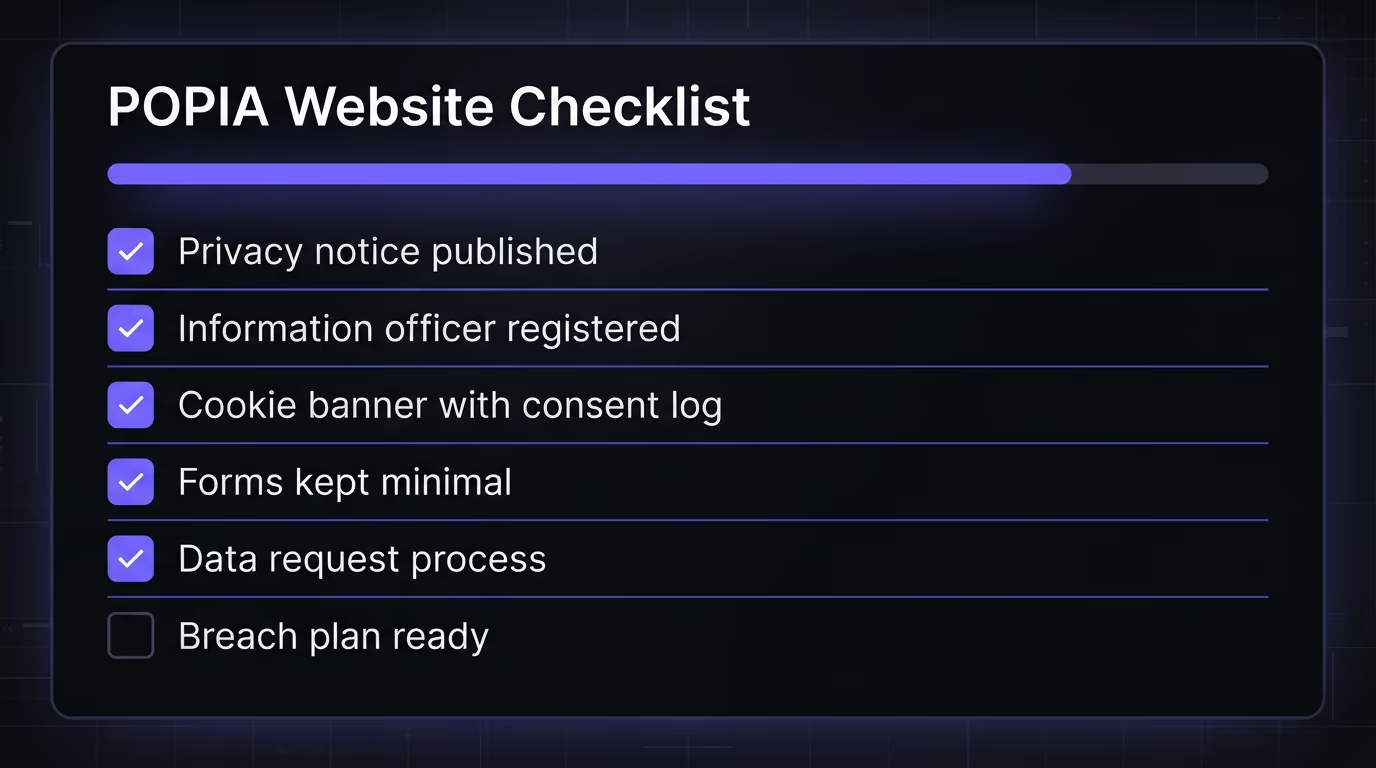
Start with a plain privacy notice that names what you collect, why, who you share it with, how long you keep it, and how someone reaches you and the Regulator. Then register your information officer with the Information Regulator through its online portal, because by default the role sits with the head of the business, and it has to be registered before that person can act. Map your data next by walking the site and listing every place personal information enters: contact and signup forms, analytics, advertising pixels, a chat box, an embedded feed, a booking tool. You cannot protect or delete what you never wrote down.
With the map in hand, fix consent at the front of the site. Put up a cookie banner that holds tracking scripts until the visitor agrees, offers a genuine reject, and records the choice with a date. Keep your forms lean by asking only for the fields you truly use, which shrinks the pile of data you have to guard. Amabrik’s forms pass each submission straight to your CRM or inbox without storing it, so nothing extra sits on a server waiting to leak. Direct marketing needs its own attention, because section 69 of POPIA asks for prior consent before you send unsolicited electronic messages to a prospect, with a narrow exception for existing customers, so wire the opt in into your signup and keep the record.
Finish with the steps that keep a person in the loop. Set up a monitored privacy email and a simple internal way to find, export, or delete a person’s record, which covers the participation rights. Pair it with a short breach plan that names who assesses the risk, who notifies the Regulator and the people affected, and where you log it. Finally, check your operators, since your analytics, email, and hosting vendors process data on your behalf and their contracts and settings are your compliance too. A dedicated cookie and consent tool handles the banner and the log for you, which is why many teams reach for one instead of stitching together scripts, the same reason people move off heavier suites like OneTrust or Cookiebot.
Getting POPIA right without a legal team
POPIA rewards the site that is honest about what it collects and careful about how it asks, and it goes hardest on the one that ignores a warning. The work is mostly clarity: say what you gather, gather less, ask before you track, and be ready when someone wants to see or delete their record.
For a typical website the load is lighter than the statute looks. Assume the law applies if your business is based in South Africa or runs means there, meet the eight conditions, register your information officer, get the cookie banner and consent log right, keep your forms minimal, and have a plan for requests and breaches. A cookie consent widget that gates tracking scripts and records every choice does the heaviest lifting, and it leaves you with a clean record to show if the Information Regulator ever asks.
POPIA is South Africa's data protection law, and compliance means following its rules every time your site handles someone's personal information. In plain terms, you need a lawful reason to collect the data, you have to tell people what you're doing and get valid consent where you rely on it, you have to keep the data secure, and you have to let people see, correct, or delete what you hold on them. It has been fully enforceable since 1 July 2021, and it is run by the Information Regulator.
It can, but the trigger is narrower than the GDPR. POPIA applies when the business, called a responsible party, is based in South Africa, or when it is based elsewhere but processes personal information using means located in the country, such as servers or staff there. Unlike the GDPR, which follows an EU resident wherever the company sits, POPIA leans on where the business and its processing sit. In practice, any business with real operations in South Africa, or one that markets to and collects data from South African customers, should treat itself as in scope.
POPIA has no dedicated cookie clause, but a cookie that collects personal information, like an advertising or tracking identifier, is processing under the Act, so it needs a lawful ground. For analytics and marketing cookies that ground is almost always consent, which POPIA says must be voluntary, specific, and informed. Strictly necessary cookies that make a login or a cart work do not need consent. So a banner that holds tracking scripts until the visitor chooses, offers a real reject, and records the choice is the workable way to meet the standard.
The Information Regulator enforces POPIA, and the most serious breaches carry a fine of up to R10 million or a prison sentence of up to 10 years. Lesser offences top out at R1 million or a year. The Regulator can also issue an enforcement notice that forces you to change or stop a processing activity, and ignoring that notice is itself the offence that draws the biggest fines. A person whose data you mishandled can sue for damages in civil court on top of that.
POPIA and the GDPR share the same backbone, a lawful ground for processing plus real rights for the individual, so a GDPR ready site is most of the way to POPIA. The differences that matter are territorial scope, the size of the fines, and one South African quirk: POPIA also protects the personal information of companies, not only living people, which changes how B2B contact data is treated. If you have already built for the GDPR, POPIA is mostly a matter of confirming the pieces are in place.
Yes. Every responsible party under POPIA has an information officer, and by default that is the head of the business, the CEO or the equivalent, unless someone else is formally designated. Before that person can act in the role, you register them with the Information Regulator through its online portal. The information officer is accountable for your compliance, from the privacy notice to breach handling, so registering one is an early item on any POPIA checklist.