AI Visibility: How to Show Up in AI Answers
AI visibility is how often ChatGPT, Perplexity, and Google AI answers cite your site. Here is how to check yours, fix the blockers, and get mentioned.

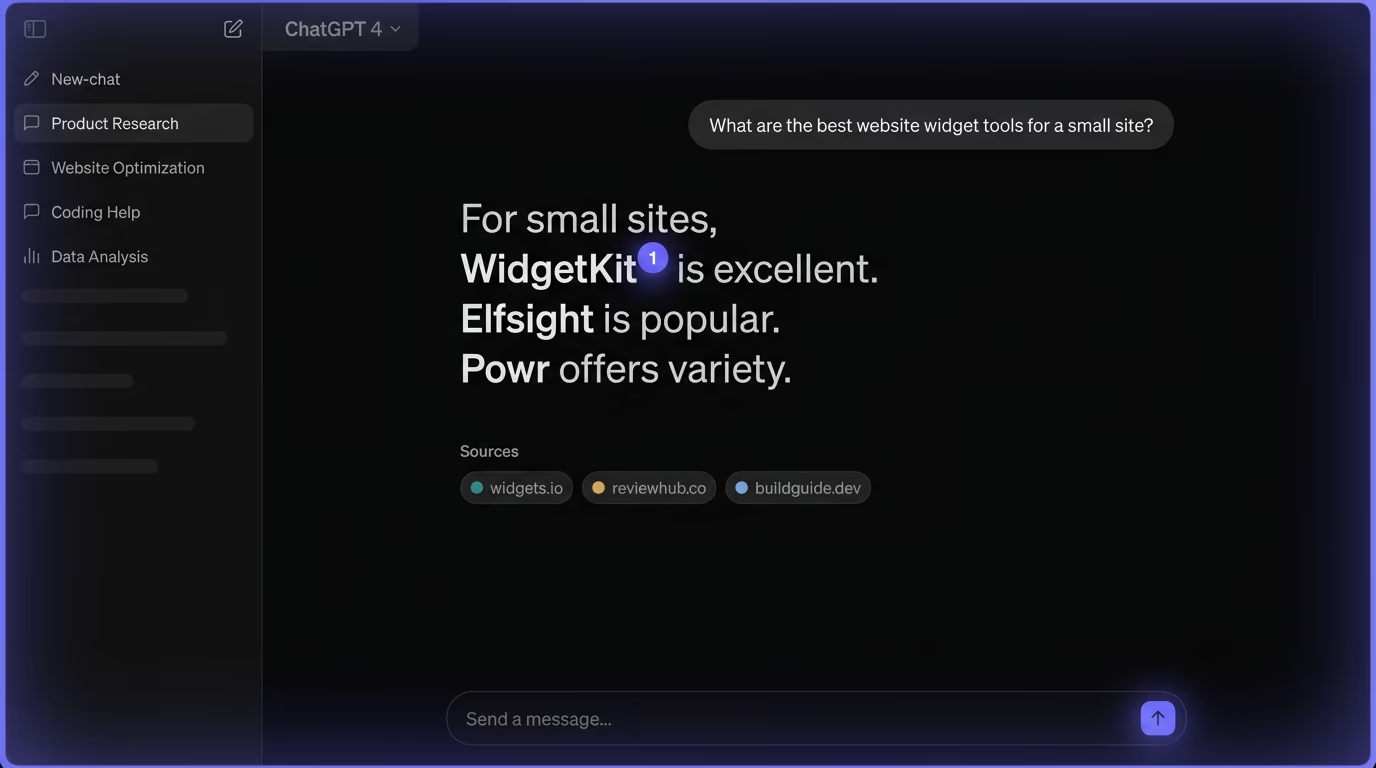
AI visibility is how often AI assistants like ChatGPT, Perplexity, and Google’s AI answers mention or cite your website when people ask questions in your field. It is the AI-era version of ranking on Google, except there is no list of ten blue links to climb. The model either names you as a source, or it leaves you out. That single difference changes how you get found, and most sites have no idea where they stand.
This article explains what AI visibility is, why it matters right now, the technical reasons most sites stay invisible to AI, and the specific fixes that get you cited. You can check and improve almost all of it yourself, for free, so the goal here is practical rather than theoretical.
What is AI visibility?
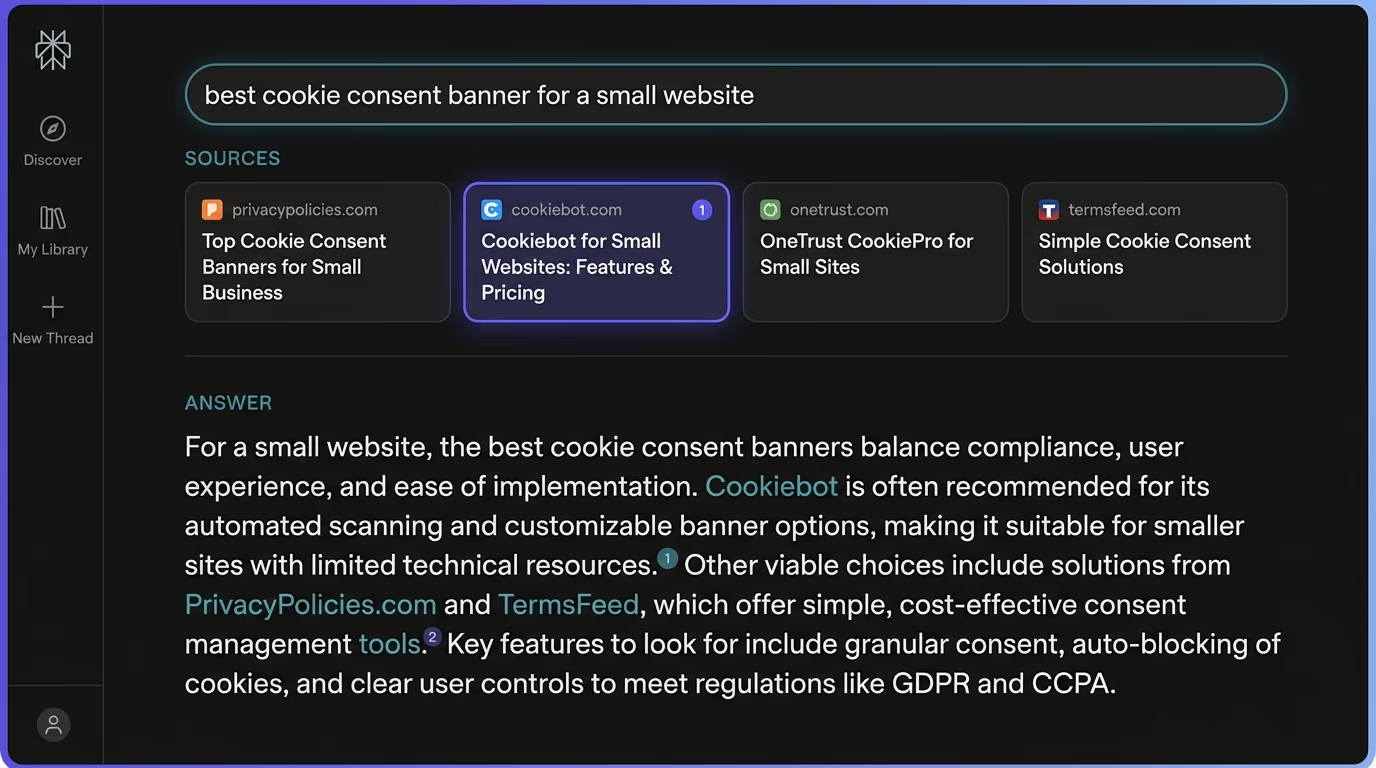
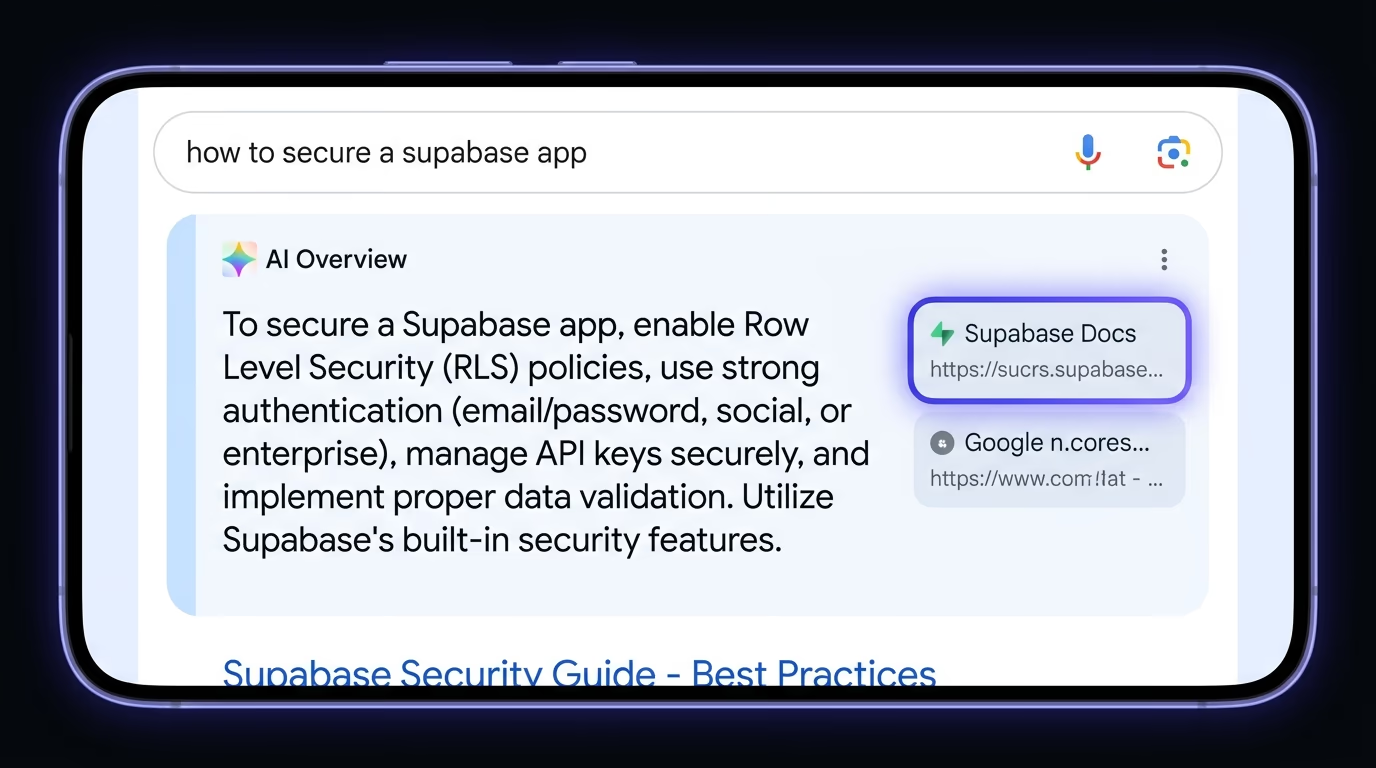
AI visibility is a measure of how present your brand and your pages are inside AI-generated answers. When someone asks ChatGPT for the best cookie consent tool, or asks Perplexity how to secure a Supabase app, the model writes an answer and pulls from a handful of sources. Whether you are one of those sources is your AI visibility.
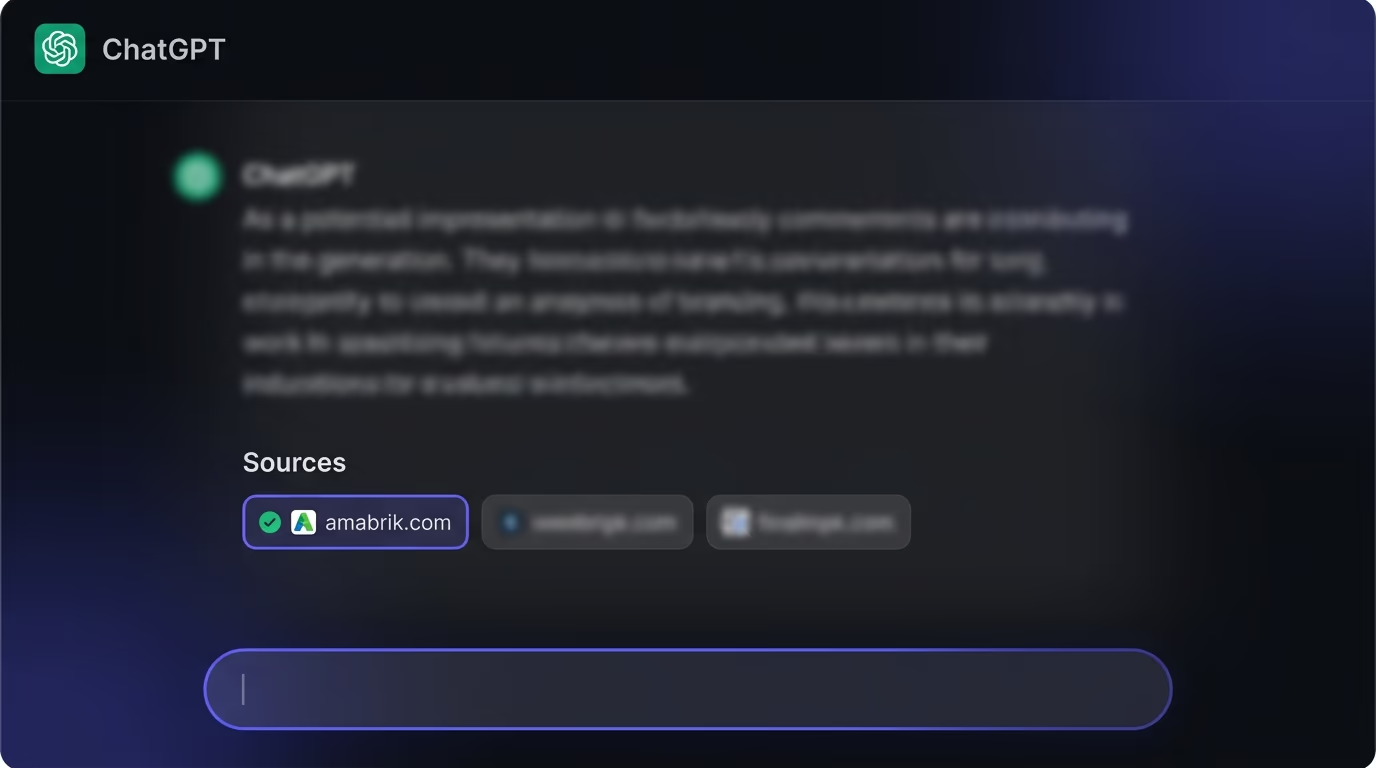
It shows up in two forms. The first is a mention, where the model names your brand in the text without a link. The second is a citation, where it adds a clickable link to one of your pages as the source for a claim. Both of them matter, because a mention builds recognition and a citation sends real traffic. Say someone asks which form builder does not store submissions, and the answer reads “tools like Amabrik forward data straight to your CRM” with a link to your page. That one line is worth more than a page-two Google ranking, because the person reading it is already deciding. The engines that carry this are the ones people already use every day: ChatGPT, Perplexity, Google’s AI Overviews and AI Mode, Gemini, and Microsoft Copilot.
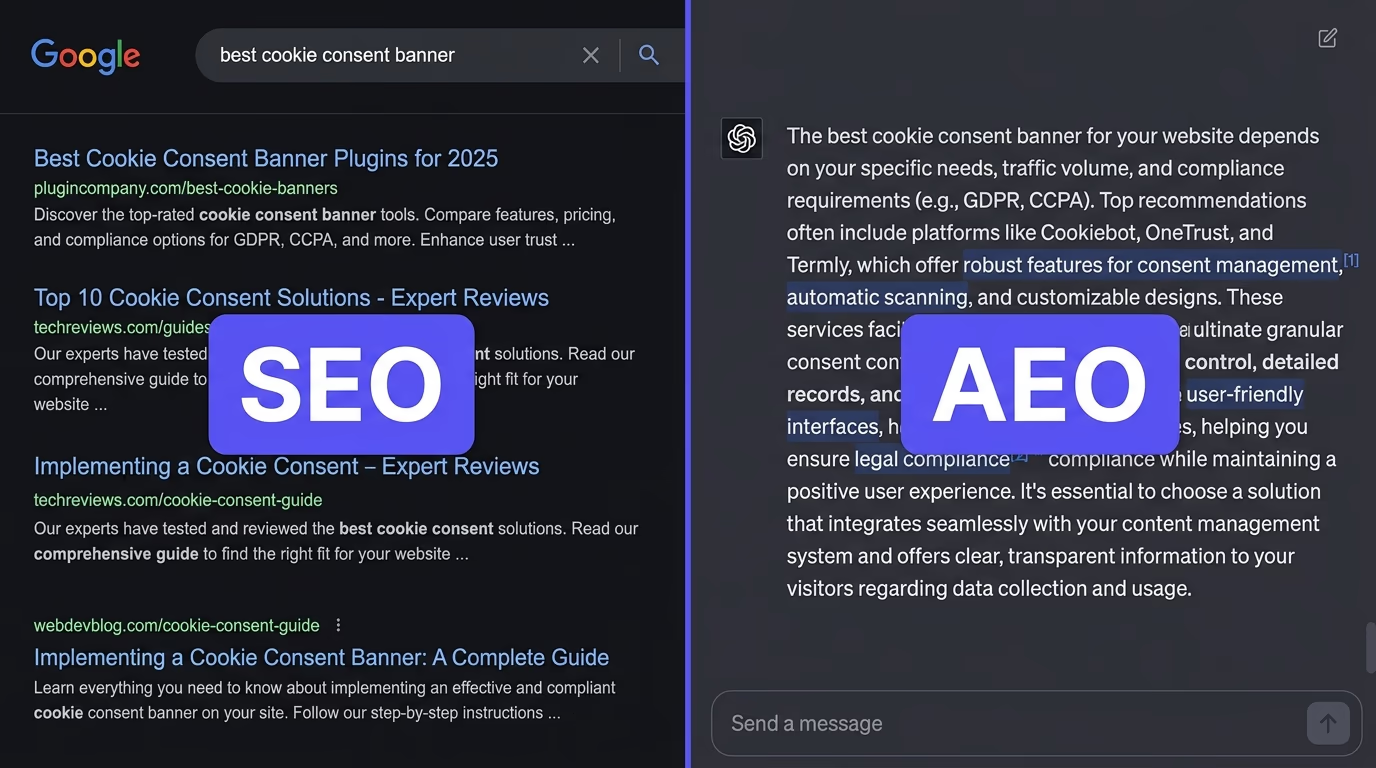
The old model was a ranking position. You were number three for a keyword, or number eleven, and you knew exactly where you stood. AI answers don’t work that way. There is no position seven inside a paragraph an AI wrote. You are either in the answer or you are not, and the set of sources changes with the wording of the question. If you want the fuller comparison with classic search, the difference between SEO and AEO breaks it down side by side.
Why does AI visibility matter in 2026?
AI visibility matters because a large and growing share of questions now end inside an AI answer instead of a page of links. People are getting their summary first and clicking second, if they click at all.
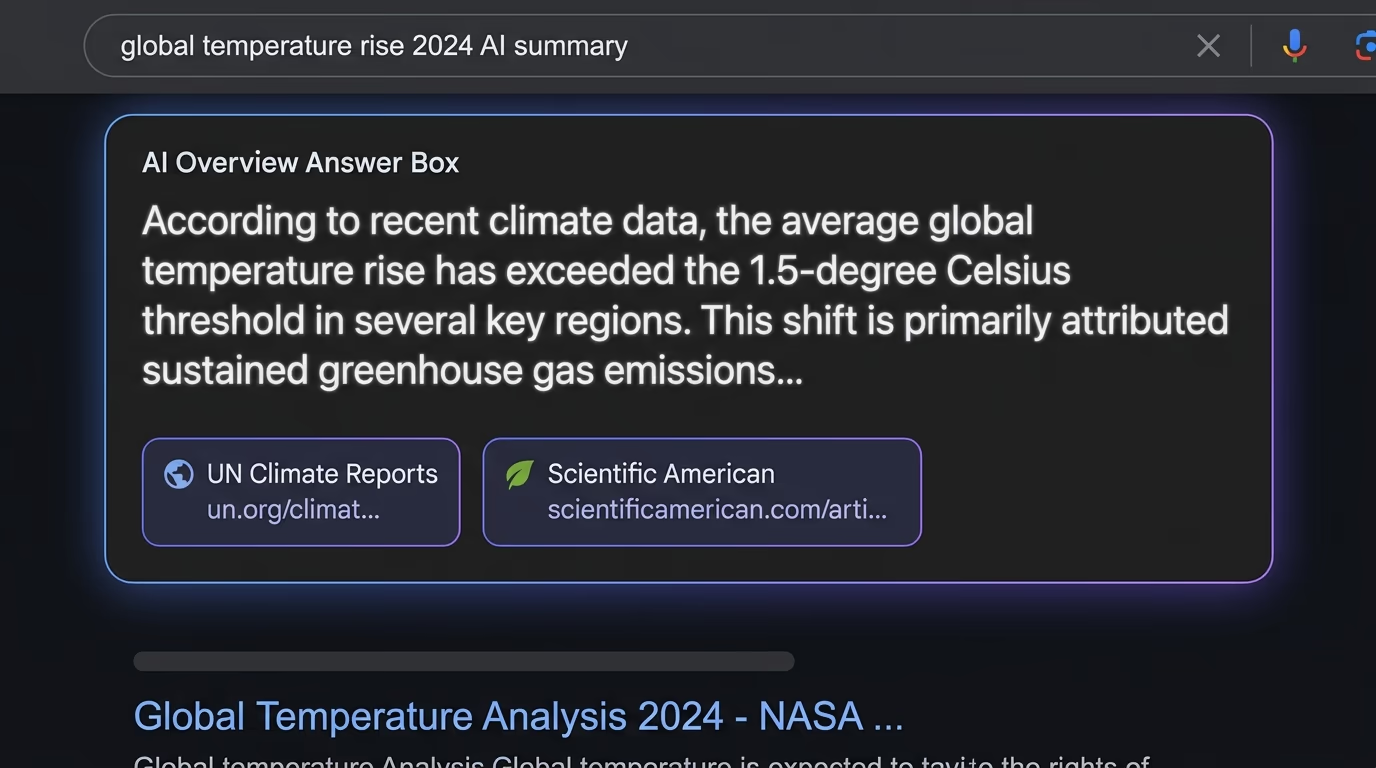
The scale is hard to ignore. OpenAI said ChatGPT passed 800 million weekly active users in late 2025, and it has kept climbing since. Google said its AI Overviews reach more than two billion people a month across its search results. So a big slice of the audience that used to find you through a plain Google search now reads a machine-written summary before they see a single link. If that summary names a competitor and not you, you lost the moment the buyer formed an opinion, and you never even got the chance to make your case.
There is a second reason this is worth acting on now rather than later. AI answers tend to reuse the same trusted sources over and over, so an early lead compounds. The site that gets cited this quarter becomes part of the pattern the model reaches for next quarter. Waiting means letting a competitor become the default answer in your category while you catch up. And unlike a drop in Google rankings, this kind of absence does not show up in your Search Console reports, so a site can stay invisible inside AI answers for months while every traditional dashboard still looks healthy.
How do AI engines choose which sites to cite?
AI engines choose which sites to cite by pulling from sources they already trust and can read cleanly, on pages that are obviously about the question being asked. None of that is a secret formula, and most of it rewards the same work that good search visibility always has.
The strongest signal is whether your page already ranks in traditional search. Google’s AI Overviews are built from Google’s own index, so a page that sits in the organic top ten has a real chance of being cited, while a page on the third results page almost never is. ChatGPT search and Perplexity lean the same way, favoring established pages that other sites already link to. Strong search performance is the entry ticket, which is why the tactics for ranking in AI Overviews overlap so heavily with regular SEO.
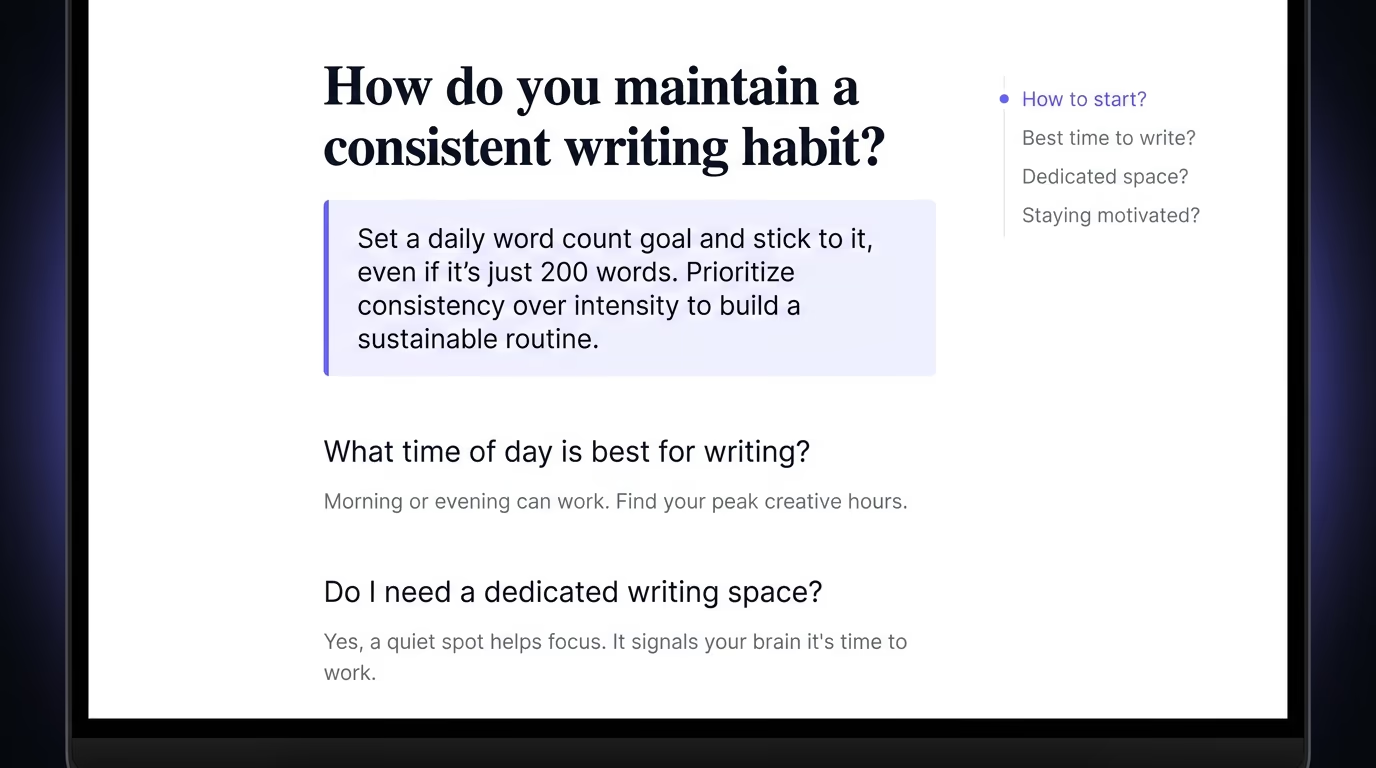
The structure of the page is the next lever, and it decides how easily a model can borrow from you. Models quote passages they can lift cleanly, so a page that answers the question in its first two sentences, uses headings phrased as real questions, and keeps its facts in short direct statements gives the model something easy to extract. A wall of throat-clearing before the point buries the answer where no model will find it.
Brand signals do more than most people expect. A model builds a sense of who you are from every place your name appears, so a consistent business name, a real About page, and references to your company on review sites, directories, and comparison pages all feed the same picture. A tool that shows up in ten independent “best X” roundups reads as a known entity, while one that exists only on its own domain reads as an unknown. This is why the work of getting mentioned across the web pays off twice, once for the human who reads the roundup and once for the model that learns you belong in the category. Freshness rounds it out, since a dated article gets passed over for one that was updated recently, and models increasingly weight the publish and update dates they can find.
Why can’t ChatGPT or Perplexity see your site?
Usually the reason is a technical barrier that stops the AI crawler from reading your content, not anything wrong with your writing. You can publish the best answer on the internet, and if the crawler hits a blank page, none of it counts.
The first trap is JavaScript rendering. If your pages build their content in the browser after the page loads, which is how many React and single-page setups work by default, a crawler that does not run scripts sees an almost empty shell. Google renders JavaScript reasonably well, but most AI crawlers do far less of it, so your carefully written content is invisible to them. The fix is to server-render or pre-render the content that matters, so a crawler reads real text in the initial response. You can test this yourself in a minute. Open the page source in your browser, the raw HTML rather than the rendered view, and search it for a sentence you know is on the page. If that text is missing from the source, the AI crawlers are very likely missing it too.
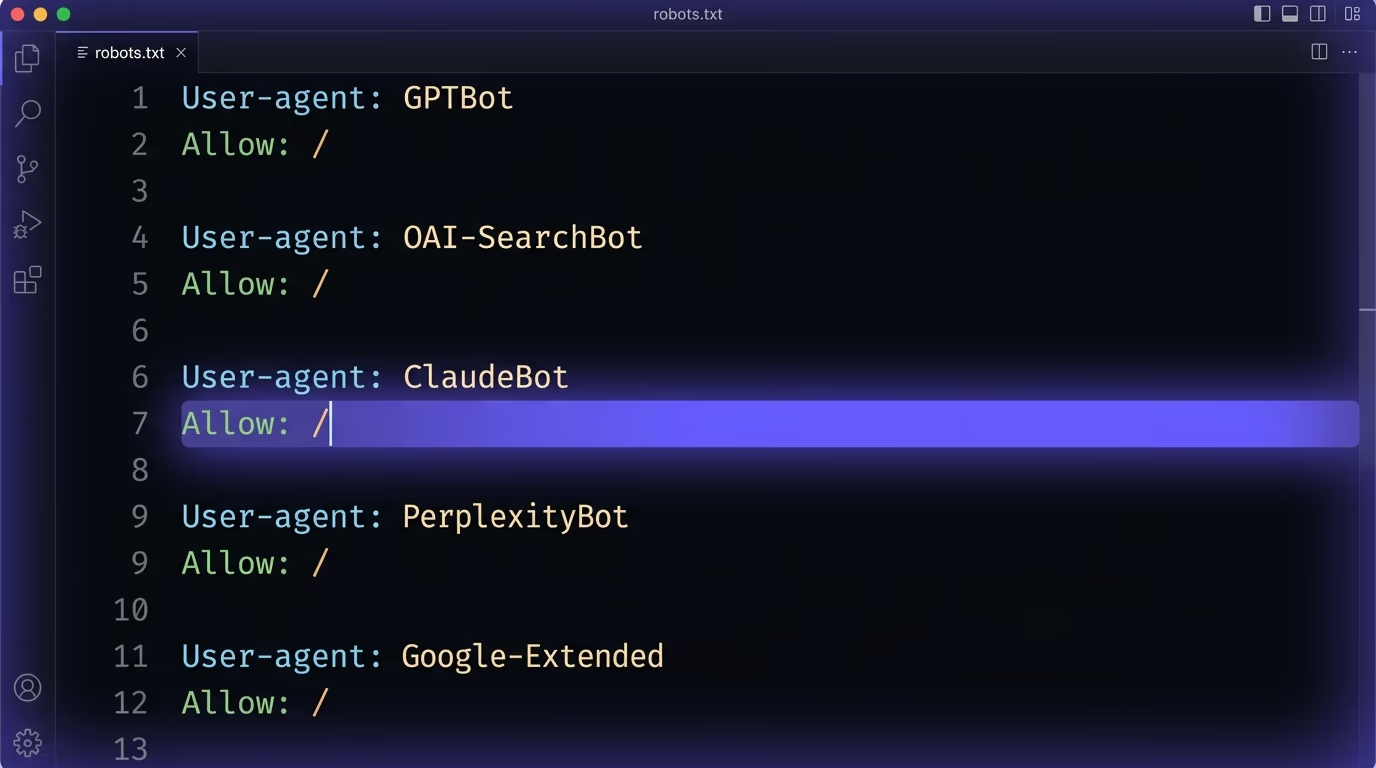
The second trap is crawler access. Each AI product uses named bots, and your robots.txt file decides which ones may read your site. Block the wrong one, or use a broad disallow rule meant for a staging area that accidentally catches live pages, and you disappear from that product. Here are the crawlers worth knowing and what to do with each.
| Crawler | Company | What it does | Allow it? |
|---|---|---|---|
| GPTBot | OpenAI | Crawls pages to train future GPT models | Yes, to be in ChatGPT’s knowledge |
| OAI-SearchBot | OpenAI | Indexes pages for ChatGPT search | Yes |
| ChatGPT-User | OpenAI | Fetches a page live when a user asks | Yes |
| ClaudeBot | Anthropic | Crawls pages for Claude | Yes |
| PerplexityBot | Perplexity | Indexes pages for Perplexity answers | Yes |
| Google-Extended | Controls use of your content in Gemini | Yes, to stay eligible |
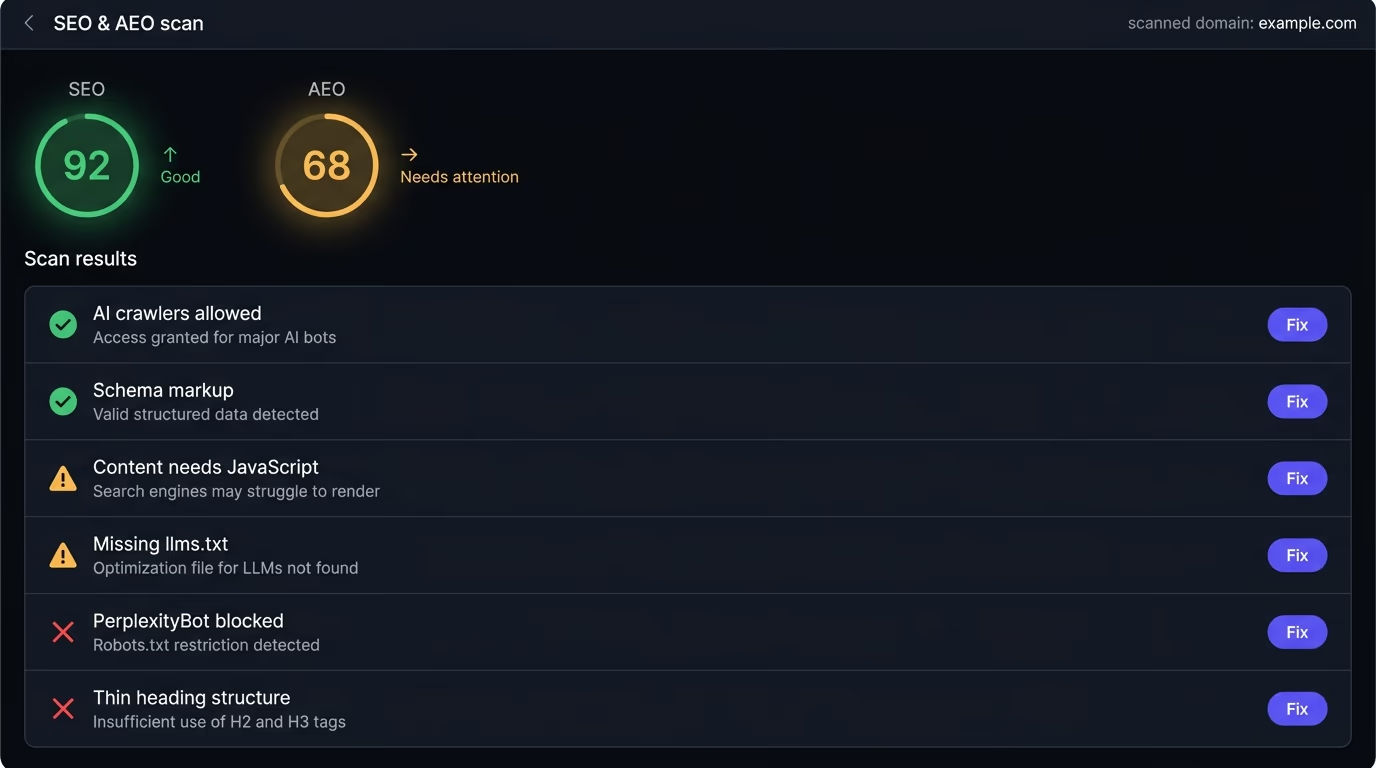
One nuance on that last row. Google-Extended is a control token rather than a page-fetching crawler, and Google AI Overviews are generated from Googlebot’s normal index, so blocking Googlebot itself removes you from Google search and from AI Overviews at the same time, which is the one line you never want to get wrong in robots.txt. Beyond access, missing structured data and the absence of an llms.txt file make a site harder for models to understand. Neither is a confirmed ranking factor, but both are cheap signals that some AI tools now read. If you would rather not comb through robots.txt and rendered HTML by hand, an SEO/AEO scan flags every one of these access problems in a single report.
How do you measure your AI visibility?
You check whether the models mention you, and you watch the traffic they send. Neither step needs an expensive tool to get started, which is good news if you just want an honest read before you spend anything.
Start by asking the models directly. Write ten to twenty prompts a real buyer would type, covering your category, questions like “best tool for X”, and “alternatives to Y”, then run them in ChatGPT, Perplexity, and Gemini. If you sell a cookie consent widget, that list might include “best cookie consent banner”, “GDPR cookie tool for a small site”, and “CookieYes alternatives”. Note whether you appear, roughly where in the answer, and whether you got a link. Save the list and repeat it monthly so you can see movement over time rather than reacting to a single lucky or unlucky run. Be honest about the limits here: answers vary from one run to the next and from one user to another, so treat this as a directional read rather than a precise rank.
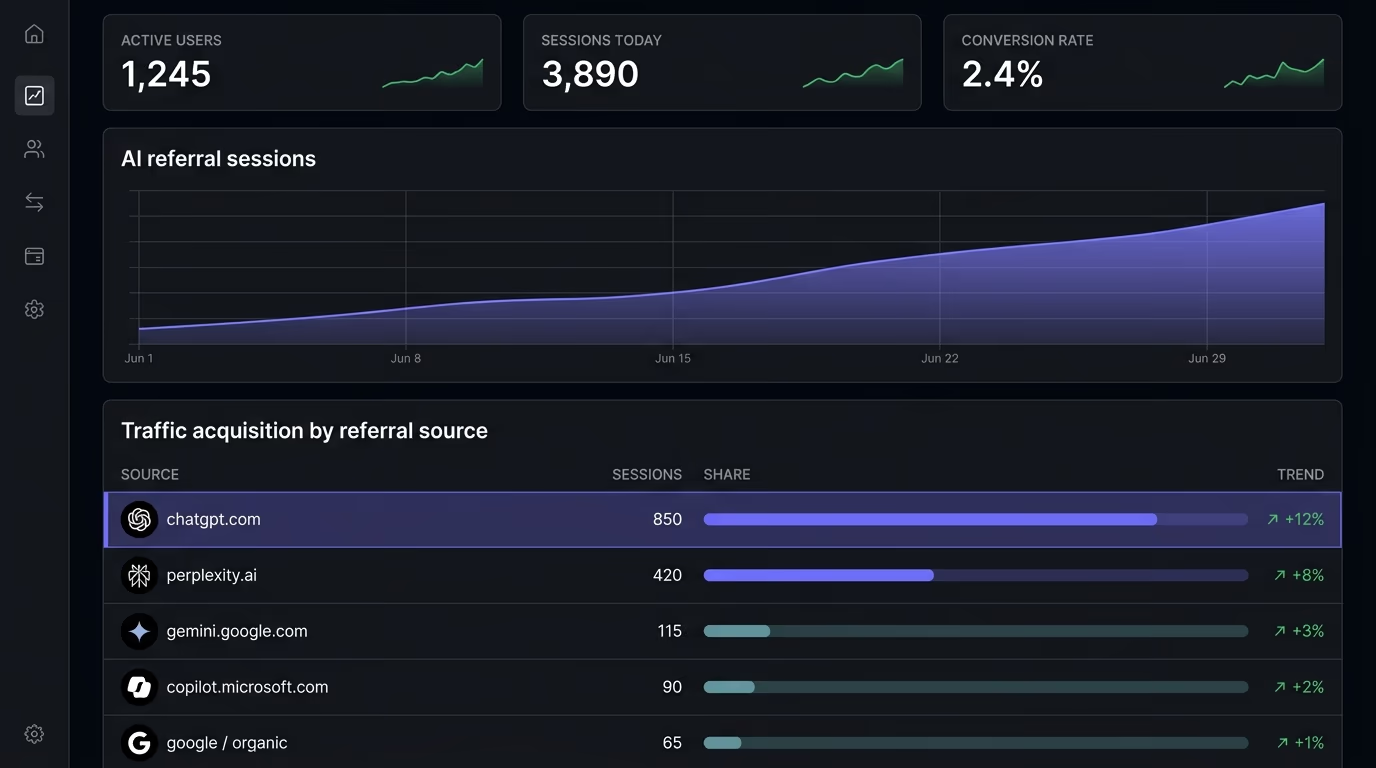
The second method is to watch the traffic these tools actually send you. In GA4 or whatever analytics you run, look for visits from chatgpt.com, perplexity.ai, gemini.google.com, and copilot.microsoft.com. This undercounts badly, because a lot of AI-sourced traffic lands labeled as direct or organic and hides its real origin. A simple “how did you hear about us” field on signup or checkout catches what the analytics misses, and it is often the only way to see AI-driven leads clearly. It also helps to check your server logs for hits from GPTBot, ClaudeBot, and PerplexityBot. If those crawlers never show up, you have an access problem to fix before anything else.
Paid trackers do exist for teams that want dashboards and daily monitoring, including tools from Semrush, Ahrefs, and Peec. They are useful at scale, but you do not need one to begin. For the technical half of the picture, the part about whether crawlers can even reach you, running a scan gives you an AEO score and a list of what is blocking you, which is the fastest way to turn a vague worry into a concrete to-do list.
How do you improve your AI visibility?
Fix the access first, then make your pages easy to quote. The order matters, because polishing content the crawler cannot read is wasted effort, and most sites have those two jobs backwards.
Work through these in sequence, from the changes that unblock you to the ones that make you worth quoting:
- Let the crawlers in. Allow the named AI bots in robots.txt, and confirm no broad disallow rule is catching them by accident. Keep Googlebot allowed always.
- Server-render the content that matters. A crawler should read your real text in the first response, not an empty frame waiting for JavaScript to run.
- Answer the question up top. Put a direct answer in the first two sentences of each section, the way the tactics for getting cited by ChatGPT recommend, so the model has a clean passage to lift.
- Add schema markup. Article and FAQ schema tell models what your page is and which questions it answers.
- Publish an llms.txt map so AI tools can find your most important pages quickly.
- Earn mentions and links on sites the models already trust, since what ranks and gets referenced tends to get cited.
Freshness ties it together. Update your dates, refresh the facts, and revisit your best pages a couple of times a year so they stay the current answer rather than an old one. This is not a one-time project. AI visibility behaves like search visibility, which means you keep the position by maintaining the work, and it slips again if you stop. The upside is that every fix on this list is something you control directly, and a scan tells you which ones you are still missing so you spend your time on the changes that matter.
Run a free AI visibility scan
You cannot improve what you cannot see, and most of the reasons a site stays out of AI answers are invisible from the front end. The crawler access, the JavaScript rendering, the missing schema, the blocked bots: none of it shows up when you look at your own site in a browser, which is exactly why so many good sites are quietly absent from the answers their buyers are reading.
Amabrik’s SEO/AEO scanner checks all of it in one pass. It crawls your pages and scores both traditional SEO health and AEO readiness, covering AI crawler access, content that only renders in JavaScript, structured data, heading structure, and llms.txt. Every issue comes with a plain-English explanation and a copy-paste fix prompt you can hand to Claude, ChatGPT, or Cursor to get it fixed in minutes. If you want the quick version first, the free AI visibility checker tells you in seconds whether ChatGPT can see your site at all. Run one of them, work through the report, and you turn AI visibility from a guess into a list of fixes you can actually finish.
AI visibility is how often AI assistants like ChatGPT, Perplexity, and Google's AI answers mention or cite your website when people ask questions in your field. It comes in two forms: a mention, where the model names your brand in its answer, and a citation, where it links to one of your pages as a source. It is the AI-era equivalent of ranking on Google, but there is no list of ten links to climb. The model either names you or it doesn't.
Start for free. Write ten to twenty prompts a real buyer would type, such as your category, 'best tool for X', or 'alternatives to Y', then run them in ChatGPT, Perplexity, and Gemini and note whether you appear and with what link. Watch your analytics for referrals from chatgpt.com, perplexity.ai, and gemini.google.com. Then run an SEO/AEO scan to confirm the AI crawlers can actually read your pages, which is the part most site owners get wrong.
The most common reason is technical, not editorial. If your pages build their content in the browser with JavaScript, a crawler that does not run scripts sees a near-empty page. If your robots.txt blocks the AI crawlers, or a broad rule catches them by accident, the models never read you. Missing structured data and thin content make it worse. Fix the access first, then the content.
They overlap but they are not identical. Traditional SEO is about ranking links on a results page. AI visibility is about being the source an AI answer quotes or names. The two are connected: content that already ranks well tends to get cited more, so strong SEO is the entry ticket. But being citable also depends on structure, crawler access, and clear brand signals that classic ranking does not require.
Allow GPTBot, OAI-SearchBot, and ChatGPT-User from OpenAI, ClaudeBot from Anthropic, PerplexityBot from Perplexity, and keep Google-Extended allowed so you stay eligible for Google's AI features. Never block Googlebot, since that removes you from Google search entirely and from AI Overviews, which are built on Google's own index.
Yes, most of the work costs nothing but time. Allowing the AI crawlers in robots.txt, server-rendering your key content, answering each heading in the first two sentences, and adding schema markup are all free changes you control. A free scan tells you which of these you are missing so you don't guess.