How to Rank on Perplexity in 2026
How to rank on Perplexity: open PerplexityBot, put your answer in the HTML, add schema, keep pages fresh, and check what Perplexity actually reads.

Ranking on Perplexity means getting your page cited as a source inside its written answers, not climbing a list of ten blue links. Perplexity answers each question by searching the web live, opening a few pages, reading their raw HTML, and quoting the ones it can crawl, understand and trust. So the work splits in two: make sure Perplexity can physically read your page, then make that page easy to quote and worth citing. Almost every guide covers the second half and skips the first, which is why sites that write great content still never appear.
This walkthrough covers both halves in the order that changes your results, so you fix the silent technical failures before you polish the writing. If you want the wider picture on how classic search and answer engines split the job, the SEO vs AEO guide sets up the difference. Everything below is specific to Perplexity: its crawler, how it reads a page, and what makes it pick you over the source next to you.
What is Perplexity, and how does it decide what to cite?
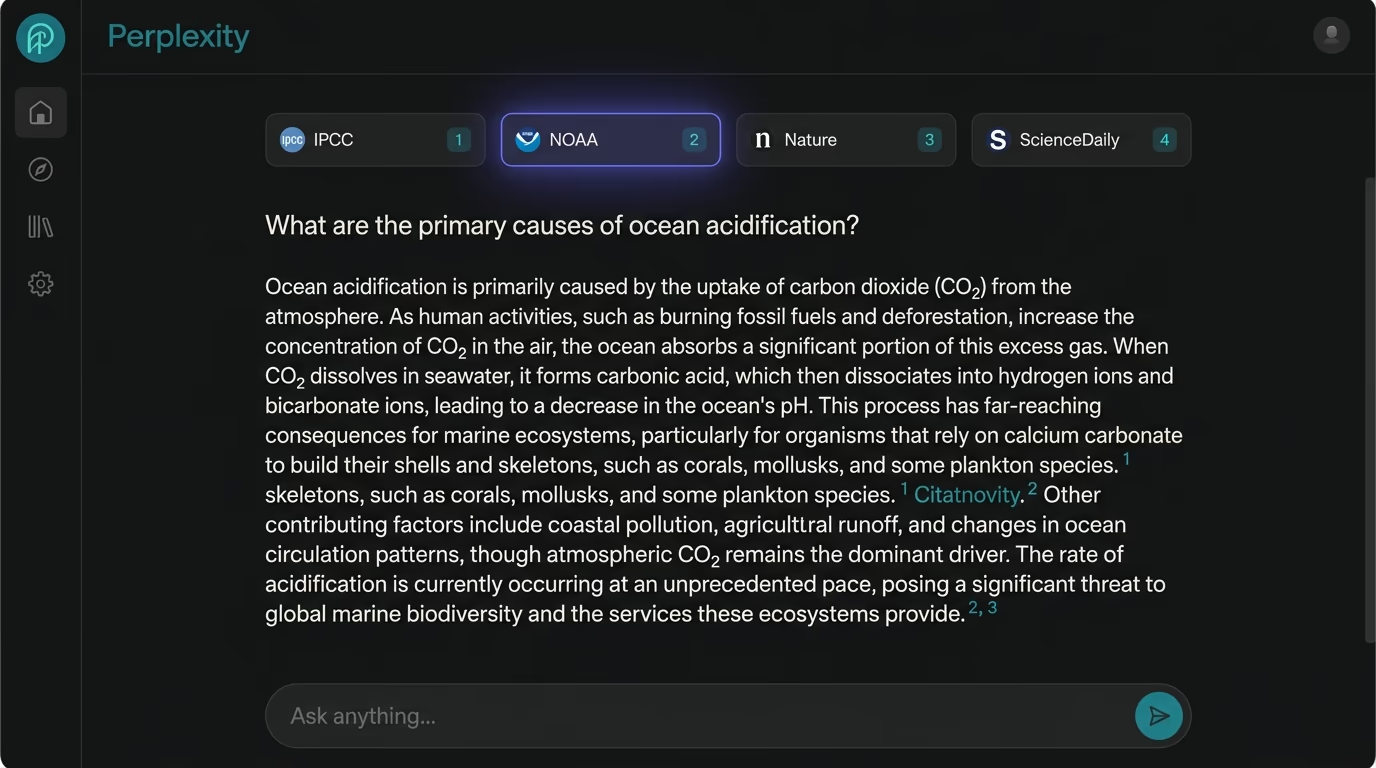
Perplexity is an AI answer engine that replies to a question with a written summary and a numbered list of the sources behind it. For every query it searches the web in real time, opens a handful of results, and quotes the ones it judges relevant and credible, linking each claim back to a page. There is no ranking of ten links to climb. Perplexity names a few sources and moves on, so your target is to be one of those named sources rather than the eleventh result nobody sees.
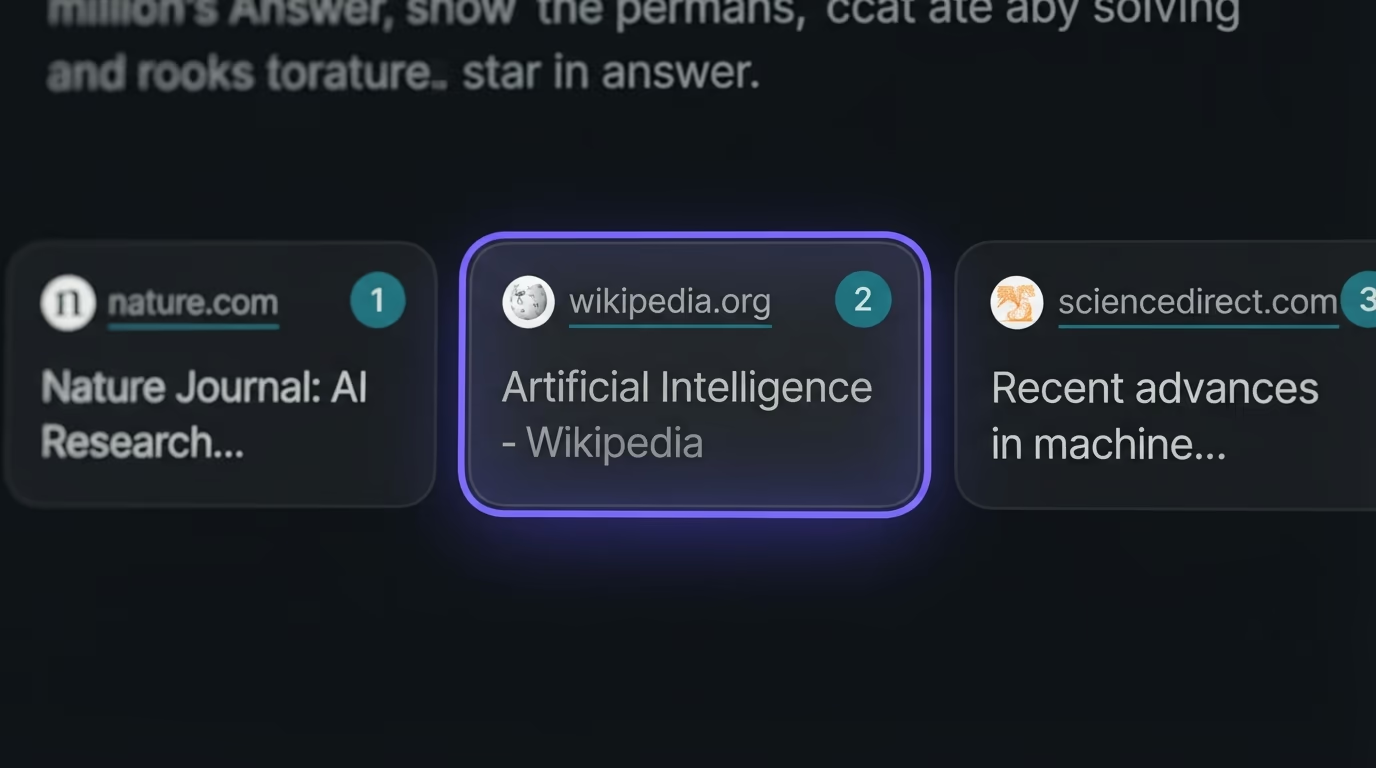
Under the surface it routes each question to a large language model that reads the pages it retrieved and writes the summary, and paid users can pick which model handles their queries. Every answer shows its sources as a row of cards near the top and suggests follow-up questions underneath, so a citation sits right next to the claim it supports rather than at the bottom of a page nobody scrolls to. What matters for you is what Perplexity favors when it chooses those sources. Its own guidance points to pages on crawlable URLs, content that answers the question directly, and information that is recent and specific rather than vague, and it leans toward domains it already treats as credible on a topic. That last point is why authority built off your own site feeds back into whether you get quoted at all. Get those signals right and you move from never cited to cited often, which is the whole game on an answer engine.
Can Perplexity actually read your page?
Perplexity reads the raw HTML your server returns, and it does not run JavaScript. If your main content only appears after a script executes in the browser, Perplexity’s crawler sees a near-empty shell with your navigation and little else, so it has nothing to quote even when a human sees a full page. This single issue keeps more well-written sites out of AI answers than any writing mistake.
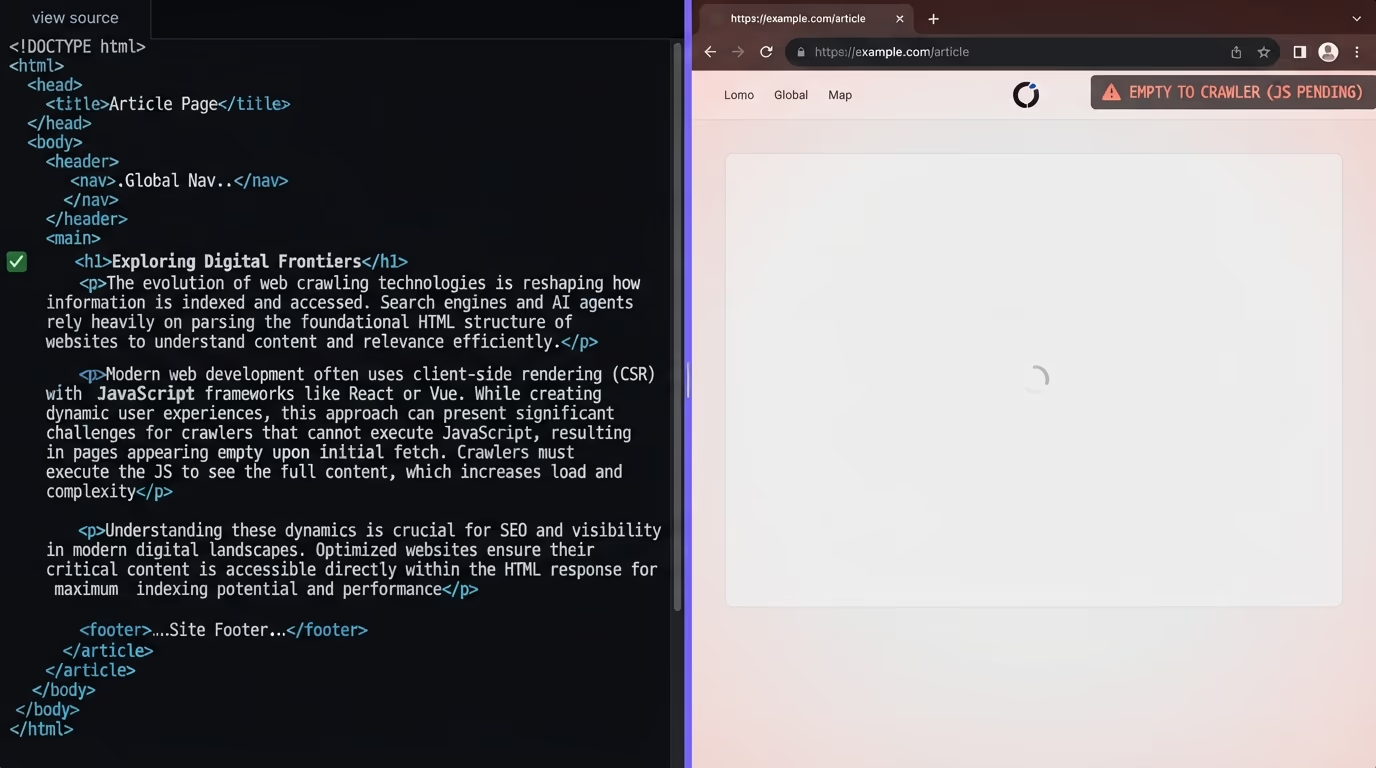
The scale of it is easy to underrate. In 2025 Vercel and Merj analyzed more than 500 million requests from GPTBot, the crawler behind ChatGPT, and found it executed JavaScript zero times. AI crawlers across engines behave the same way, Perplexity included: they fetch the HTML and stop. So the fix is to serve your content in that HTML. If you build on a framework like Next.js, Astro or Nuxt, render pages on the server or pre-render them at build time instead of loading the body client-side. You can check any page yourself by opening “view source” in your browser, or running curl against the URL, and confirming your actual text is there and not just an empty <div>. If the source shows your headings and paragraphs, Perplexity can read them; if it shows a handful of script tags wrapped around an empty container that the browser fills in later, that empty version is exactly what the crawler receives, and it cannot quote text that is not there. The same principle governs getting cited by ChatGPT, because both engines read HTML the same blunt way.
How do you let PerplexityBot crawl your site?
Perplexity reaches your pages through a named crawler called PerplexityBot, and if your robots.txt blocks it, you have quietly opted out of every answer Perplexity writes. Allowing it is two lines, and getting this wrong is one of the most common reasons a site never shows up despite doing everything else right.
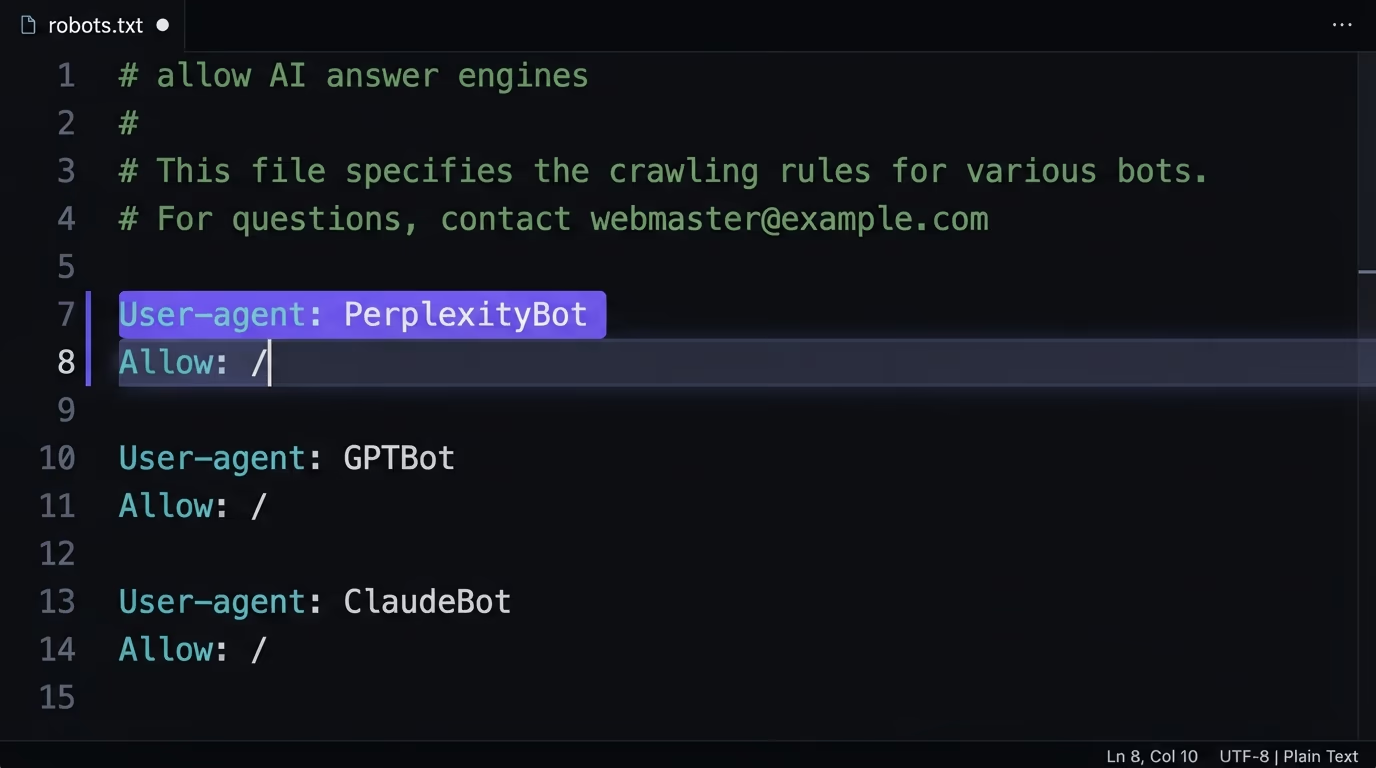
Add a block to your robots.txt with User-agent: PerplexityBot followed by Allow: /, then open yourdomain.com/robots.txt in a browser to confirm the live file says what you think it does. PerplexityBot handles search indexing and is not used to train models, so allowing it only affects whether you can be found and cited. There is a second agent worth knowing, Perplexity-User, which fetches a page when someone’s question sends Perplexity to visit it directly; because a real person triggered that request, it generally ignores robots.txt rules. Perplexity publishes the current IP ranges for both at perplexity.com/perplexitybot.json, which is the source to trust if you want to verify a crawler is genuine rather than someone spoofing the name. Plenty of sites disallow these bots without meaning to, usually through a robots.txt copied from another project or bolted on by a plugin, so the honest move is to check yours and open the crawlers you actually want. Watch for two sneakier versions of the same mistake: a blanket User-agent: * block with Disallow: / that sweeps up every crawler including PerplexityBot, and a path rule like Disallow: /blog/ that hides the exact content you want quoted. Both look harmless in a config file, and both cost you every citation on the pages they touch. If you care about the full set of answer engines, the guide to ranking in AI Overviews lists the other agents to allow alongside PerplexityBot.
How should you structure a page so Perplexity quotes it?
Perplexity quotes short, self-contained passages, so the pages it cites tend to state the answer in the first sentence or two under a heading that matches the question. Write the answer up front, phrase your headings as the questions people actually type, and give the engine clean blocks it can lift without guessing where the answer starts.
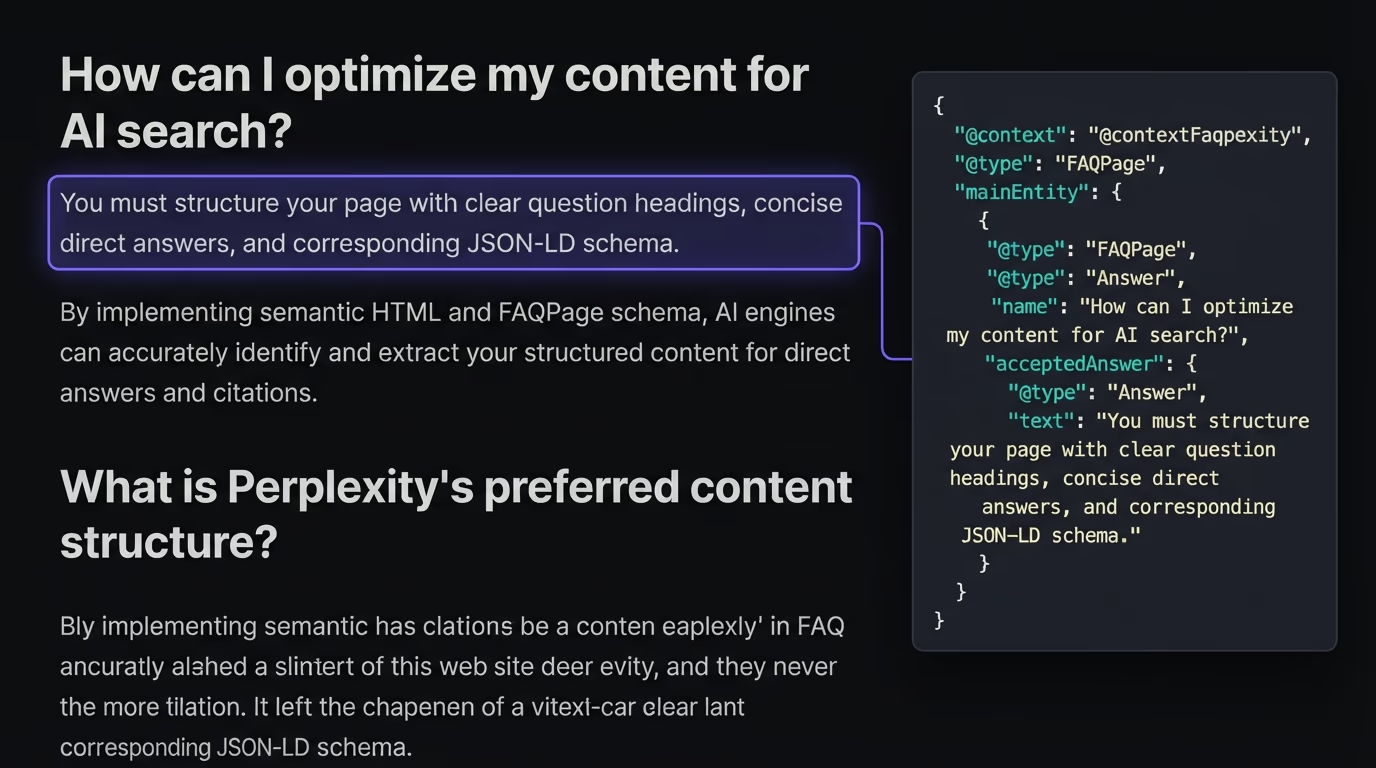
In practice that means leading each section with a direct answer a machine could paste into a reply with no surrounding context, then supporting it below. As an example, a section headed “Does Perplexity read JavaScript?” should open with “No, Perplexity’s crawler reads raw HTML and does not run JavaScript”, not with two sentences of build-up before the answer lands. The first version can be lifted and quoted on its own, while the second makes the engine dig for the point and often skip you. A concrete number, a real example or a short comparison then gives Perplexity something specific to cite, which it prefers over generic prose. Schema markup helps it read you cleanly, because adding JSON-LD for Article, FAQPage, HowTo or Organization tells the engine what the page is and hands it structured question-and-answer pairs instead of forcing it to infer them. That is exactly why FAQ schema still earns AI citations even after Google retired the visible rich result. Short lists and a clean comparison table help for the same reason, because they hand the engine a tidy block of facts instead of a paragraph it has to unpick. An llms.txt file is a smaller, optional touch that points models at your best pages, though it does far less than the crawler and HTML work above. Structure the page for a reader who wants the answer fast, and you have structured it for the way Perplexity extracts one.
What makes Perplexity trust and refresh your content?
Perplexity leans toward recent pages and toward sources it already sees named across the web. A page updated this quarter with a visible date, from a site that gets mentioned on Reddit, LinkedIn and industry write-ups, is easier for the engine to justify citing than an undated page nobody references. This is the slower half of the work, and it is where classic reputation-building pays off.
Freshness carries more weight on Perplexity than on a classic search index. It leans on recency hard, and newer pages routinely surface ahead of older, higher-authority ones in fast-moving topics. The practical response is to review your core pages every couple of months, update the facts and figures that have aged, and show a clear “last updated” date so both the crawler and the reader can see the page is current. A page refreshed last month reads as more reliable to the engine than an identical one stamped two years ago and left to rot. Authority is the other half of the equation, and it is the part you cannot rush. Perplexity often cites places where people already talk about a brand, and community platforms like Reddit and LinkedIn show up heavily among its sources, so being discussed off your own site feeds back into being quoted on it. You earn that by answering real questions in the places your buyers already gather, and by publishing the kind of data or examples other sites want to cite, so a steady name on one topic slowly starts to stick to you. None of it lands in a week, which is the reason to ship the technical fixes first and let the reputation work compound behind them.
Is ranking on Perplexity the same as ranking on Google?
Ranking on Perplexity and ranking on Google overlap, but they are not the same job. Perplexity often cites pages that already rank well on Google, so strong classic SEO gives you a head start. What differs is what each one rewards, and a page can win on one while losing on the other for reasons that have nothing to do with quality.
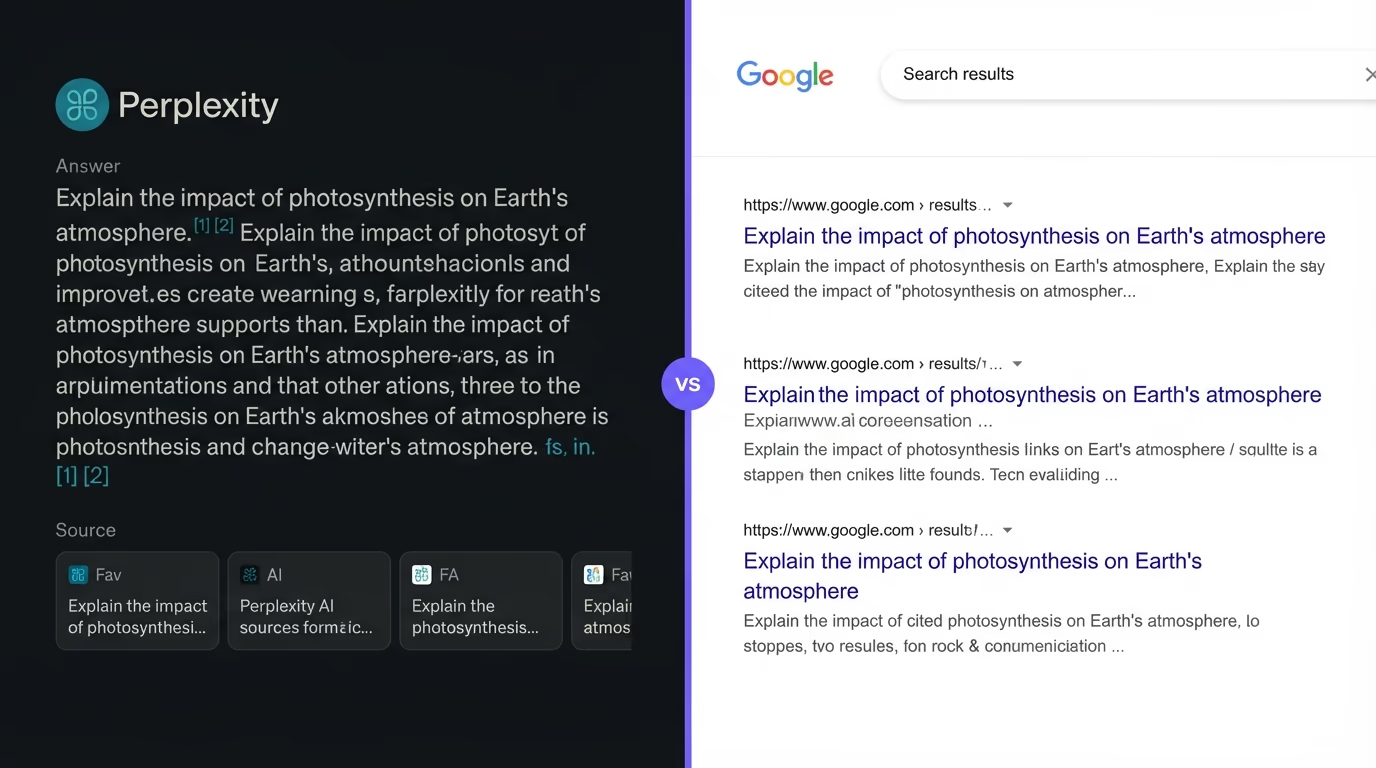
The overlap is real: SEO platform seo.com reports that roughly 60% of Perplexity citations come from pages sitting in Google’s top ten organic results, which means the fundamentals of relevance and credibility still apply. The gaps are where people get caught. A page that states one clear answer can get cited by Perplexity while it sits on page two of Google, and a page ranking first on Google can be invisible to Perplexity if a script hides its text or a robots.txt rule blocks the crawler. Links weigh differently too: Google still counts backlinks heavily, while Perplexity cares more about whether it can read a clean answer and whether your name turns up in the wider conversation about a topic. The table below lays out where the two diverge.
| Question | Google Search | Perplexity |
|---|---|---|
| What you win | A ranked link people click | A citation inside the written answer |
| How your page is read | Fully rendered, JavaScript runs | Raw HTML, no JavaScript |
| What matters most | Links, relevance, page experience | A direct quotable answer, crawler access, freshness |
| How freshness weighs | Moderate, varies by query | Higher, recent pages surface faster |
So treat Perplexity SEO as an extension of your Google work, not a replacement for it. The full comparison of SEO and AEO goes deeper on where the two disciplines meet and where they split.
How do you check whether Perplexity is citing you?
Check whether Perplexity is citing you in two ways: ask Perplexity the questions your buyers ask and see whether you appear in the sources, and watch your analytics for referral traffic coming from perplexity.ai. The manual test tells you what an engine says about your topic today, and the referral data tells you whether that visibility turns into visits.
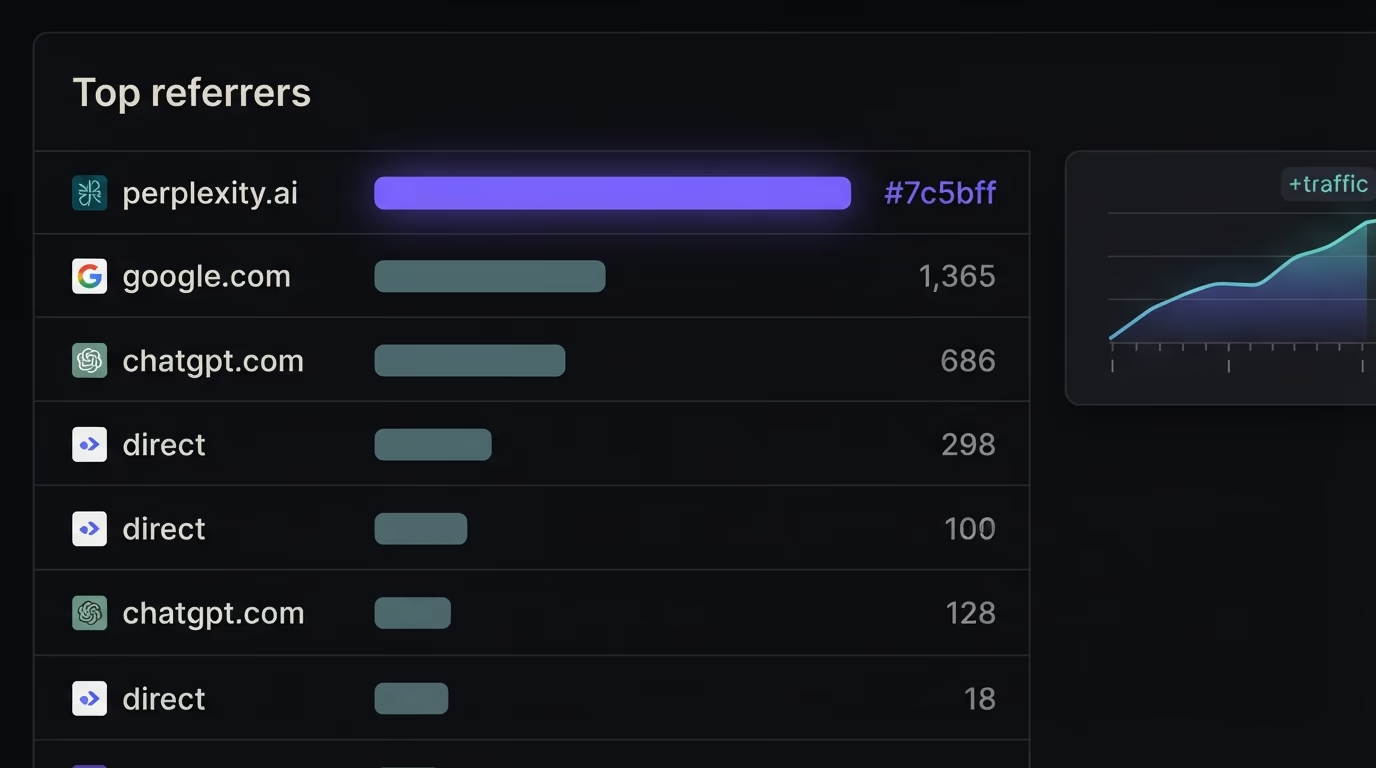
Write ten to twenty prompts a real buyer would type, such as your category, “best tool for X” or “alternatives to Y”, run them in Perplexity, and note whether you show up and with which page. Then open your analytics and filter referrers for perplexity.ai to see the traffic it already sends you. Repeat the prompt test on a schedule, monthly or after any large content change, because answer engines swap their sources far more often than Google reshuffles its rankings, so a page you owned last quarter can quietly drop out of the answer. That covers what is happening, but not why you are missing from answers you should be in. For that, run an SEO and AEO scan that reads your site the way Perplexity does. Amabrik’s scan crawls your pages and scores them twice, once for Google and once for AI search, then flags the exact blockers: content that only renders with JavaScript, a robots.txt that disallows PerplexityBot, missing schema, and headings an engine cannot follow. Each issue comes with a plain-English explanation and a copy-paste fix prompt you can hand to Claude, ChatGPT or Cursor, so the correction is written for you. Working from a scan beats guessing, because it separates a content problem you can write your way out of from a technical block no amount of writing will fix, and it tells you which one is actually keeping you out of the answer. If you want the broader version of this measurement habit, the guide to AI visibility covers tracking your presence across every answer engine at once.
Where to start with Perplexity
Fix the plumbing before the prose. Allow PerplexityBot in your robots.txt, confirm your content sits in the raw HTML rather than behind JavaScript, and you have cleared the two failures that keep most sites out of Perplexity entirely. From there, structure each page around a direct answer under a question heading, add the schema that lets the engine lift a clean block, and keep your important pages current with a visible date. The authority and mention-building work compounds on top of that over months, but it only helps once a crawler can read you in the first place.
The fastest way to move is to see what Perplexity sees before you guess. Run an SEO and AEO scan on your site, work through the blockers it surfaces in order, and recheck after the next crawl. Do the technical layer once and it keeps paying out on every question your buyers ask, long after the work is done.
Ranking on Perplexity means being cited as a source inside its written answers, so the work is to make your page easy for the crawler to read and quote, then earn the trust that gets it cited. Allow the PerplexityBot crawler in your robots.txt, serve your main content in the raw HTML rather than only through JavaScript, state the answer in the first sentence under a clear heading, add schema markup, and keep the page recent. Then confirm it by asking Perplexity your buyers' questions and watching for referral traffic from perplexity.ai.
No, Perplexity does not read JavaScript, because its crawler only fetches the HTML your server returns. Any content that appears after a script executes in the browser is invisible to it. In 2025 Vercel and Merj analyzed more than 500 million requests from a comparable AI crawler and recorded zero JavaScript execution. If your text loads client-side, render it server-side or pre-render it so the answer sits in the HTML Perplexity reads.
Add a block with User-agent: PerplexityBot followed by Allow: / to your robots.txt, then open yourdomain.com/robots.txt in a browser to confirm the live file says what you expect. PerplexityBot is the crawler that indexes pages for Perplexity search, and it is used for search rather than model training. A robots.txt copied from another project is the usual reason a site blocks it by accident.
Perplexity SEO overlaps with Google SEO but rewards different things. Both favor relevant, credible pages, and many Perplexity citations come from sites that already rank on Google. The difference is that Perplexity reads raw HTML with no JavaScript, quotes one clear answer rather than sending a click, and leans harder on freshness, so a page can be cited by Perplexity while sitting on page two of Google, or rank first on Google and stay invisible to Perplexity.
The technical fixes work fast, so once your content is in the raw HTML and PerplexityBot is allowed, the next crawl can pick you up within days to a few weeks. The trust side is slower, because being mentioned across the web and building a track record on a topic compounds over months. Most sites see the fastest gains from the technical layer, which is why it comes first.
No, ranking on Perplexity is free, because Perplexity does not sell citation placement, so being named as a source is earned rather than bought. What it costs is the work of making your pages crawlable and quotable, and keeping them current. Any tool you use, including an AEO scan, only speeds up finding the gaps, and the citation itself is free.